Evaluate KEE roof repairs in Jurupa Valley with damaged-detail assessment, compatible welded connections and clear limits for retaining or replacing layers.
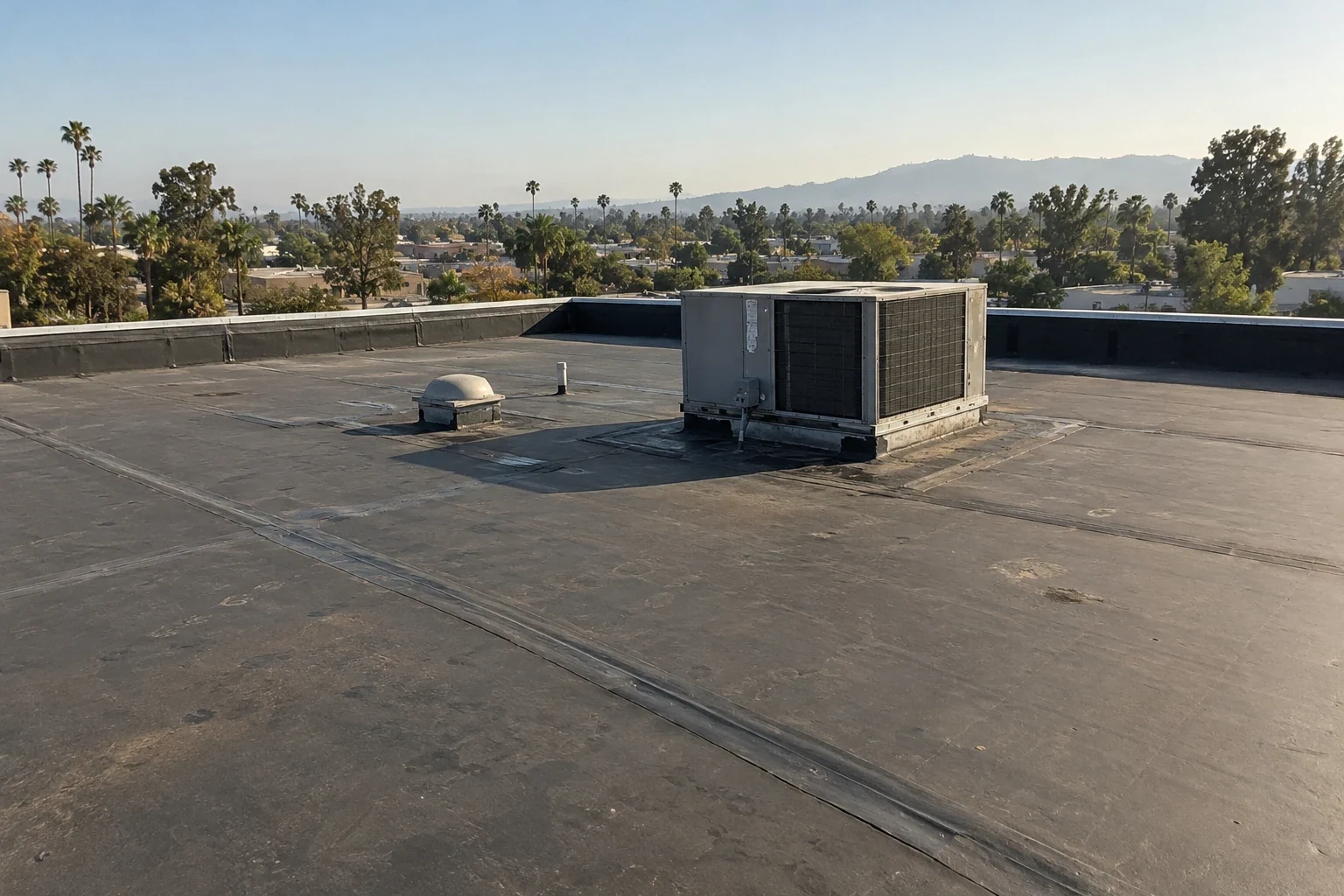
A torn KEE flashing at a relocated equipment connection can be rebuilt without discarding suitable membrane across the rest of the roof. That choice changes if the relocation crushed underlying board or left an opening through wet layers. We inspect KEE roofing in Jurupa Valley, CA to define the complete correction at the altered detail. The contractor needs a scope for the damaged connection and its support, with a separate assessment of the field that may remain.
Corona has manufacturing businesses including Fender and Saleen, while Jurupa Valley combines Mira Loma distribution operations with retail and service uses. Changes to equipment at those kinds of properties can affect roofing connections. We assess the actual altered area before selecting repair material. KEE construction should be evaluated as an installed assembly, including its receiving surface and attachment, rather than as a product name that settles every repair question.
A new equipment position may leave the old penetration, shifted supports and fresh contact damage in different locations. We inspect each affected connection and identify which materials need removal. The scope should not stop at the visible torn flashing if the supporting assembly was also disturbed. Conversely, usable surrounding layers should not be removed without a physical reason tied to the proposed reconstruction.
Rebuilding altered equipment interfaces can involve another trade's support or equipment work. We identify the roof-side detail and the receiving condition it needs. An abandoned opening requires an appropriate closure below the weather layer, while a new penetration needs a complete compatible flashing arrangement. The contractor can coordinate those different tasks instead of treating both as a general membrane patch allowance.
Concentrated bearing may damage the board beneath a support even without an obvious membrane opening. We examine depressions and movement where they affect the repaired detail. Moisture testing or controlled openings can establish whether the support layers remain usable. A smooth surface after equipment relocation does not eliminate the need to check construction that was loaded, cut or exposed during the change.
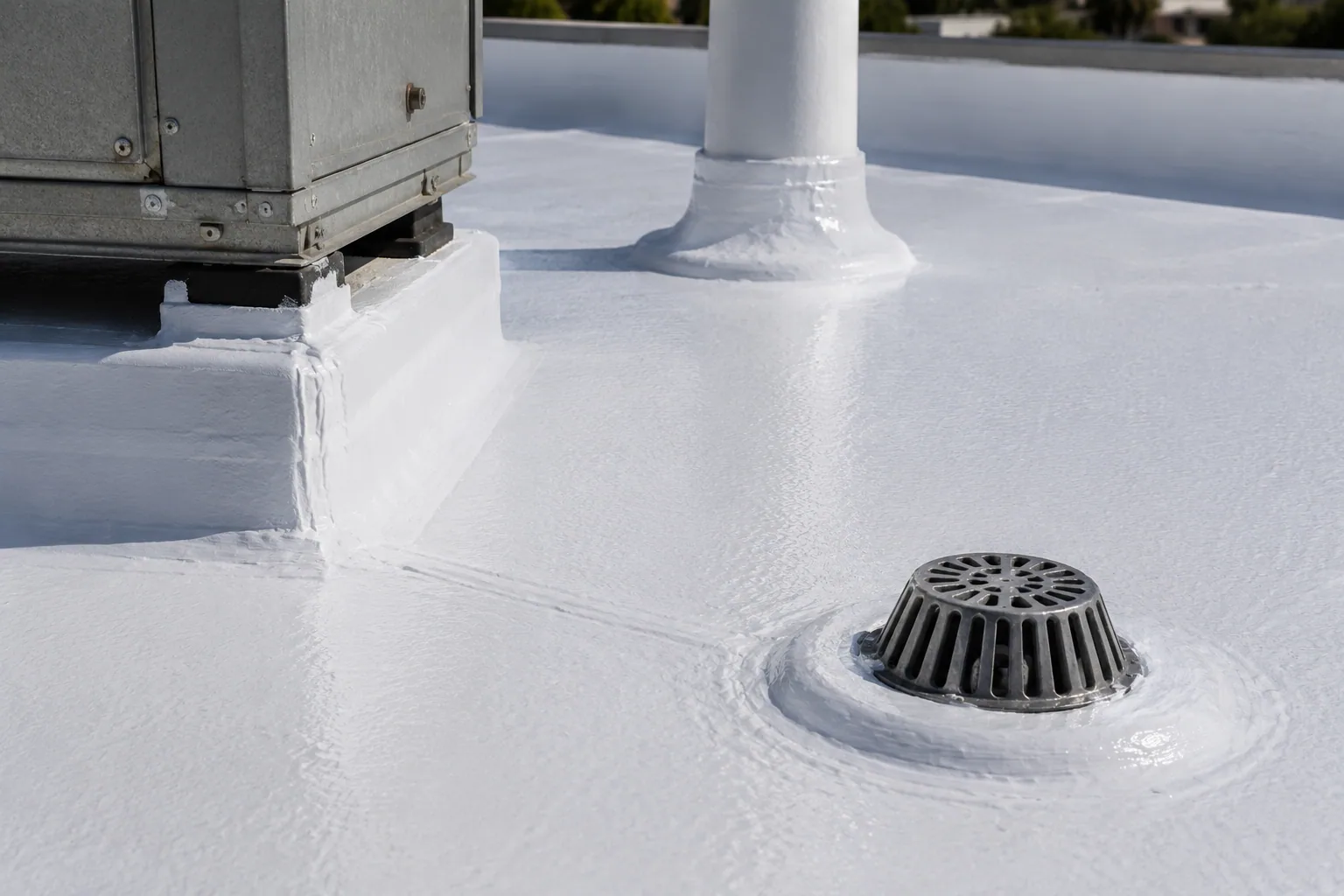
KEE roofing uses membrane formulations whose repair requirements must be established for the installed system. We assess available product information and the physical sheet, then select compatible materials and preparation. Welded repair construction needs a suitable receiving area. A resemblance to another light-colored membrane is insufficient for substituting its repair sheet or cleaning method at an altered penetration.
PVC-based roofing choices may share some installation characteristics with KEE systems, but the proposed connection still needs the relevant system requirements. We establish the membrane that will be retained and the detail being added. Where old treatments affect the welding area, their removal and the condition left behind belong in the allowance. The comparison should identify preparation rather than assume the new flashing can be placed over every previous repair.
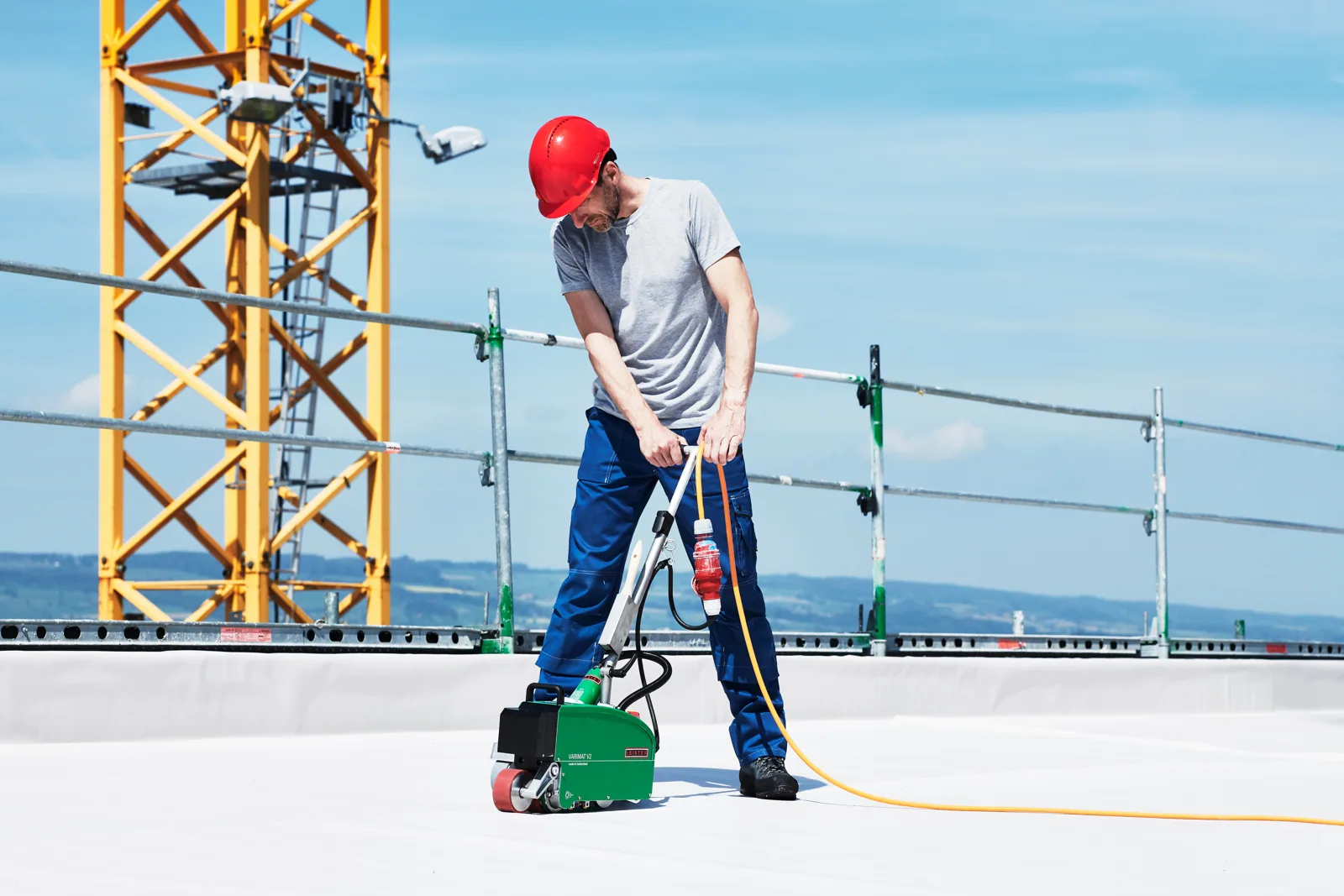
We use appropriate trial connections to assess preparation and equipment settings before the final repair. Complex corners and multiple sheet intersections need access for a complete weld and inspection. If the existing geometry restricts that work, we revise the repair boundary or detail arrangement. A small visible tear can therefore require a larger new flashing piece while much of the surrounding field stays in place.
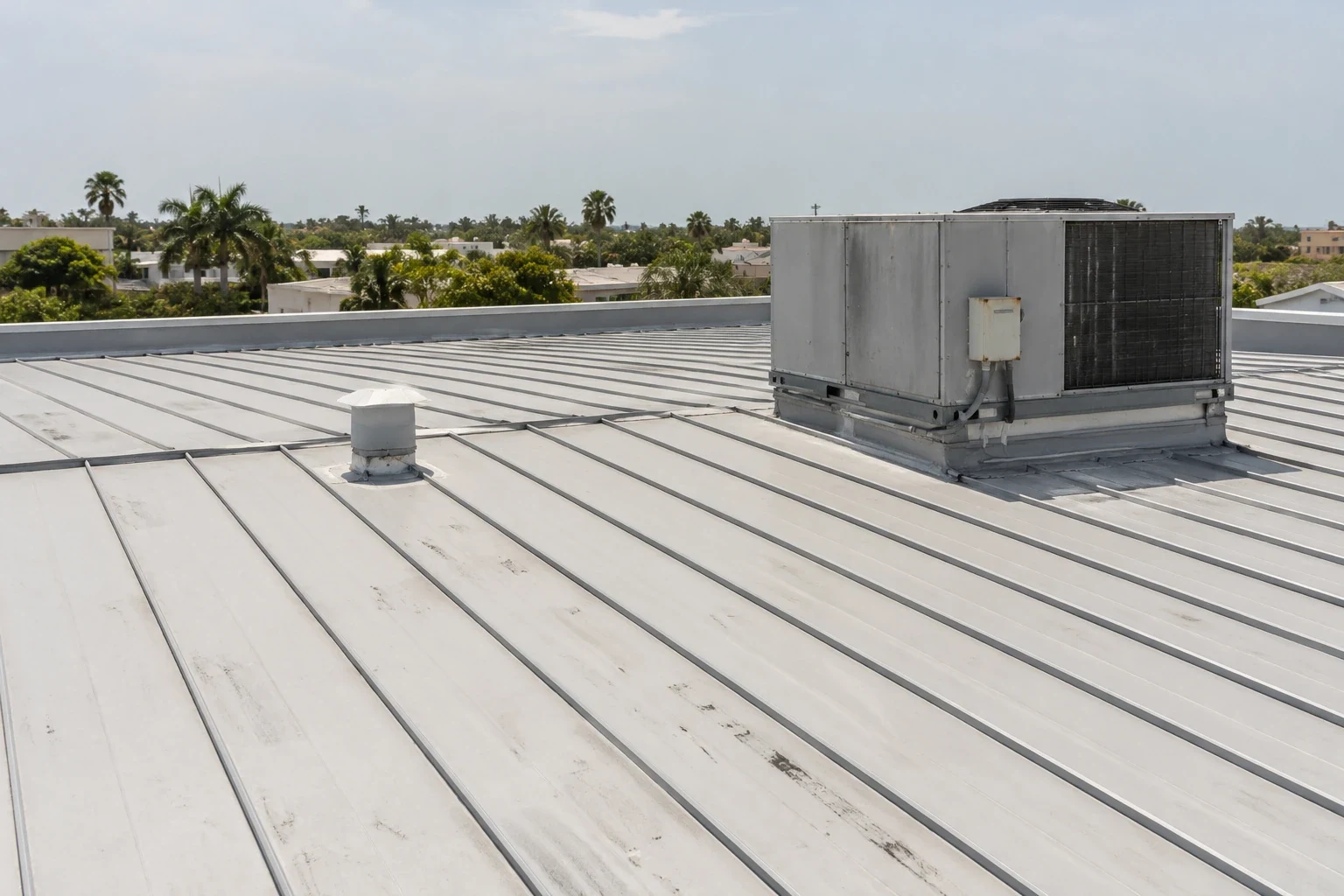
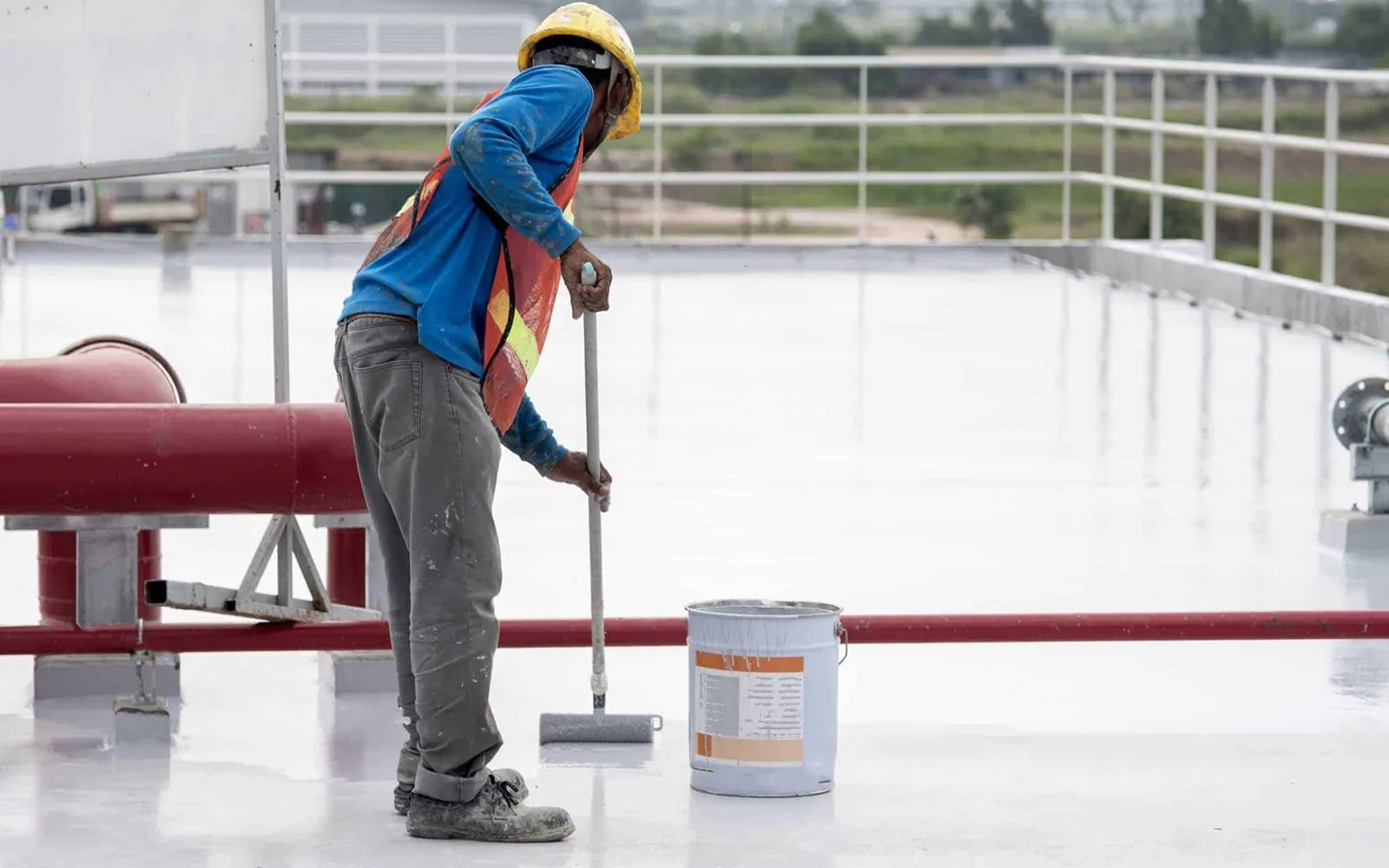
Chemical contact and residues need assessment against the particular membrane product. We identify the substance, exposure location and means of controlling continued deposits. The roof-side work may require cleaning, damaged material replacement and coordination with the equipment operator. A broad statement about membrane durability does not describe those tasks or establish that the proposed assembly is suitable for every process occurring inside the building.
For a manufacturing roof assembly, the receiving deck, ventilation penetrations and maintenance paths may be as consequential as material exposure. We examine the actual roof configuration and select construction that meets the specified needs. If another trade must change discharge or support arrangements, the roof repair sequence should allow that work to occur before the new flashing is formed around the final configuration.
A TPO alternative needs its own assessment of material compatibility and detail construction. We compare the preparation, supporting layers and installation method required by the proposed options. The owner should see whether the choice changes only the field membrane or also changes attachment, equipment interfaces and future servicing. Those differences can affect the practical repair and replacement allowances more than the sheet designation alone.
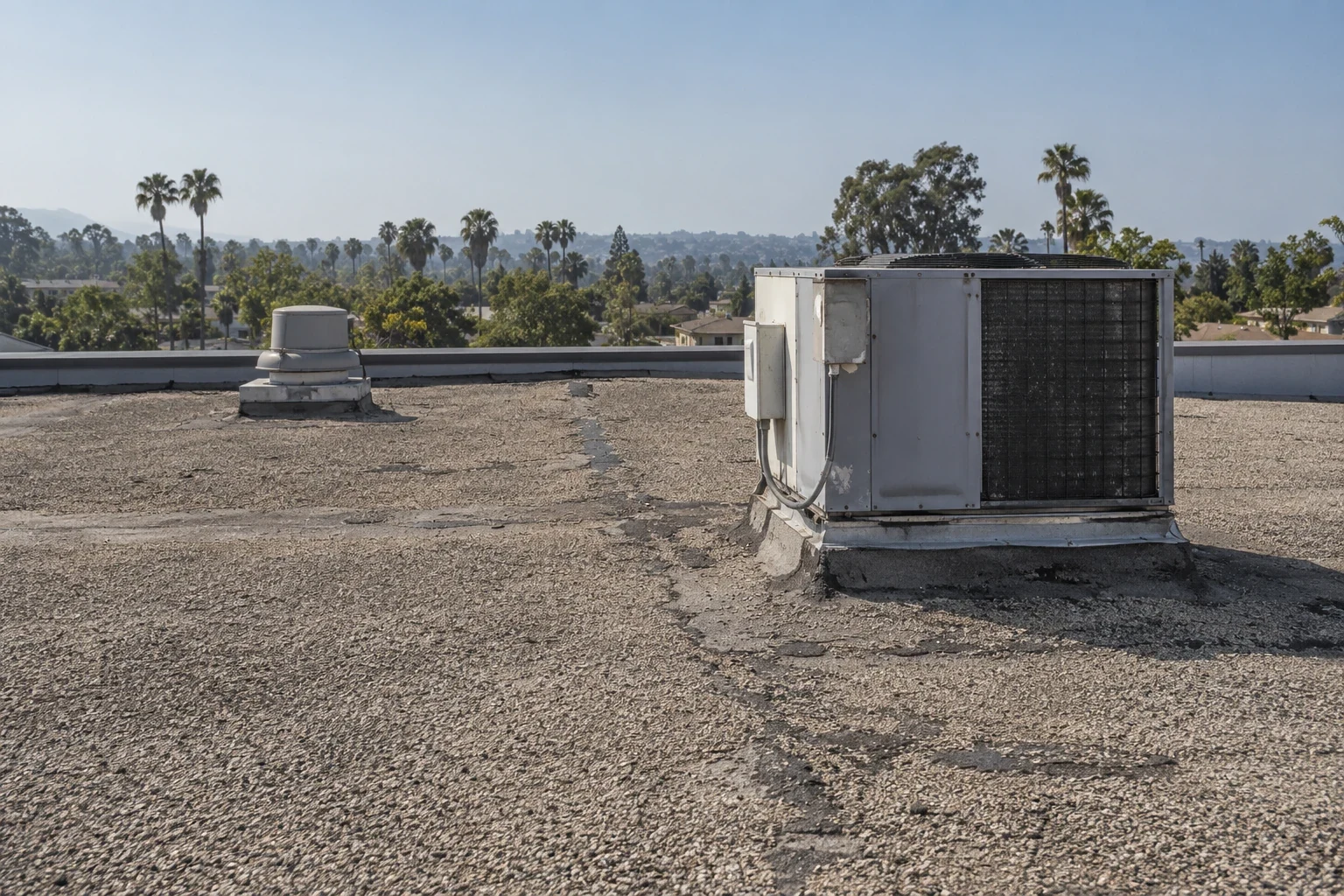
Wet or crushed material beneath the damaged flashing needs removal where it cannot support the rebuilt assembly. We identify a boundary that reaches suitable layers and gives the replacement room to connect to retained membrane. The opened deck requires assessment for any separate correction. Adding material above deteriorated support can alter elevations without restoring the construction that carries the new detail.
Where the new connection is higher than the previous one, we check its relationship to drainage and adjacent flashing. The repair should avoid trapping water at a support edge or reducing a useful transition dimension. The responsible design team resolves requirements that extend beyond the roofing detail. We show those interfaces in the scope so the contractor can arrange the needed correction before membrane installation fixes the finished geometry.
Access and temporary protection follow the removal, not merely the size of the replacement flashing. We coordinate the affected space below and establish a closure that can be completed within the work window. Materials for the new support and detail must be available together. Waiting for a missing component after opening the assembly can increase exposure and handling without changing the final repair's footprint.
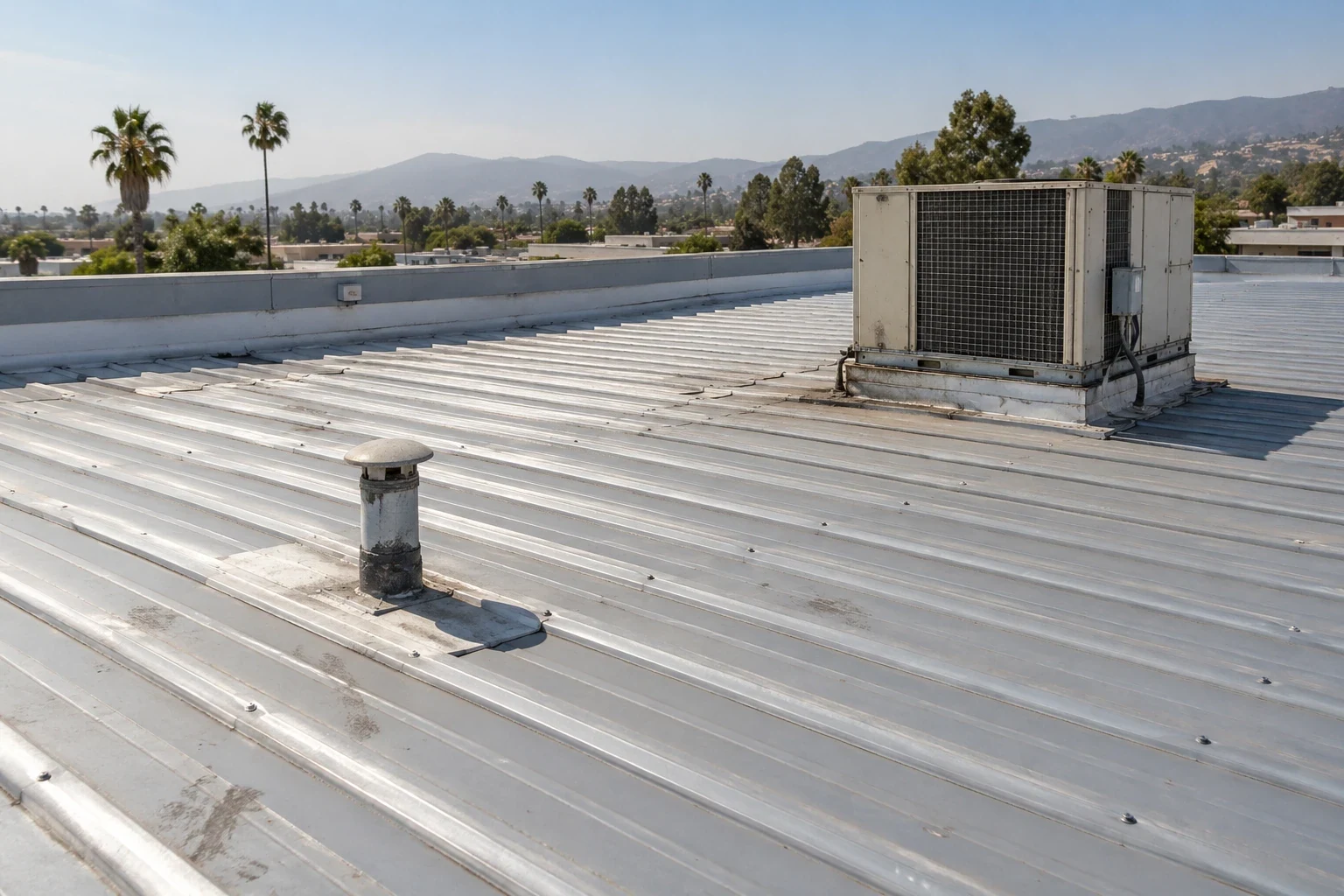
Maintenance paths and equipment contact should be addressed after the immediate repair. We identify compatible protection where service activity returns to the same area. The arrangement must keep drainage and important connections accessible. A protection pad that hides another failed detail is not a substitute for its repair. The retained field stays useful when traffic and contact are managed alongside the reconstructed penetration.
At a property in Corona, manufacturing operations may affect when rooftop equipment can be released for adjustment. We coordinate that actual constraint with subsequent roof checks. The operator can plan inspection of repaired welds, support contact and nearby outlets after servicing. Changes in those physical conditions guide the next repair decision without requiring the sound field to be replaced on a general schedule alone.
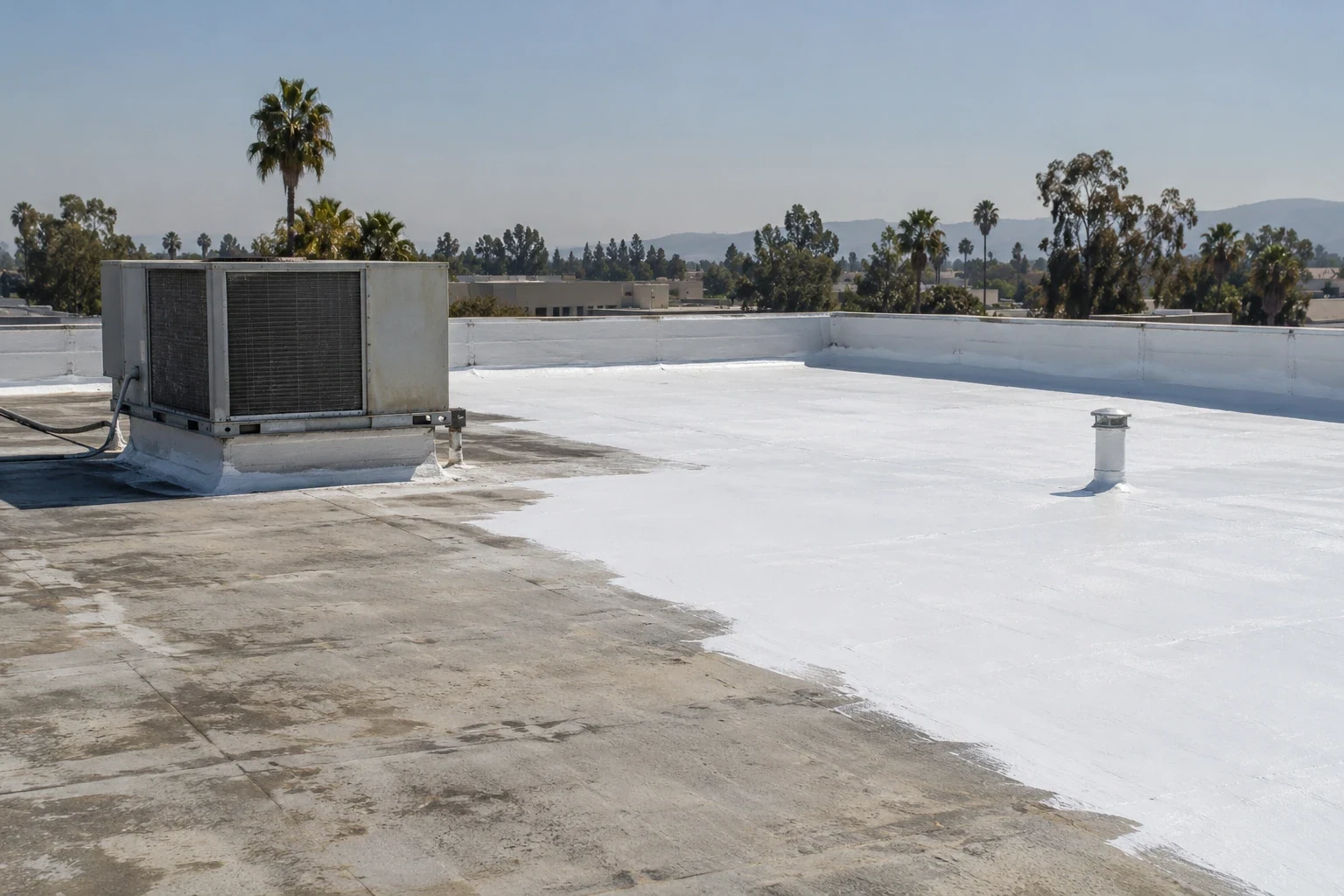
The proposal separates equipment-interface correction, damaged-layer removal and the welded KEE detail. It also identifies usable membrane that stays. Wider replacement becomes a distinct option where deterioration or incompatible previous work prevents a suitable connection in several locations. The contractor can assess those alternatives against actual quantities, preparation and operating interruptions, with the scope tied to construction that will receive the completed repair.
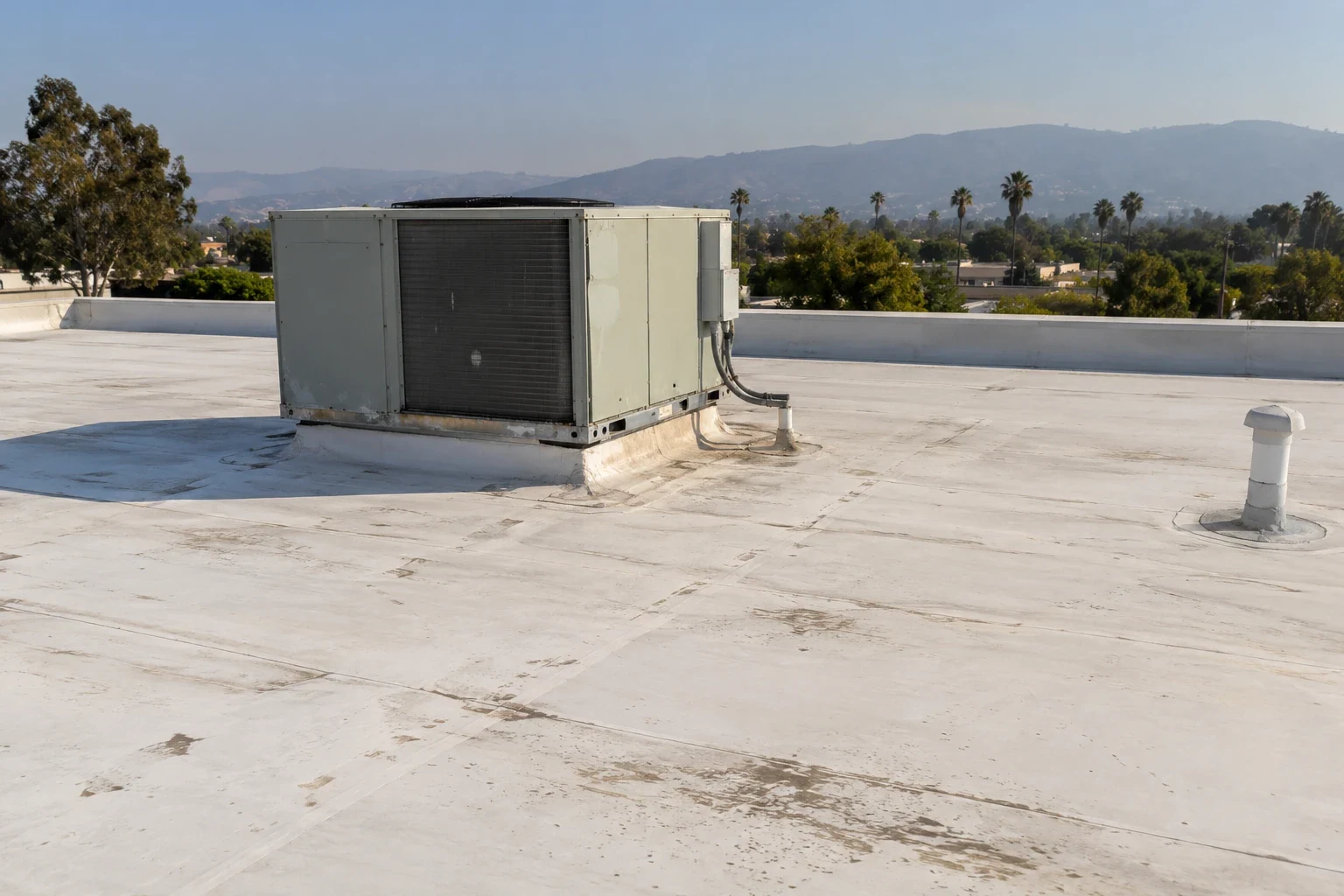
Sound membrane and supporting layers may remain outside the disturbed connection. We inspect the old opening, new support locations and receiving sheet before defining the repair. Damage beneath the surface or unsuitable welding material can enlarge the required replacement section.
Compatibility must be established for the installed membrane and proposed detail. We identify the system and follow its material and preparation requirements. Similar appearance does not settle which sheet or cleaning method can form the intended connection.
The opening requires suitable closure and support below a compatible weather detail. We identify the necessary roof-side reconstruction and coordinate any deck or equipment work with the responsible trade. Placing membrane over an unsupported opening leaves a separate assembly defect unresolved.
Crushed or wet board cannot be retained where it prevents the new detail from being properly supported. We establish the damaged-layer boundary and show it separately from the flashing sheet. That gives the contractor a complete construction allowance for the altered connection.