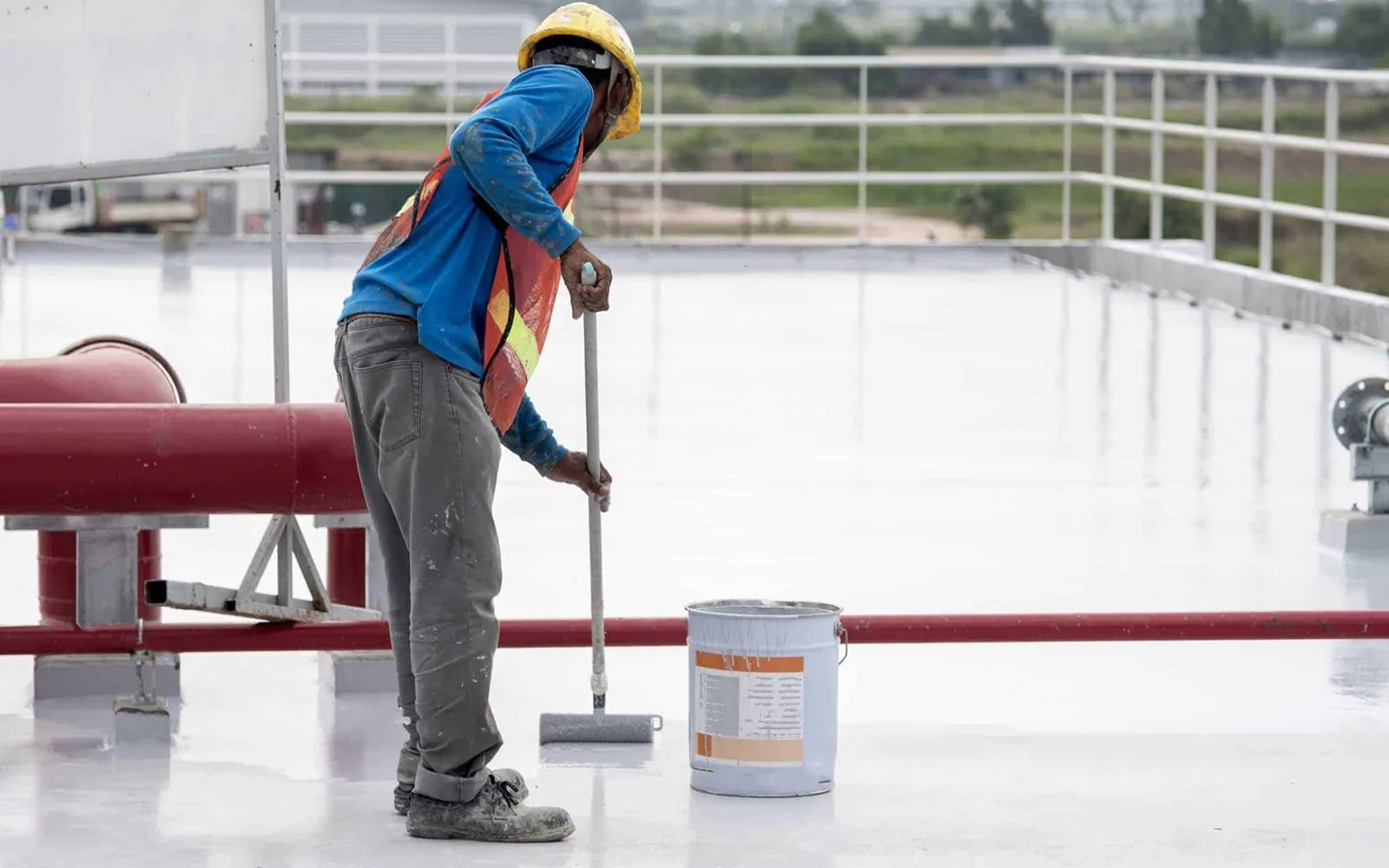
Assess PVC roof repairs in Jurupa Valley by separating damaged flashing from usable field membrane and selecting preparation for the retained construction.
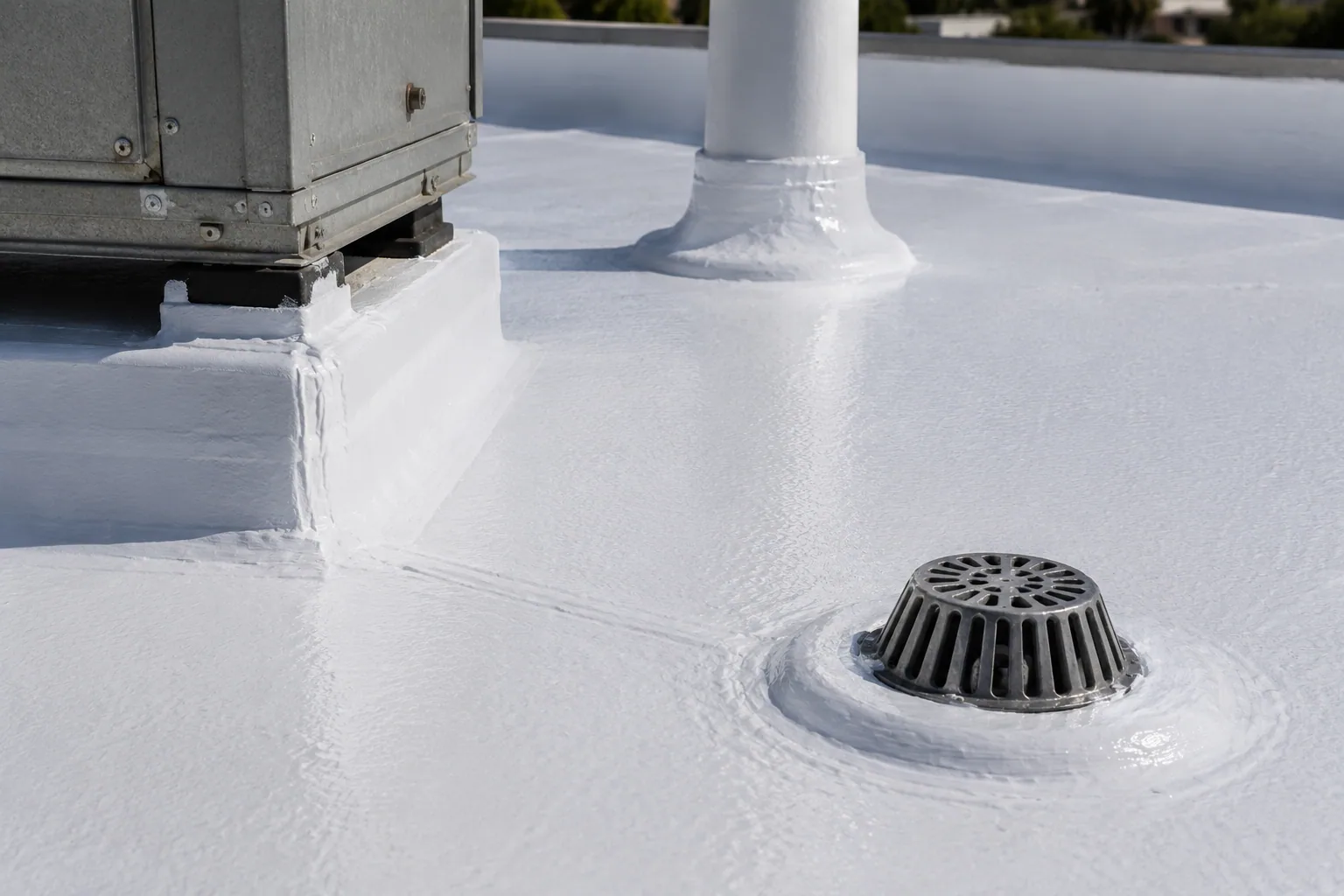
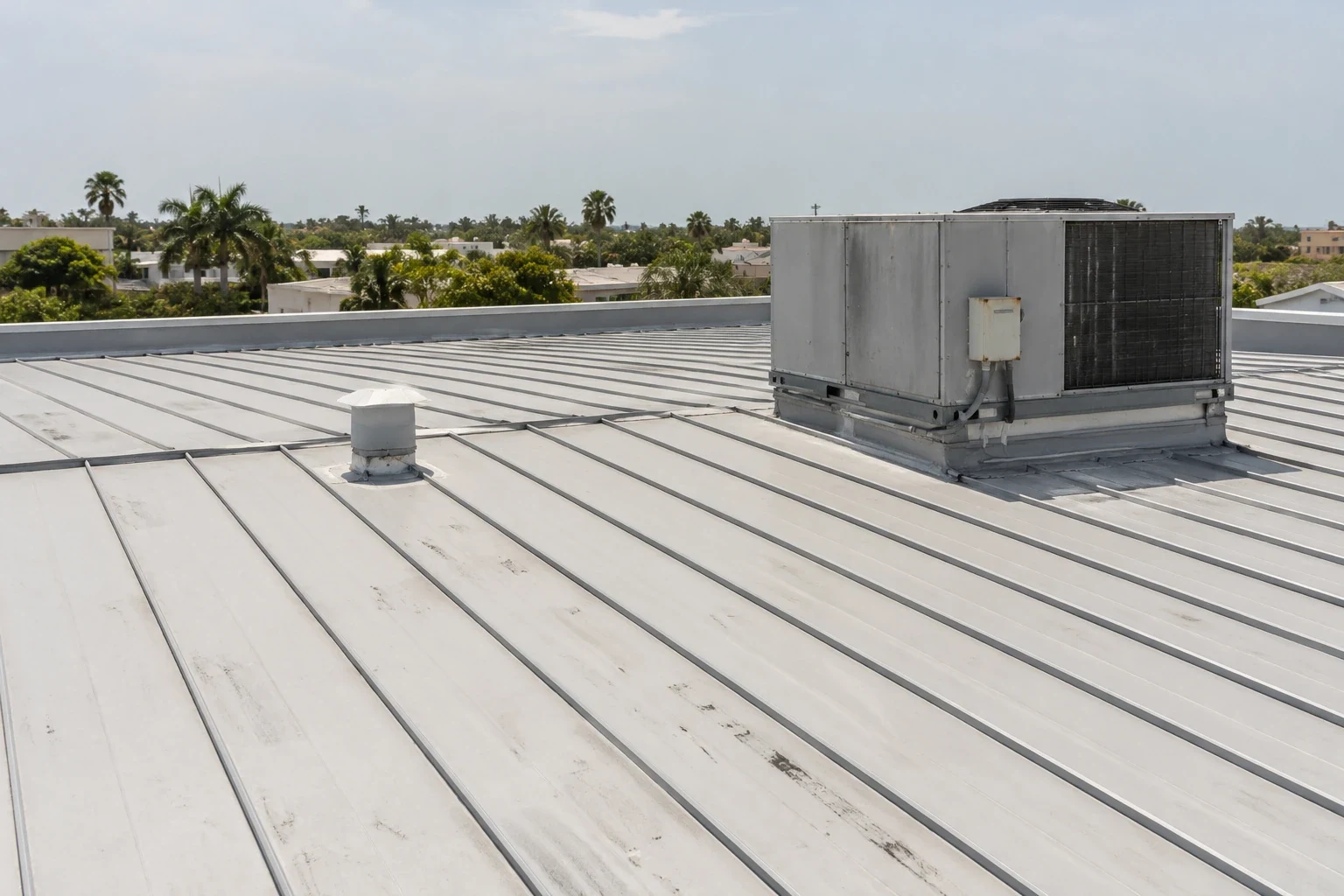
PVC flashing pulled tight across a wall-to-roof angle can split even where the adjacent field remains usable. Rebuilding that transition may preserve the larger assembly, provided the retained sheet can receive the new connection. We assess PVC roofing in Jurupa Valley, CA by examining that work boundary before recommending a broader removal. The owner gets a distinction between failed flashing, damaged support and serviceable membrane, with the preparation each retained portion needs.
Glen Avon's town-center businesses serve communities along Mission Boulevard, while Rancho Cucamonga includes commercial office parks particularly along Haven Avenue. Commercial roof projects in those settings can involve multiple walls, equipment curbs and occupied spaces beneath the connections. We examine the particular building's transitions and operating needs. PVC selection and repair should address the installed geometry and exposure, not stop at choosing a light-colored field sheet.
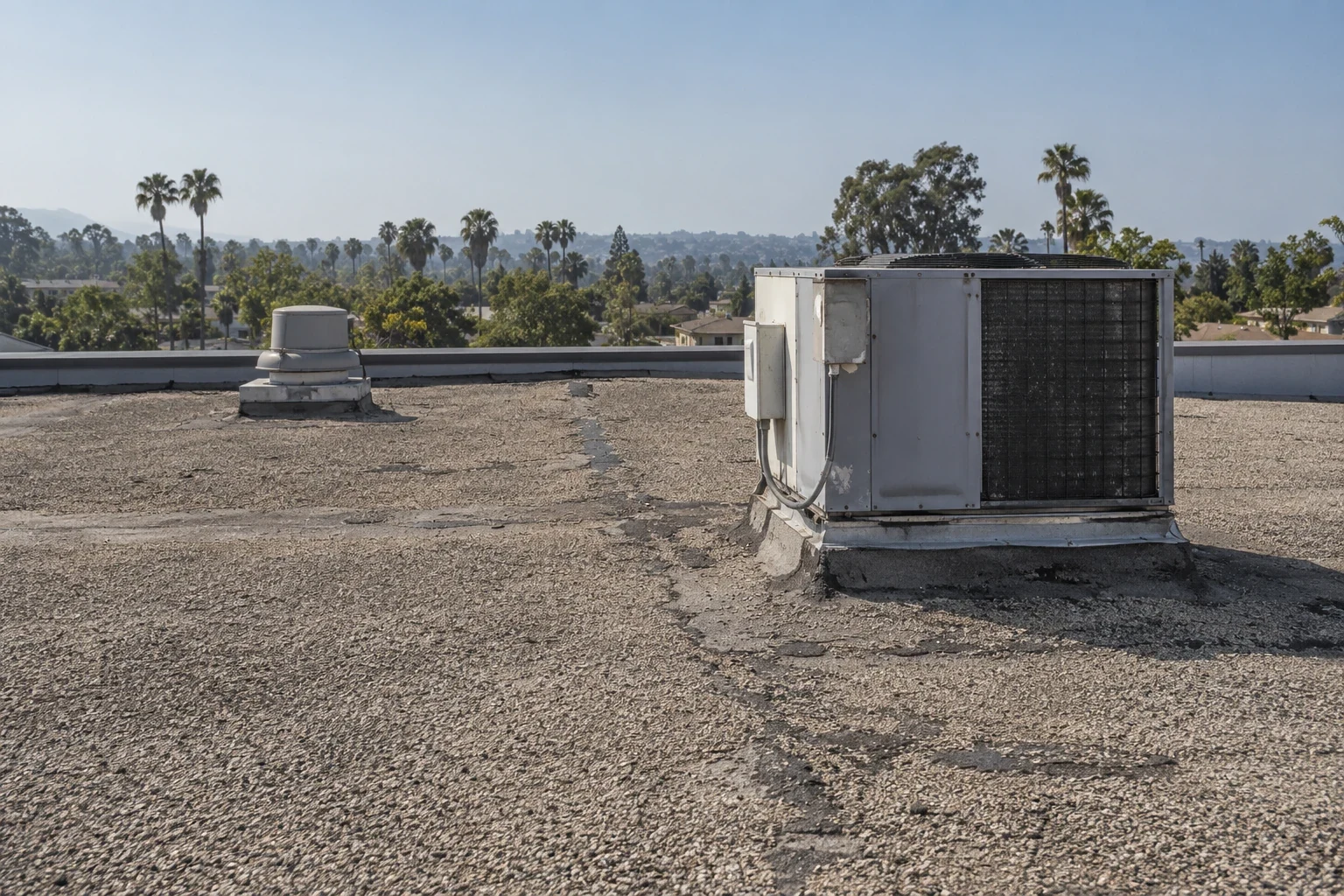
A split beside a wall can reflect more than surface wear. We examine how the flashing is attached, whether movement has pulled it away from its support and whether the lower connection has room for the intended detail. Old patches can obscure that geometry. The repair needs a suitable transition arrangement so the new sheet does not carry the same strain that opened the previous flashing.
Repairing the roof's flashing connections includes assessment of the receiving wall or curb. Deteriorated backing and loose termination components may require replacement before new membrane is attached. We distinguish that support work from the welded connection to the field. The contractor can see why a repair allowance changes when a failure reaches behind the visible flashing rather than remaining within its exposed sheet.
Water entering at the transition may wet insulation outside the visible split. We inspect the adjacent assembly and identify any testing needed to bound the removal. The usable field can remain when its condition and support are suitable for the new connection. If moisture or deterioration extends farther, the replacement limit follows those findings instead of the outline of the first visible crack.
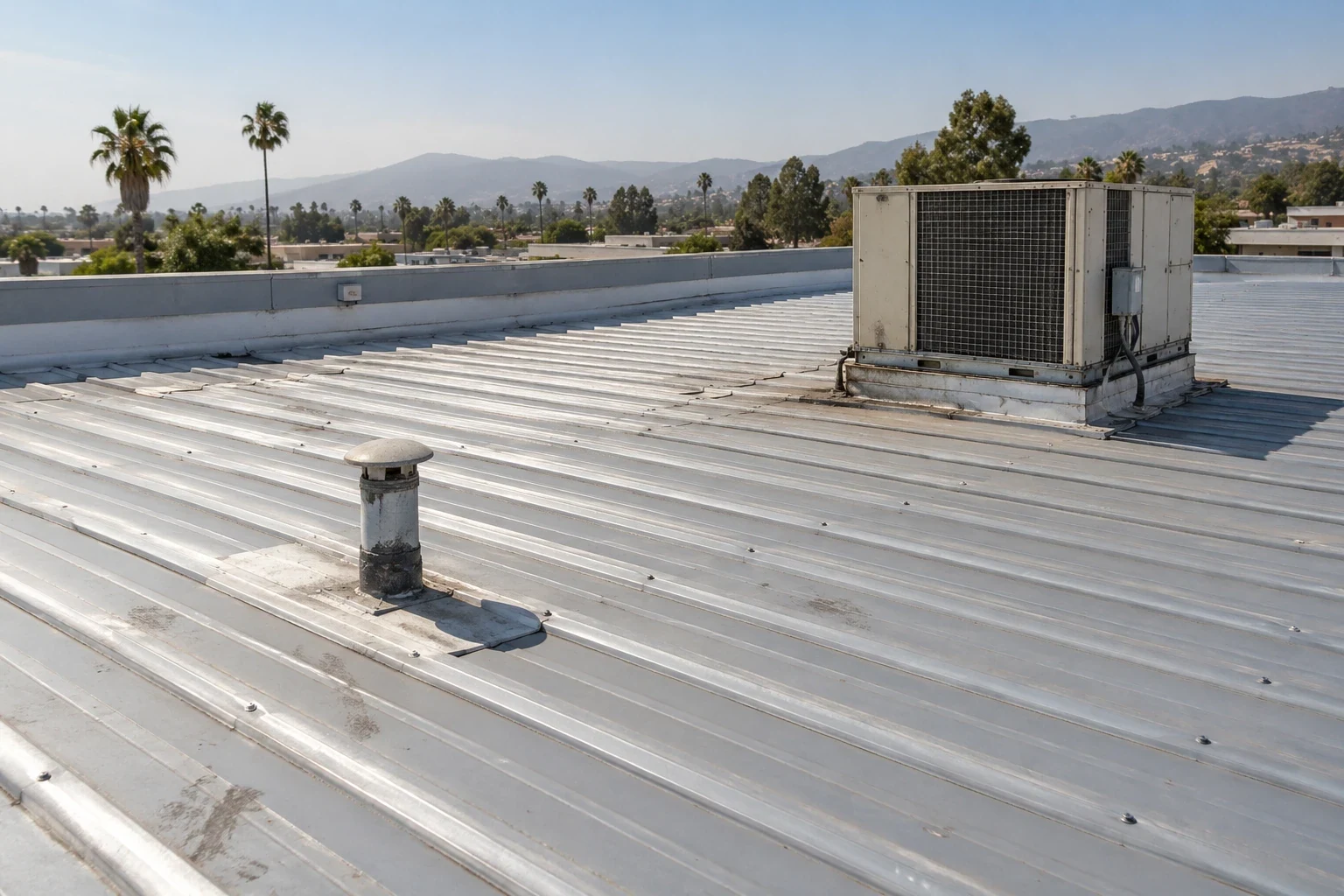
The retained membrane's condition affects welding preparation. Dirt, old coatings and field-applied compounds may need removal using procedures appropriate to the system. We assess the cleaned surface and trial connection before completing the repair. A patch cannot be considered solely by its coverage area; it needs an adequate perimeter of suitable membrane on which the new connection can be formed.
Reinforcement, thickness and product formulation can vary between installed sheets. We identify the assembly as far as practical through project information and physical assessment, then select compatible repair materials. A visually similar membrane may not be the correct connection material. Where the installed construction cannot be established or prepared sufficiently, a larger replacement detail may be needed to avoid relying on an unsuitable receiving surface.
Material contact also matters at supports and exposed equipment interfaces. We examine incompatible residues, abrasion and previous treatments where they affect the repair. Any exposure assessment should identify the actual substance and proposed membrane, rather than apply a general claim that PVC resists everything. The receiving surface and detail requirements determine whether the connection can be completed after cleaning or needs affected material removed.
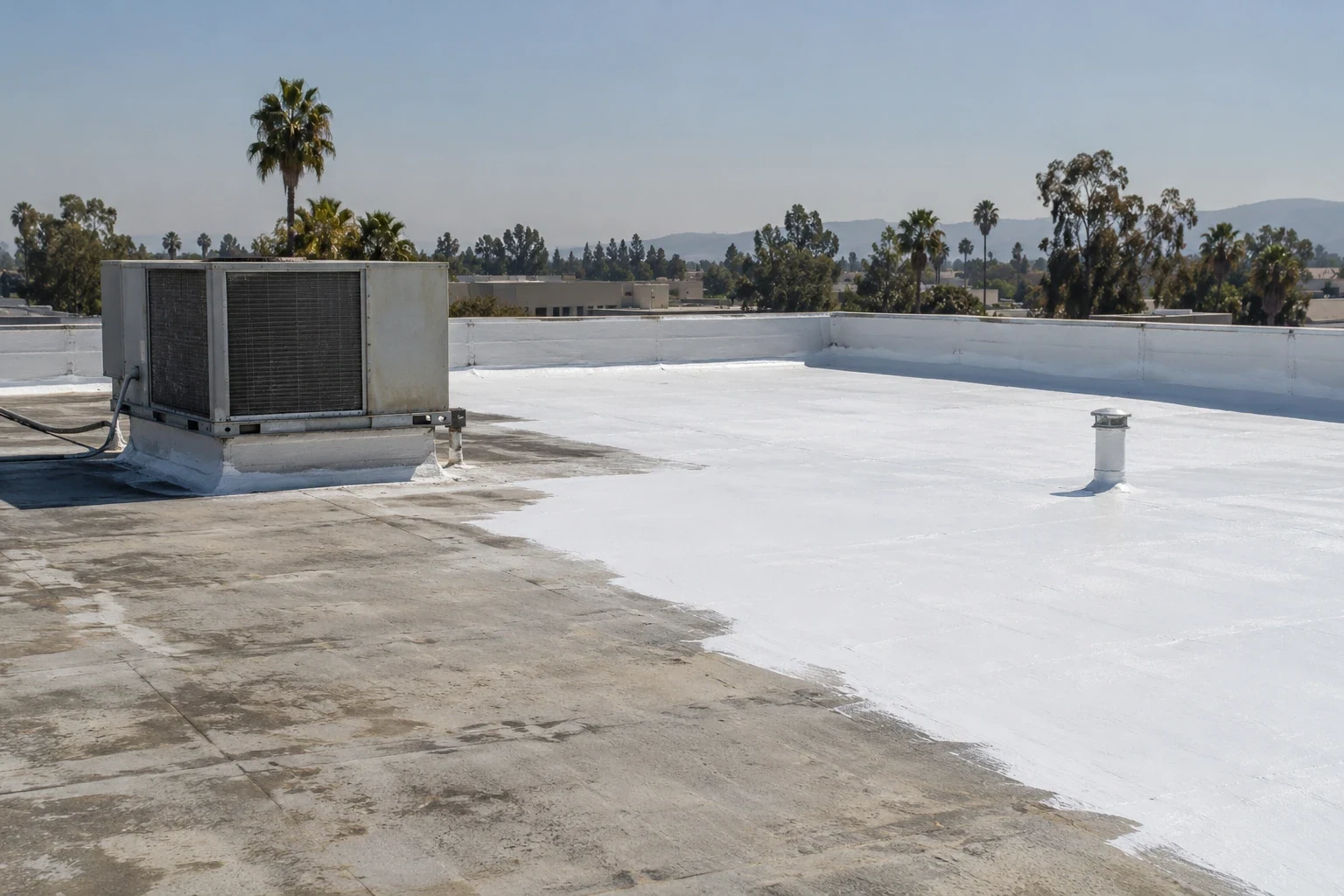
Restaurant equipment can expose nearby roof areas to deposits that need careful assessment during material selection and repair preparation. We inspect the actual contamination and the means of controlling it. The scope may include equipment-side correction by another trade as well as roofing reconstruction. Without controlling repeated discharge, a new compatible sheet can return to the same exposure that made the original repair surface difficult to use.
A restaurant roof replacement should therefore compare the complete detail, cleaning and ongoing equipment arrangement. The operator needs to know where access or servicing is required. We identify roof materials suitable for the specified exposure and follow the applicable product requirements. A favorable material characteristic does not eliminate the need to maintain outlets, equipment connections and the surrounding weather assembly.
A KEE membrane system may be another option where its properties and specified assembly suit the project. We compare installation requirements against the receiving roof rather than substitute one alloy label for another. With TPO construction, preparation and material compatibility also need their own assessment. The contractor should see how each proposed system meets the building's actual exposure and detail requirements.
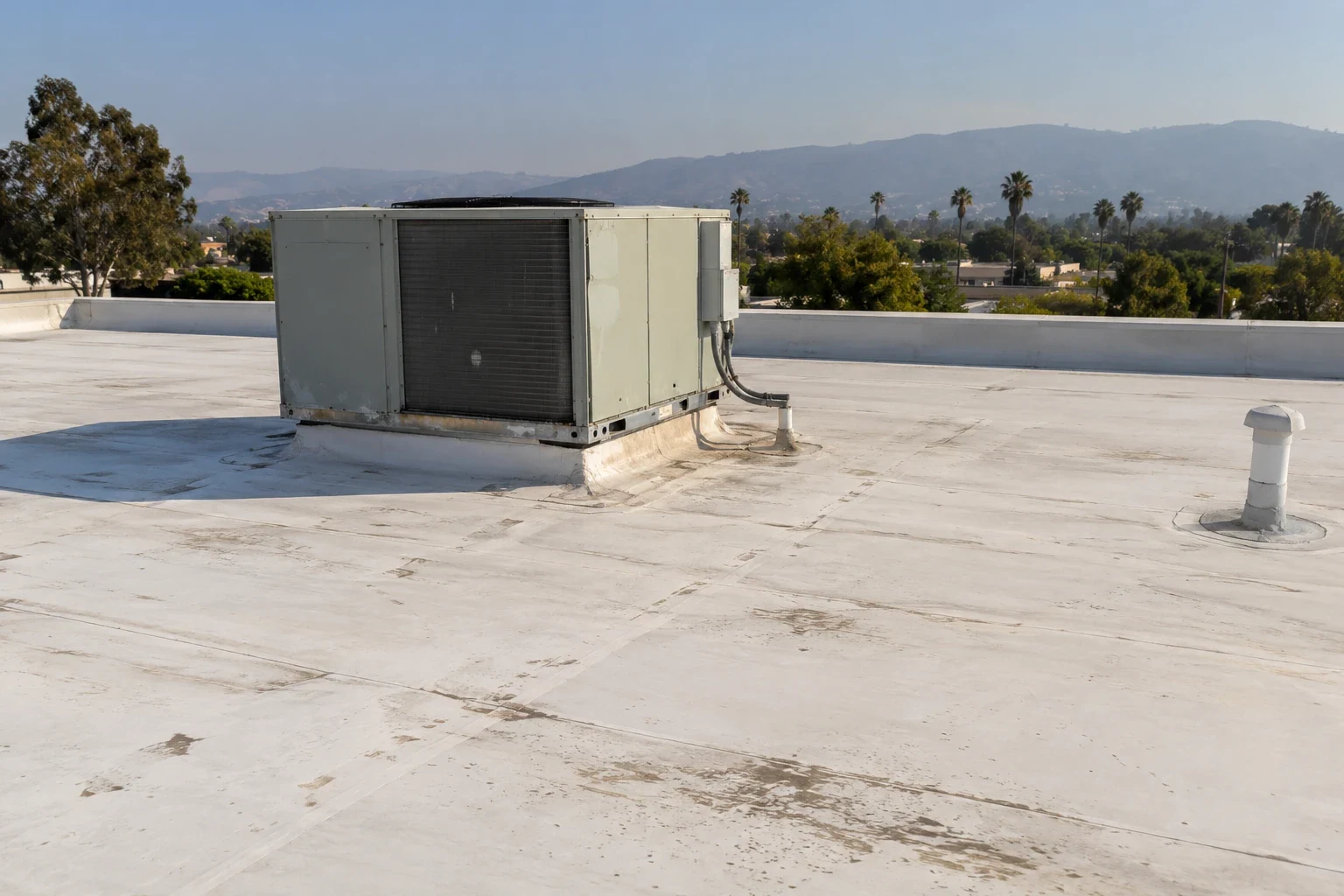
A congested corner can leave too little space for proper cleaning and welding. We establish the repair geometry before cutting new material. Sheet intersections, supports and small penetrations may require separate detail components so the connection can be formed against stable construction. The narrowest patch is not the smallest complete repair when its perimeter passes through compromised sheet or an inaccessible change in level.
Drain outlets need a receiving detail that remains workable at the finished roof elevation. We examine the connection and nearby slope before adding replacement layers. A height change can reduce the useful flashing dimension or create a low area outside the outlet. The proposal identifies the reconstruction needed to keep those transitions suitable, including any adjustment that needs plumbing or design coordination.
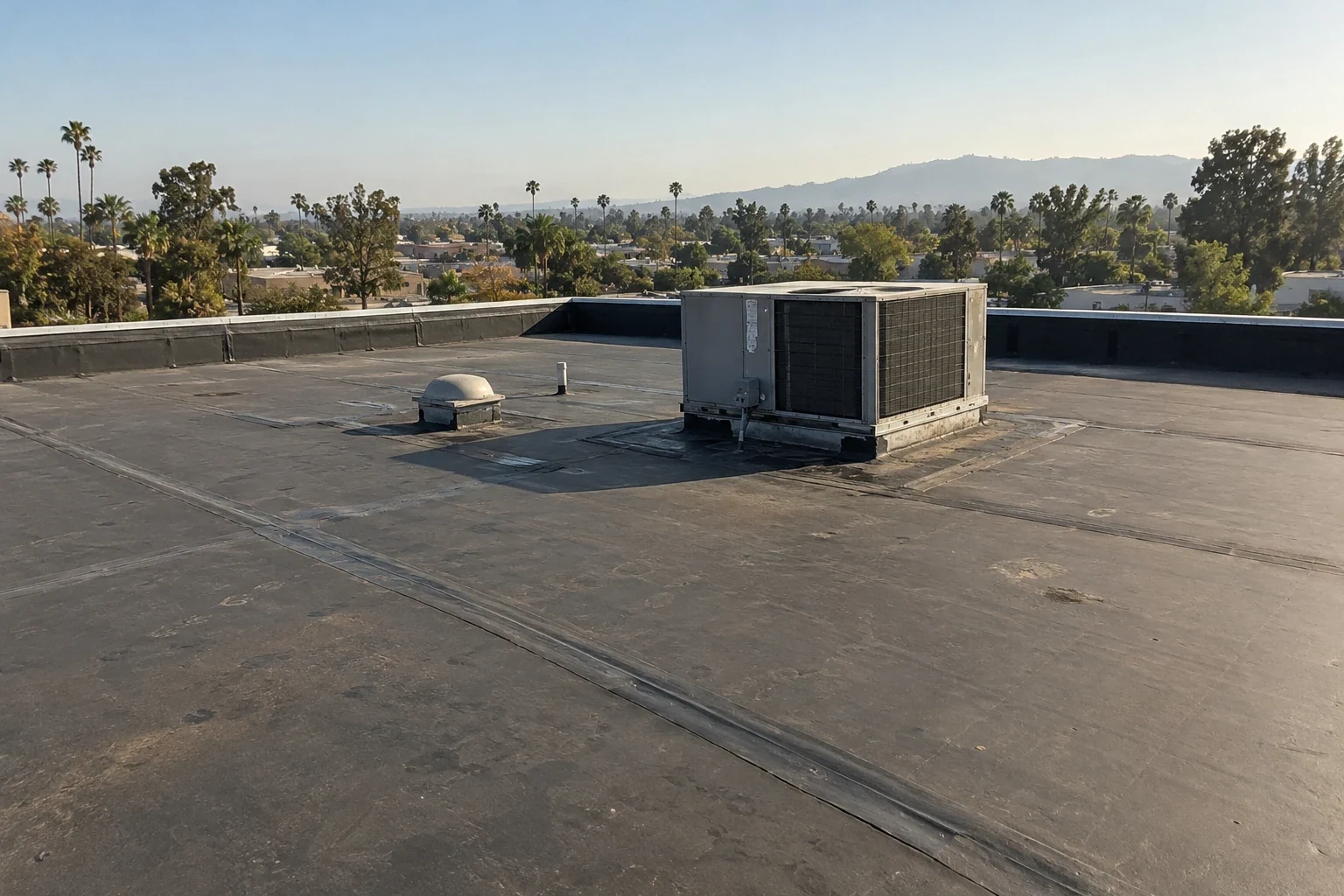
Localized PVC replacement starts with a boundary that reaches suitable support and membrane. We remove affected insulation or cover board where it cannot be retained and assess exposed deck condition. The new section is rebuilt to meet the adjacent assembly and its drainage. Wider deterioration may require a different replacement scope, but a failed wall flashing alone should not become an unexplained allowance for removing the entire field.
At a property in Glen Avon, business access may affect when the transition above an entrance or work area can be opened. We discuss that actual use with the operator and coordinate protected replacement stages. The allowance includes the opening protection and detail work needed to finish the connection within the available period, not simply the area of new PVC being placed.
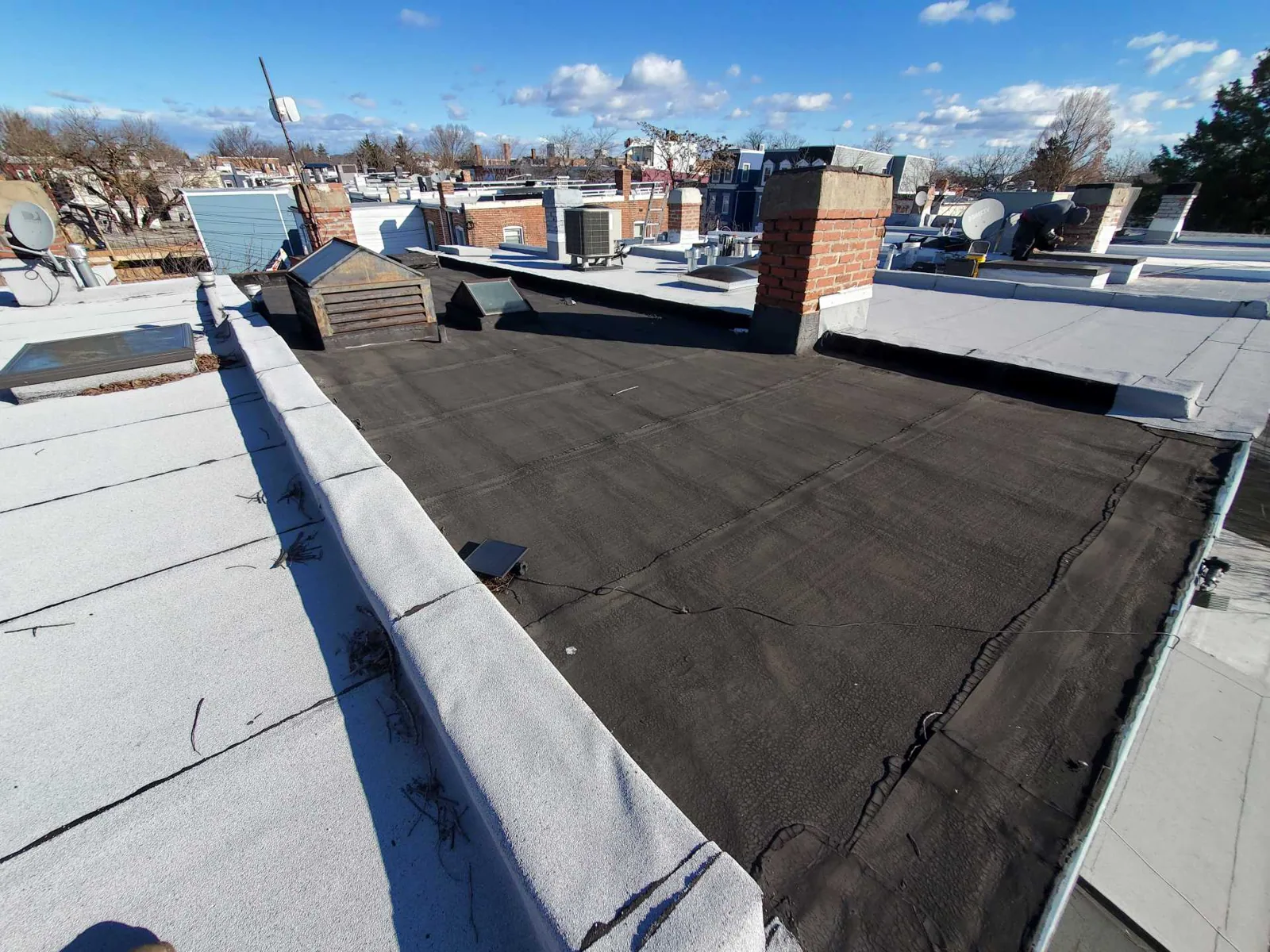
Preparation labor, support replacement and difficult corner work can explain more of the repair cost than the field material alone. We show where those requirements occur and which usable layers stay. The owner can compare a localized transition rebuild with broader membrane renewal on the same basis. After completion, the repaired joints and adjacent equipment exposure need continued inspection so a change in the retained construction can be addressed before it expands the next removal.
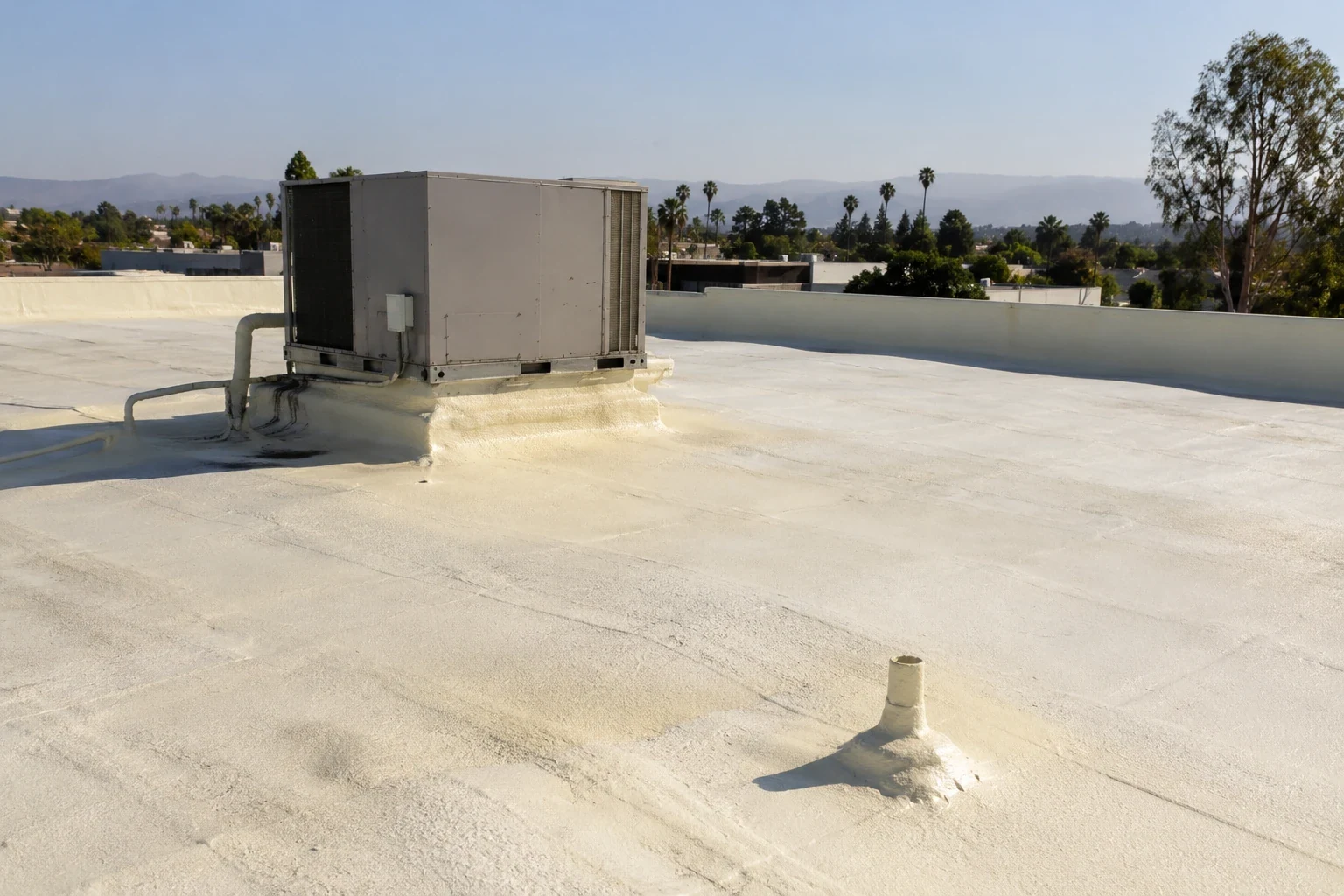
Sound field membrane may remain if its support and receiving surface can accommodate the repair. We inspect the transition and adjacent moisture before setting the limit. Failed backing or unsuitable sheet can enlarge the replacement section beyond the visible flashing split.
The compound needs assessment for removal and compatibility with the proposed connection. We prepare a suitable receiving surface before welding. If the treatment has damaged the sheet or cannot be removed appropriately, the repair boundary must reach usable membrane elsewhere.
The actual deposit and selected product require a compatibility assessment. We also identify how the equipment exposure will be controlled. Roofing selection alone does not replace cleaning, servicing and correction of repeated discharge onto the weather assembly.
Loose or deteriorated support can prevent the new flashing from being attached and formed properly. We identify that correction separately from the exposed sheet. Rebuilding the backing gives the replacement connection suitable construction instead of leaving it subject to the previous movement.