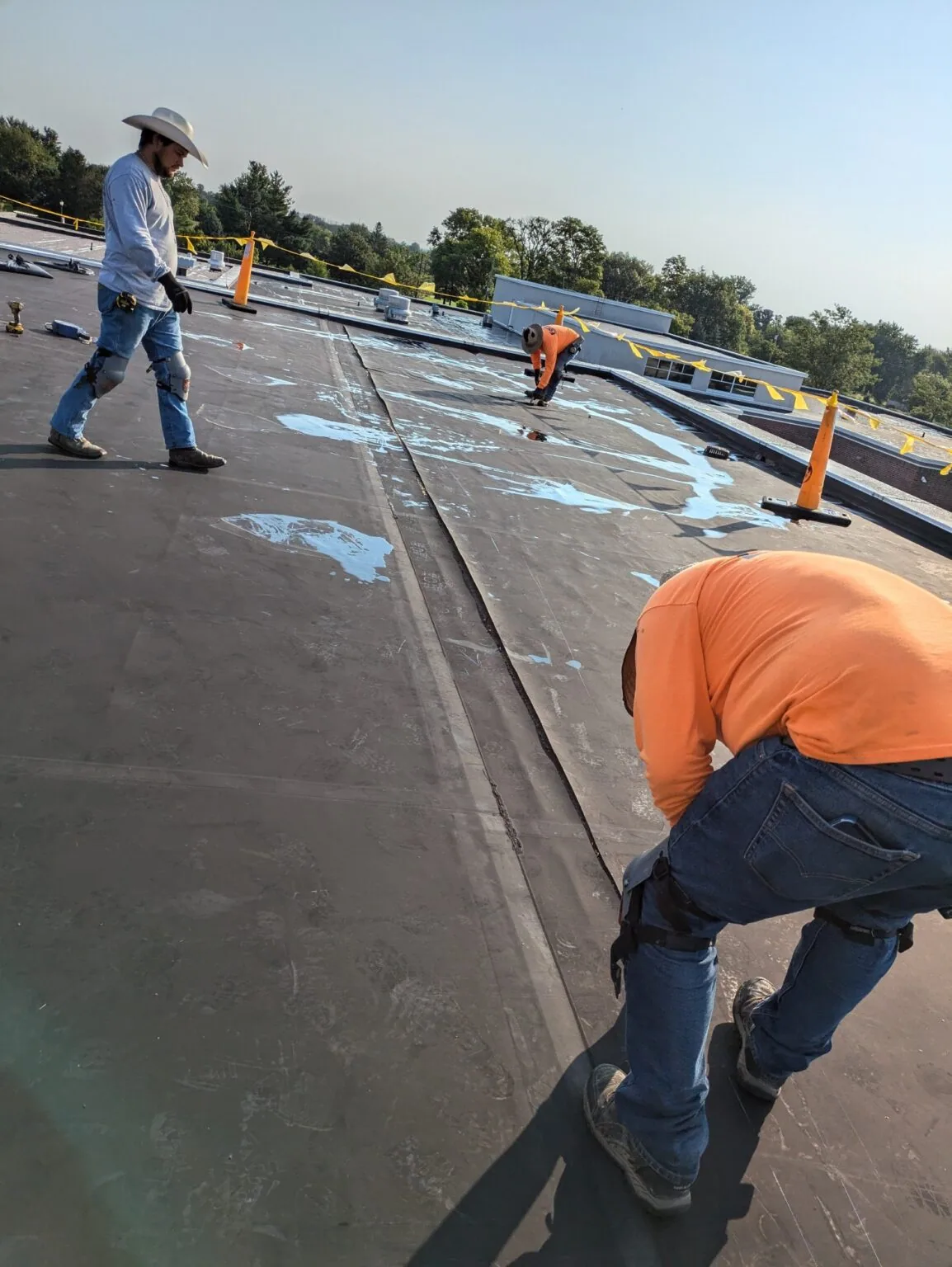
Locate and repair commercial roof leaks in Jurupa Valley by checking suspect details, tracing moisture and defining the damaged layers that need removal.
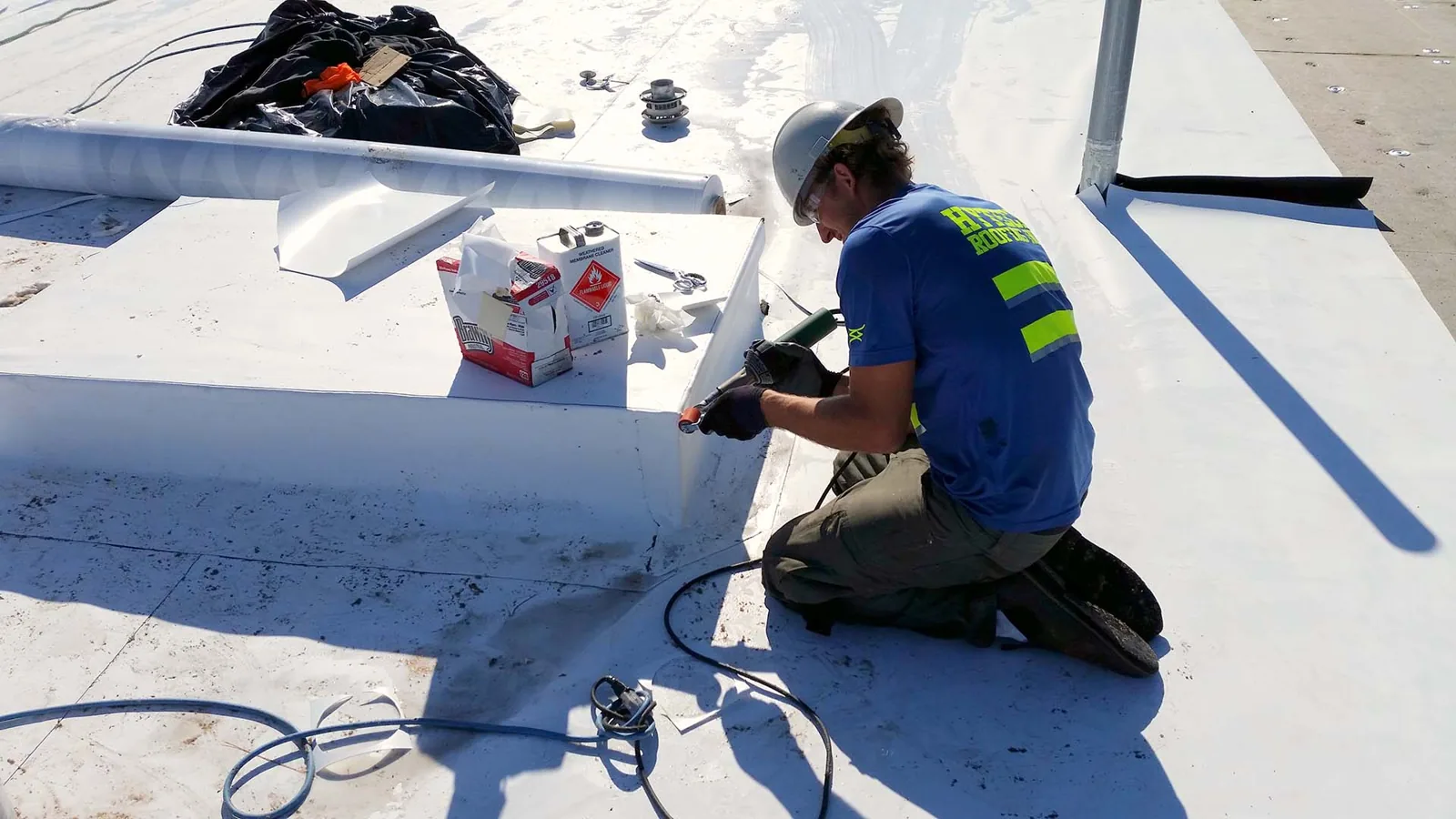
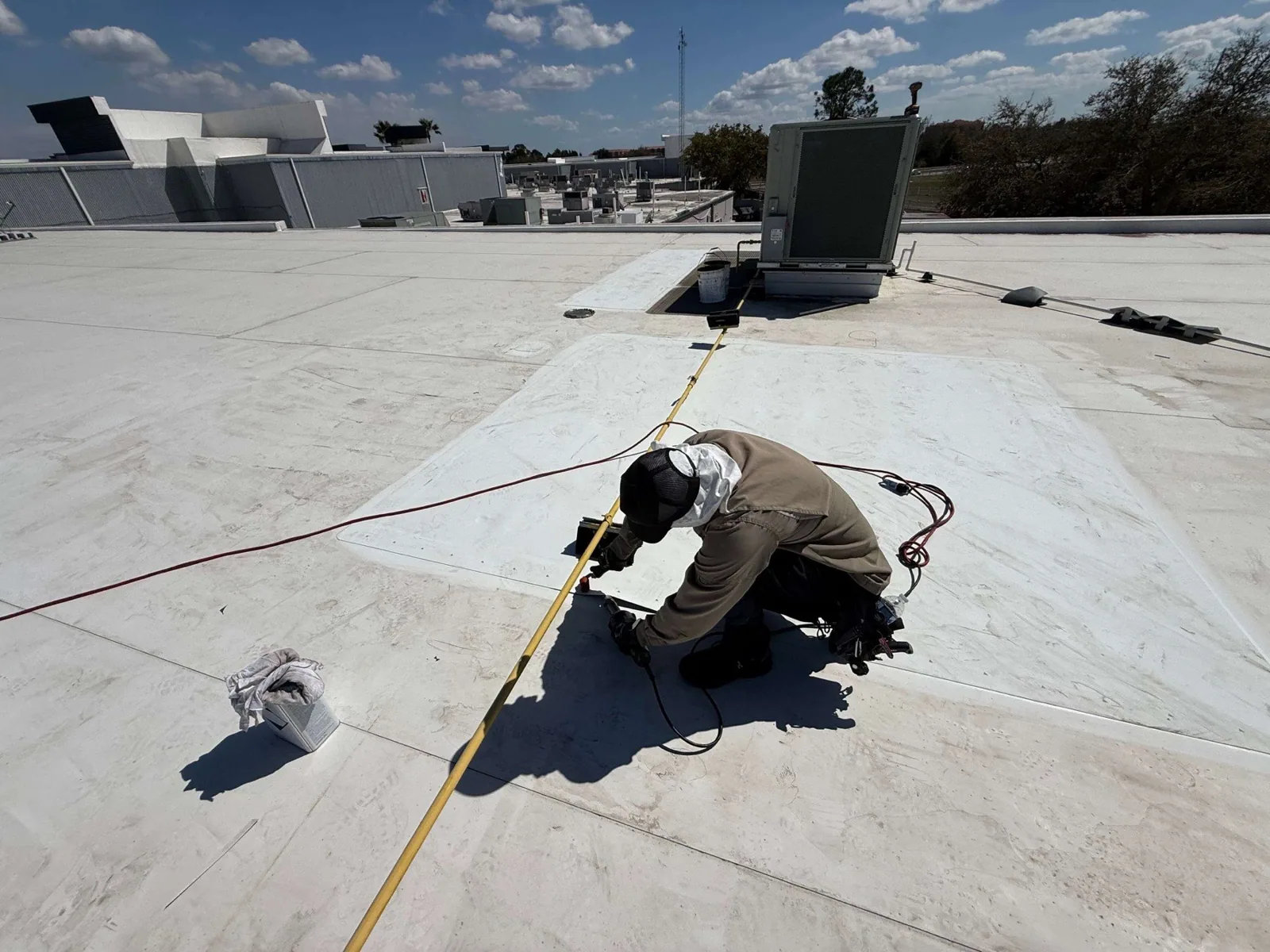
A dripping duct collar above an occupied room creates two jobs: protect the area now and establish whether the roof connection is admitting water. Condensation, equipment discharge and a failed penetration detail can produce similar interior symptoms. We separate those possibilities before assigning the repair scope at a Jurupa Valley, CA building. The permanent work follows the entry point and damaged construction. Treating the nearest visible joint without that assessment can leave the owner paying for a repair while the same drip continues.
Glen Avon has commercial activity along Mission Boulevard, while Mira Loma includes industrial distribution operations. A leak above a retail counter requires different interior protection from one above stocked shelving. We assess the affected use, check the roof and document the findings. Where the building needs immediate stabilization, emergency roof protection can precede the diagnostic work. Temporary water control and the completed repair remain separate, clearly identified decisions.
Water near electrical equipment, ceiling panels or stored material changes the response sequence. The operator should restrict the affected area and involve the appropriate building or electrical personnel where a hazard is present. We locate the roof area above the symptom, identify safe access and determine whether exterior stabilization is workable. Wet roof surfaces, loose components and poor visibility can limit safe work. We establish those limits before choosing a temporary closure.
Interior photographs, the time leakage began and the weather conditions help us narrow the investigation. We ask whether the drip appears during rain, after a delay or while equipment is operating. Those observations can distinguish water stored in the roof from a continuing entry point or mechanical issue. A general contractor can also identify recent roof penetrations or equipment changes. We use that information to focus the inspection, without letting it replace examination of the actual detail.
Containment should avoid creating a second problem. A bucket can catch a localized drip, but saturated overhead material may still need qualified attention. Temporary coverings on the roof must shed water beyond the damaged area and stay secured under the expected conditions. We inspect the connection to the retained roof and avoid directing runoff into an adjoining opening. The immediate objective is to reduce exposure while keeping the next diagnostic step accessible.
We examine seams, curb corners, drains and wall terminations in the likely entry area. Water can travel along the underside of a sheet, the deck or a pipe before becoming visible indoors. We relate the interior symptom to roof elevations and construction changes, then test the plausible connections. A roof diagram with marked observations helps keep separate defects from being combined into one assumed cause. That is useful when several trades have touched the same equipment opening.
Selected testing may include controlled water application, seam probing or moisture checks, depending on the assembly and interior risk. We limit test areas so the result identifies a particular connection. Broadly flooding a suspect bay can obscure which detail admitted water and add exposure below. Where water testing would threaten sensitive contents, we choose a different investigation sequence. Physical roof inspection remains important even where an interior symptom has a strong apparent cause.
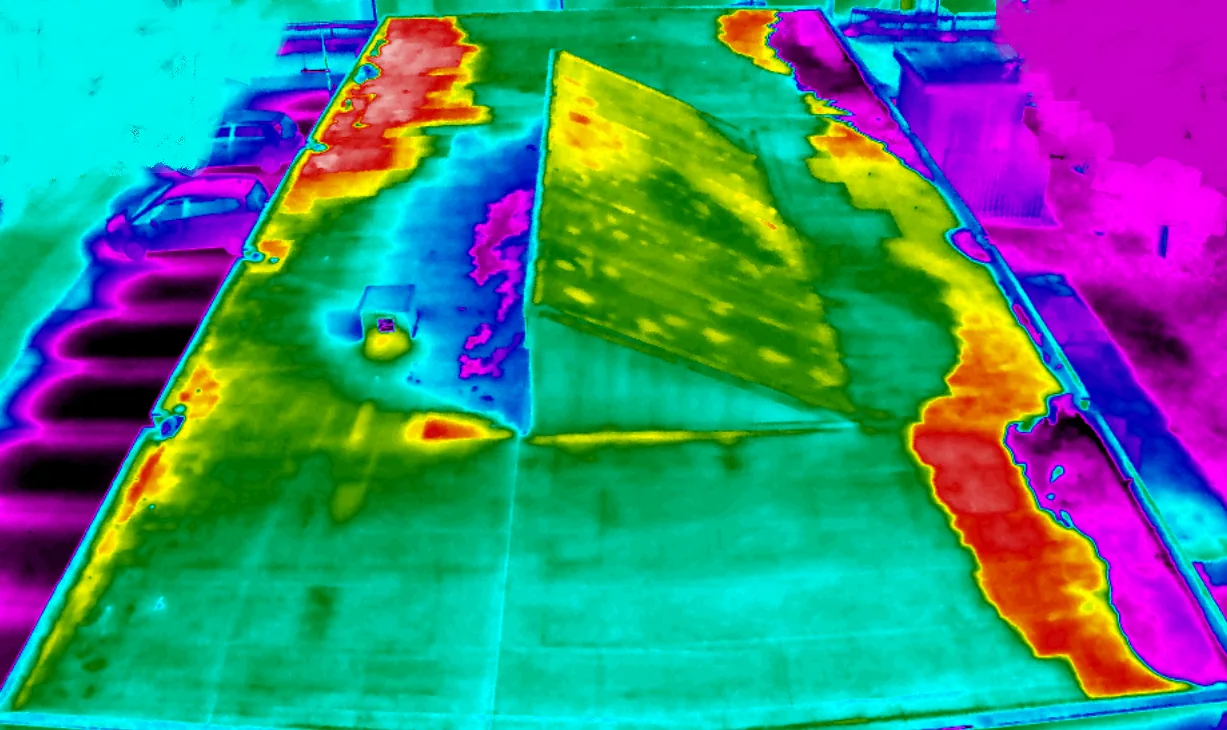
An infrared moisture investigation may help locate retained moisture beyond the obvious defect. Suspected wet areas need confirmation and a physical damage limit before removal. We distinguish the point where water entered from the material it affected. A repair at the entry can stop further leakage, while saturated insulation may still need replacement to restore the supporting assembly and avoid leaving damaged material underneath the new patch.
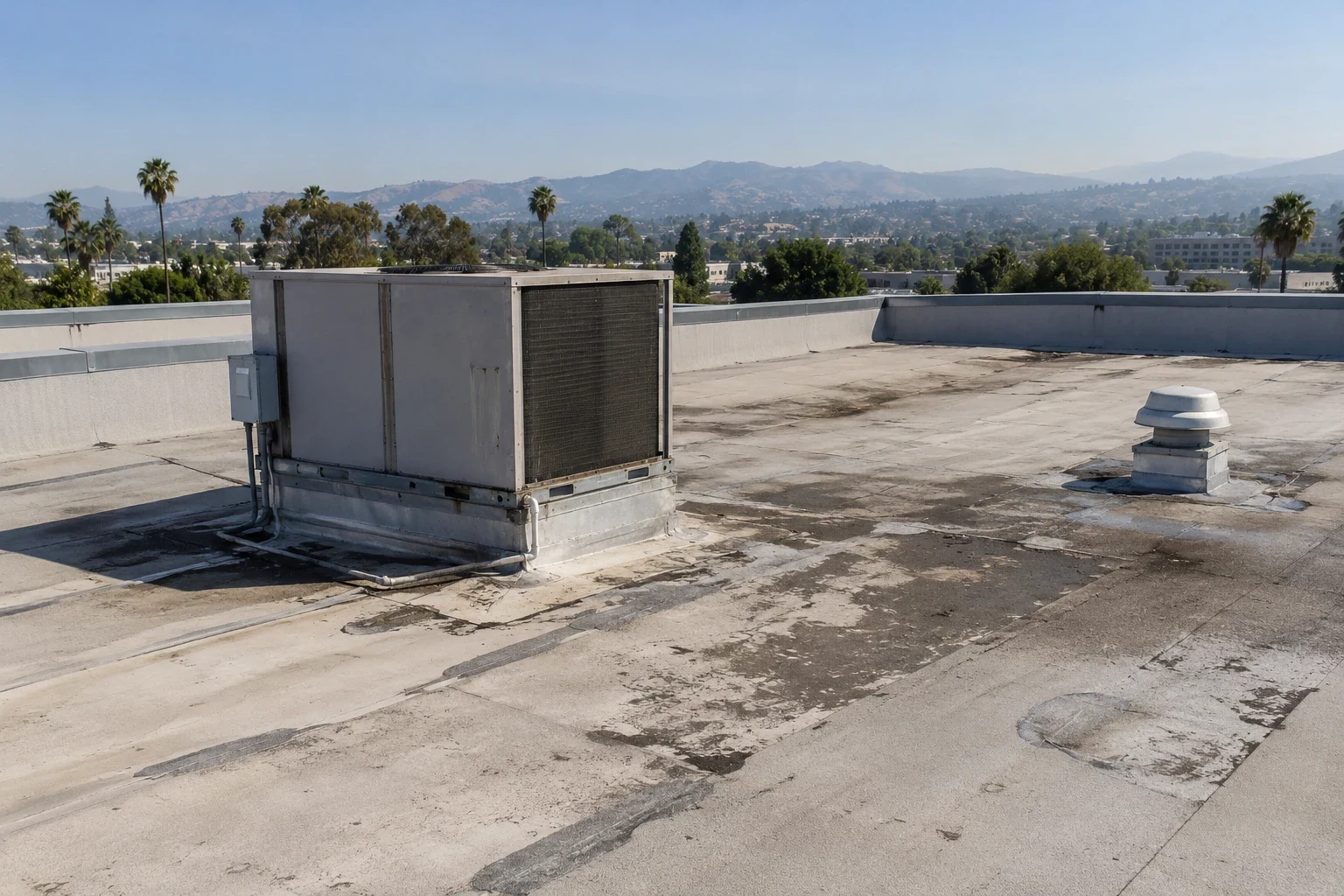
A failed penetration can require replacement flashing, corner reinforcement and a new upper termination. We inspect the receiving surface and strip away unstable repair materials as needed. The new detail has to connect to sound membrane and a secure curb or pipe support. For flashing failures, the work boundary may be larger than the visible split because the surrounding material must provide room for a complete, compatible connection.
Leak repair on modified-bitumen roofing differs from repair on a heat-welded single-ply sheet. We identify the installed system and select materials and application methods suitable for it. Heat exposure, contamination and old compounds can change preparation needs. A shiny surface patch is not sufficient evidence of a dependable bond. We check the completed connection using methods appropriate to the repair and record the finished work location.
Drains need attention to the bowl, clamping assembly and membrane transition. Leakage may occur at the roof connection or at plumbing beneath it. We inspect the accessible roof-side components and identify when plumbing work is required. Replacing a membrane ring will not correct a separated pipe below the deck. The scope divides the roofing repair from the connected trade work while defining the sequence needed to return the outlet to service.
One failed detail with dry adjoining insulation may support a localized repair. Multiple entry points or wet material extending across a roof bay can require broader removal. We show the evidence behind that difference and identify which components remain usable. The owner can compare a permanent localized repair with a larger replacement section based on the actual damage. The number of indoor drips alone does not establish the size of the roof work.
Santa Ana winds caused damage and injuries in Mira Loma during December 25 and 26, 2000. Wind exposure makes loose perimeter components and disturbed flashing worth checking during an assessment in Mira Loma. We inspect today's attachment and joint condition, including components adjacent to the reported leak. A loose edge may require mechanical correction along with the weather seal, especially where a surface treatment would leave movement at the same connection.
We identify the diagnosed defect, the work completed and any remaining condition requiring attention. Photographs should distinguish the original opening from the finished connection. Where weather or access prevents final testing, the outstanding check remains identified rather than folded into a completion statement. A repair record also needs to say when temporary materials were removed and whether connected plumbing or equipment work was completed by the responsible trade.
Cost follows the amount of diagnostic access, preparation, wet-material removal and reconstruction. A leak at a crowded curb can take more labor than a larger puncture in an open field. We explain those differences and identify any conditions that may expand the repair once opened. That makes the allowance useful to a contractor coordinating several trades, and gives the owner a clear next decision if leakage involves more than one building system.
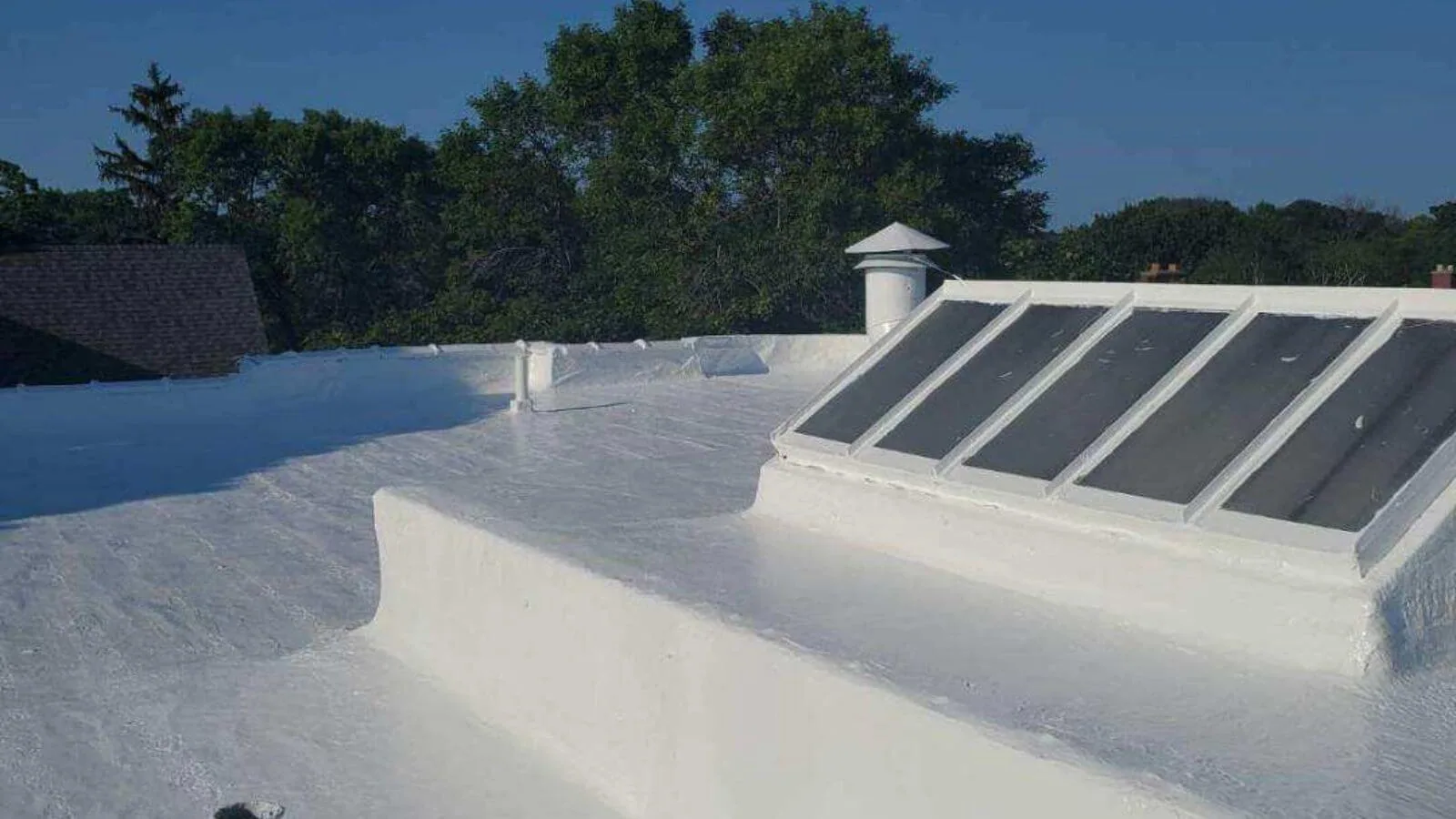
Stored moisture can remain after the surface stops leaking. We check the affected assembly to determine whether insulation or cover board needs removal. Stopping the entry and restoring damaged layers are related parts of the repair, but they can have different work boundaries.
Equipment discharge, condensation and plumbing defects can produce roof-level water problems. We examine the roof connection and identify symptoms needing the mechanical or plumbing trade. The roofing scope should address the failed weather detail without assigning unrelated equipment repairs to a membrane patch.
We assess the interior risk before choosing test methods or opening locations. Sensitive operations may require staged access, limited testing or a shutdown window for invasive work. The investigation sequence should protect the occupied area while still establishing a usable damage limit.
Movement, incompatible material or an unstable receiving surface can break the connection. We inspect those conditions and remove failed compounds where necessary. A replacement flashing detail may be the complete repair if the original joint cannot be restored by another surface application.