Assess manufacturing plant roof repairs in Jurupa Valley with failed exhaust transitions, suitable support and replacement work coordinated around production.
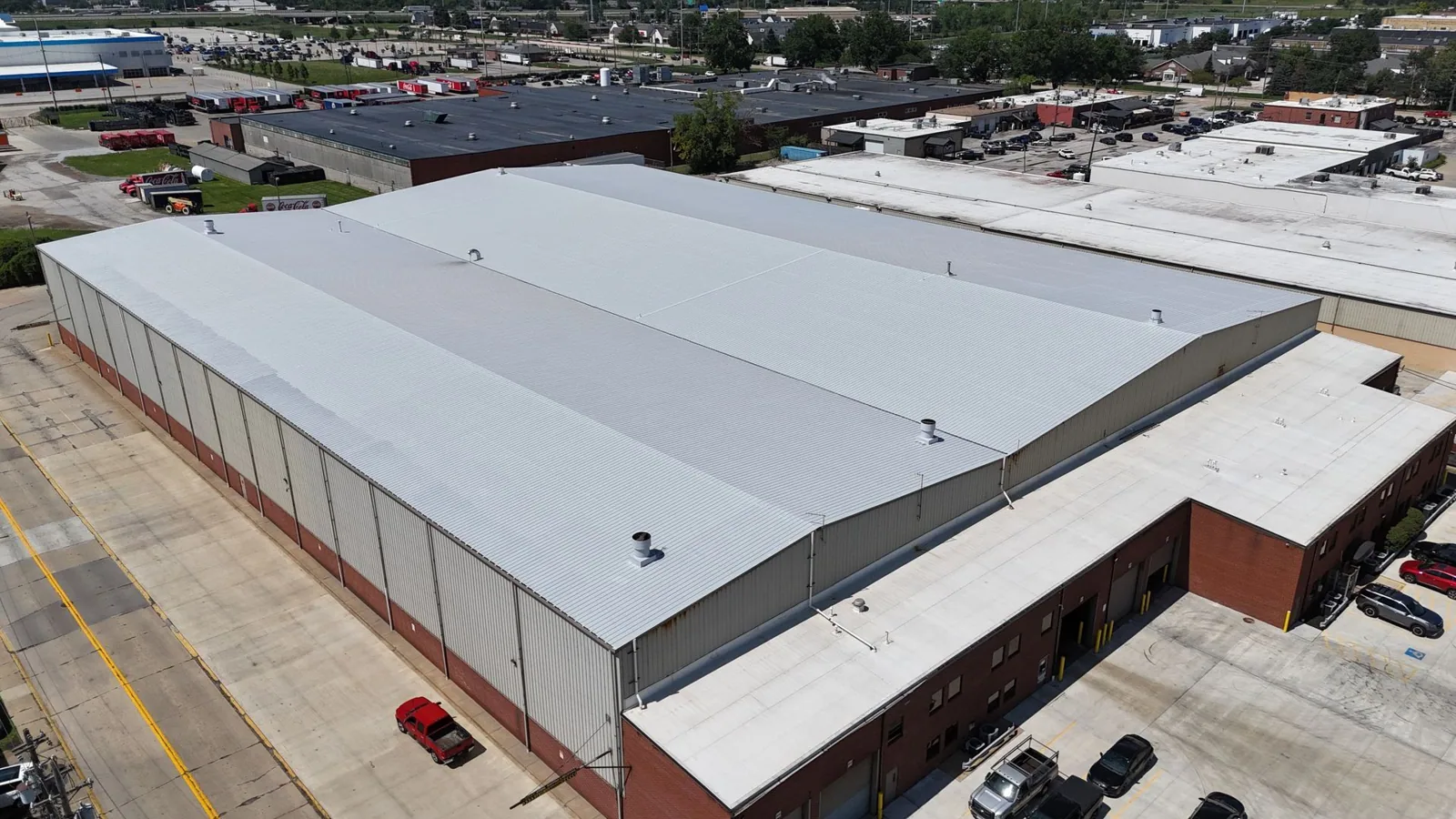
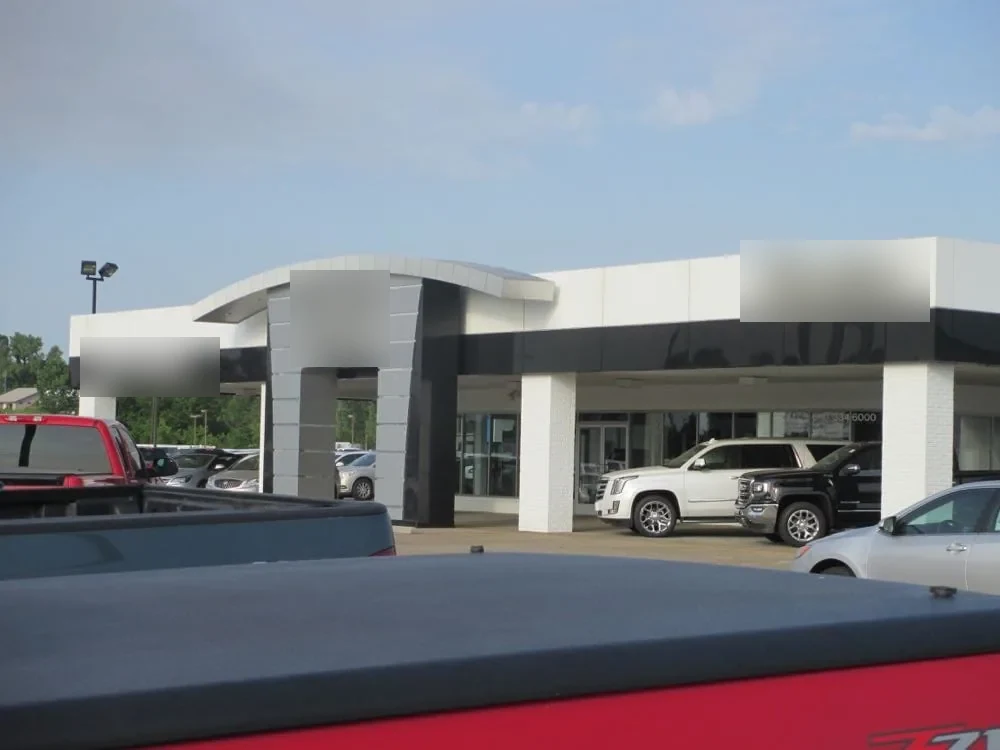
A cracked weather connection around a process exhaust opening can need a rebuilt transition while the surrounding field remains usable. The scope grows if heat, deposits or deteriorated support have affected the receiving layers. We assess manufacturing plant roofing in Jurupa Valley, CA to establish that distinction before equipment is disturbed. The contractor gets a roof-side repair boundary and a clear equipment interface, with removal tied to the materials that cannot remain.
Corona includes manufacturing businesses such as Fender and Saleen. Mira Loma contains an existing Del Real Foods manufacturing building, where a refrigerated-warehouse addition was approved in May 2021. Those local manufacturing uses make process equipment and operating conditions relevant to roof planning. We examine the actual proposed building and its equipment exposure, then coordinate the roofing construction around the production requirements identified by its operator.
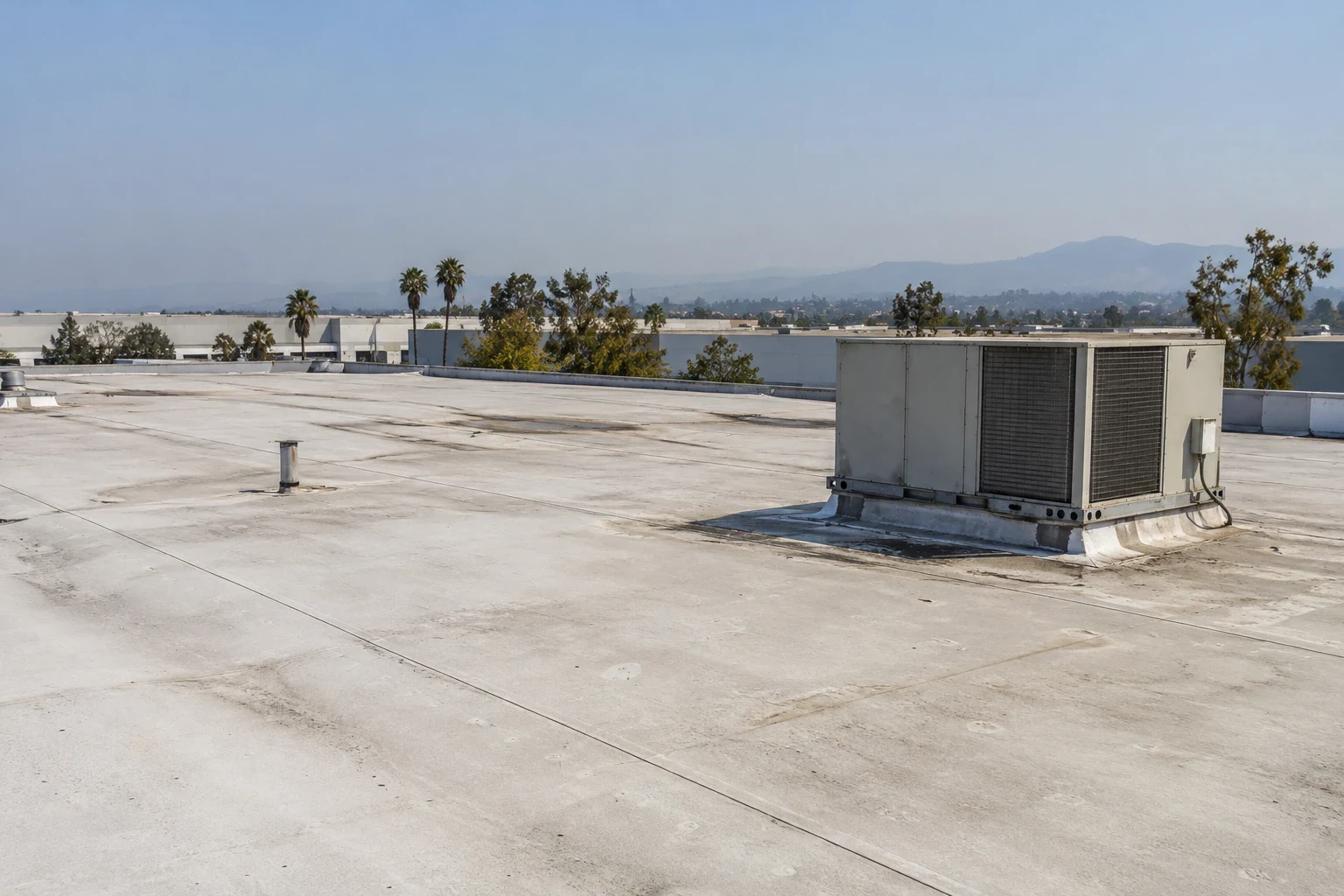
A leak beside an exhaust penetration can involve the flashing, receiving curb or equipment connection. We inspect the roof-side components and coordinate assessment of equipment concerns with the responsible trade. The repair needs a defined interface between those tasks. Applying compound around the opening does not restore deteriorated backing or correct a connection whose geometry prevents a complete weather detail.
Rebuilding penetration flashing includes checking how the retained membrane can receive the new material. Previous treatments and contamination can restrict that connection area. We identify necessary preparation or wider removal before selecting the detail. The contractor should see why the allowance changes when the usable tie-in is farther from the opening than the visible crack.
Supporting layers can be damaged by moisture or concentrated equipment loads. We assess suspect areas and identify physical investigation where needed. Dry field construction may remain while affected cover board or insulation is replaced. Structural concerns require responsible design input. The scope should describe the actual supporting correction rather than rely on a new finish material to carry a connection that has lost suitable backing.
Process deposits, discharge temperature and chemical contact need assessment against the selected roof product. We identify the actual exposure and the means of controlling it with the operator. The roof repair may require another trade to alter the discharge or equipment arrangement. Material selection should follow those conditions, with compatible preparation and detail construction defined before the new connection is installed.
A PVC assembly and other proposed membranes have particular compatibility requirements. We compare them against the exposure and receiving roof. A broad material characteristic does not establish suitability for every substance used in the building. The contractor needs the product-specific assessment and the practical preparation that will make the repair connection possible at the actual location.
With KEE roofing, identification of the installed system and suitable repair components remains necessary. We assess its supporting construction, seams and transitions alongside exposure. Where a different system is proposed for wider replacement, the comparison includes attachment, insulation and equipment detail changes. Choosing a field sheet should not leave the process-opening repair dependent on an unspecified connection.
Equipment movement can change the position, size or height of the roof opening. We coordinate the final arrangement with the responsible equipment team before installing the weather detail. The roofing scope identifies suitable support and the surface that will receive flashing. An opening formed to an earlier layout can require additional reconstruction if the equipment position changes after the roofing material has been placed.
Curb and support reconstruction may be necessary where the connection cannot be formed on existing backing. We identify that work separately from equipment release or relocation. The contractor can assign the tasks and schedule them together. The crew should not remove the weather connection and then wait for a support correction that was never included in another trade's allowance.
Electrical routes, process lines and controls can create additional dependencies. The operator and responsible trades establish their requirements, while we identify the roof-side access and protection needed. A short equipment release may be workable for one flashing repair but insufficient when support layers need replacement. The sequence should reflect the complete reconstruction that inspection identifies, not just the time needed to apply new membrane.
Roof opening above production can expose equipment or materials to water and debris. We discuss the affected space with the operator and coordinate appropriate protection before removal. The available interior release helps determine the practical daily section. The damaged-layer boundary still needs complete correction, so a restricted window may require several suitable stages rather than leaving part of the affected assembly under a surface patch.
A temperature-controlled production area may also need enclosure assessment where roofing is opened. We coordinate insulation and vapor-control requirements with the responsible design team. Those needs differ from routine protection above a dry storage space. The new roof-side construction must suit the actual internal conditions, including the connections through which air or moisture can enter the assembly.
For stored materials beside production, handling routes and stock protection can affect staging. We identify the actual spaces below the proposed section. New roofing and removed material should use an agreed route that preserves needed access. The construction allowance includes these measures where they change the process of reaching and rebuilding the damaged roof.
Wet insulation and unsuitable cover board are removed where confirmed, with the receiving deck assessed before new work. The replacement section must connect to usable adjacent construction and maintain drainage. Finished heights at the equipment opening need coordination with the specified flashing dimension. The contractor gets a complete weather boundary, including the affected support, rather than a membrane quantity that leaves the transition unfinished.
At a property in Corona, manufacturing operations may limit when process equipment can be released for the repair. We establish that actual work window and prepare the needed roof materials. A dependable daily closure must remain achievable if opening reveals additional damage. The scope includes suitable temporary protection and a process for resolving the changed permanent boundary without leaving the production area exposed.
The completed roof detail needs access for inspection and equipment servicing. We identify compatible protection where maintenance paths return to the same area. Deposits or abrasion should be assessed as they develop, with any equipment correction assigned to the responsible trade. The retained field can stay usable when the repair addresses the cause of recurring contact or exposure alongside the immediate damaged connection.
Equipment handling, support replacement and membrane preparation should be identifiable in the proposal. Wider renewal is compared separately where several areas cannot receive suitable repairs. The owner can use those scopes to distinguish production coordination from the materials actually being reconstructed. The choice then follows the failed assembly and the practical sequence needed to return its connection to service.
Sound adjacent roofing may remain if the receiving sheet and supporting layers suit the new connection. We inspect moisture, deposits and backing before defining the boundary. The failed equipment interface needs separate assessment with the responsible trade.
The actual exposure requires compatibility assessment and control where it damages the roof. We coordinate the equipment-side correction before selecting the repair. A material change should not substitute for addressing continued deposits or unsuitable discharge at the connection.
The coordinated scope assigns support construction and equipment handling to the responsible teams. We identify the roof-side receiving condition and weather detail required. Those tasks need scheduling together before the existing connection is removed.
We identify the damaged-layer boundary and affected interior with the operator. Protection and the available release determine a workable stage. The section must be reconstructable and closable within that arrangement, including support and flashing rather than only the field sheet.