Assess Duro-Last custom-fabricated PVC roofing in Jurupa Valley by field measurements, substrate condition, attachment, flashing and replacement limits.
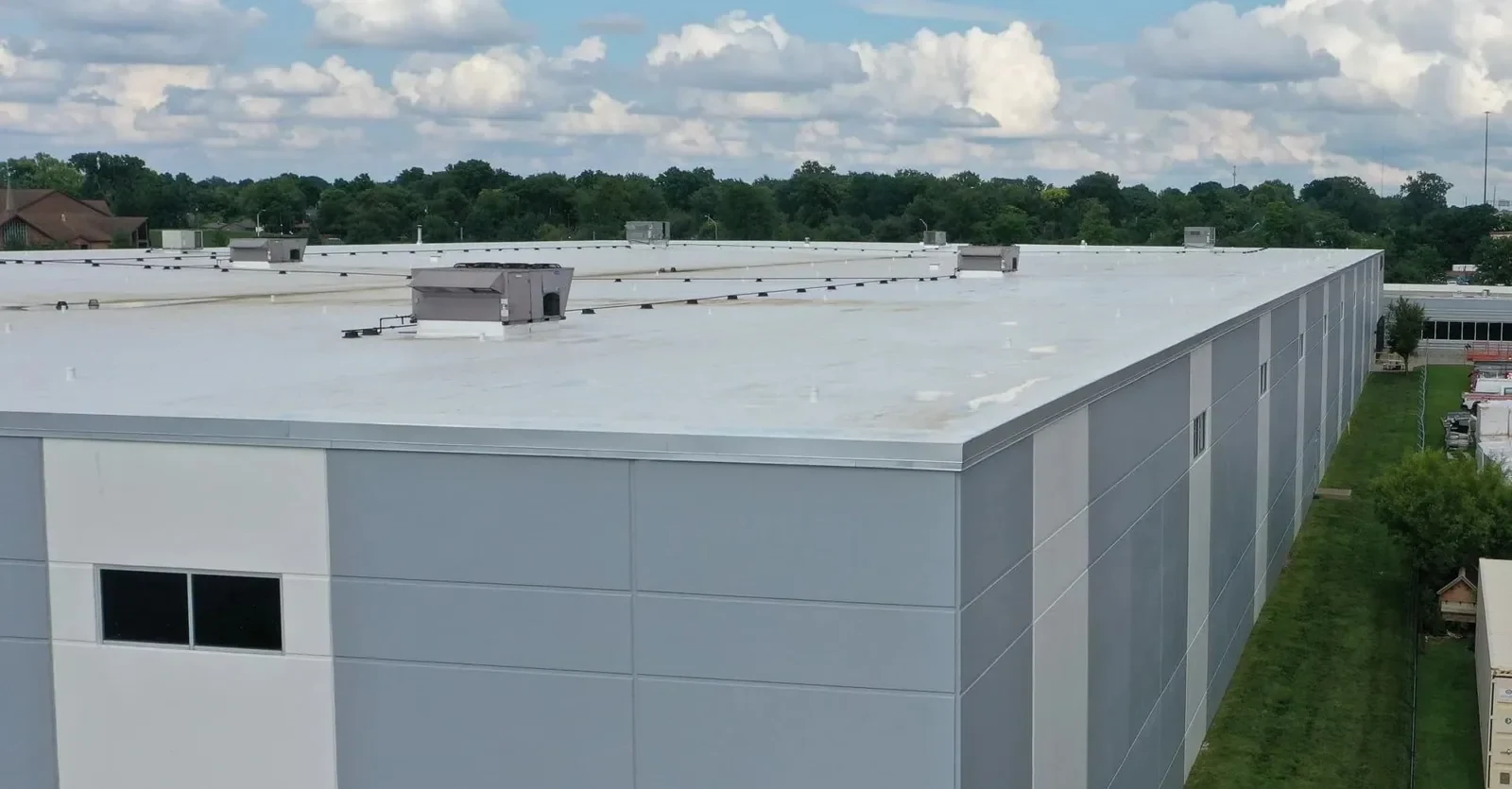
A roof curb that does not match the planned membrane layout can leave field seams, corners and flashing crowded into one detail. Duro-Last custom fabricates membrane sections and accessories, so measurements and roof geometry need attention before the package is prepared. We inspect the Jurupa Valley, CA roof, verify the conditions at curbs and edges, and determine which layers must be removed. Custom fabrication can change on-site seam work, but it does not remove the need for sound support, correct attachment and complete transitions.
For a fabricated sheet layout, Jurupa Valley's summer heat, winter rainstorms and Santa Ana winds make timing, closure and edge attachment part of the installation review. The actual roof perimeter and drainage paths determine the work that needs to be included. At Mira Loma buildings with distribution use, deliveries and active interior operations can influence where materials are staged and how much roof can be opened. We connect the Duro-Last layout to those site limits, identify the support board and deck condition, then set the daily closure plan.
Custom-fabricated sheets rely on accurate dimensions and a complete picture of roof obstructions. We document roof boundaries, ridges or changes in plane, drains, penetrations, equipment curbs and edge geometry. Existing drawings can guide planning, but field measurements establish the conditions that the crew must receive. A curb that has shifted or an added pipe may alter the layout and accessory count. We locate those differences before the manufacturer package is finalized.
Membrane fabrication will not correct a wet layer, poor slope or failed deck attachment. We inspect the existing assembly and make selected openings when moisture, crushed board or deck damage could expand removal. An infrared moisture survey with confirmatory openings may help define suspect areas. We record the repair limit and distinguish the measured roof geometry from concealed conditions that still need physical confirmation. If the deck needs structural attention, the applicable design input must come before fastening the new assembly.
Duro-Last PVC membrane comes with factory-welded seams and custom-fabricated roof sheets and accessories. That can reduce some field seaming, but the remaining connections at transitions, terminations and repair boundaries still need proper field work. We check where those joints land and whether installation access is adequate. A layout that puts a seam beside a crowded curb or tight inside corner needs an adjusted detail before installation starts.
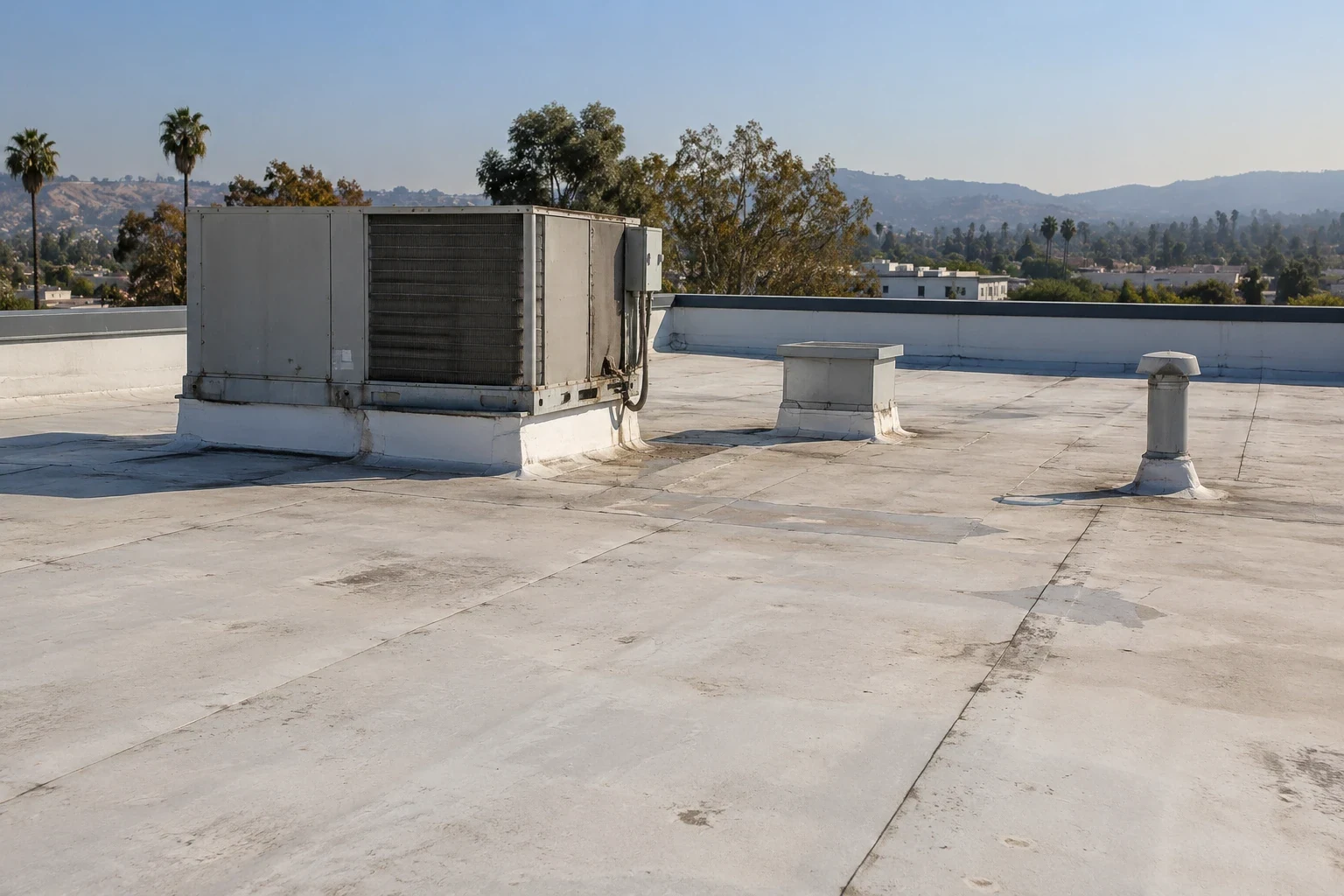
The main planning benefit of prefabricated sheets is that selected seams and accessories are assembled under factory conditions. Fewer field seams can change installation labor, waste handling and closure timing. The roof still needs field connections around the perimeter, penetrations and any change in elevation. We compare a Duro-Last layout with the actual plan and identify which seams arrive formed and which welds the crew must complete on site.
Installation options include mechanical attachment, adhesion and induction welding over a range of substrates. The method changes the supporting assembly and roof layout. Mechanical fastening needs sound deck and a planned pattern. Adhesion depends on the receiving surface and specified bonding materials. Induction welding connects membrane to compatible plates secured through the supporting layers. We compare these approaches against the deck, wind design, access and project specification before including one in the scope.
The membrane's reflectivity or chemical resistance may matter when the roof has a specific exposure, but it does not replace a building-specific review. We identify rooftop exhaust, traffic, cleaning methods and equipment routes that could affect the membrane. A system from Sika Sarnafil or GAF may also be included in a bid comparison where the specification allows. Each option should show its field-seam count, attachment, flashing package and support assumptions.
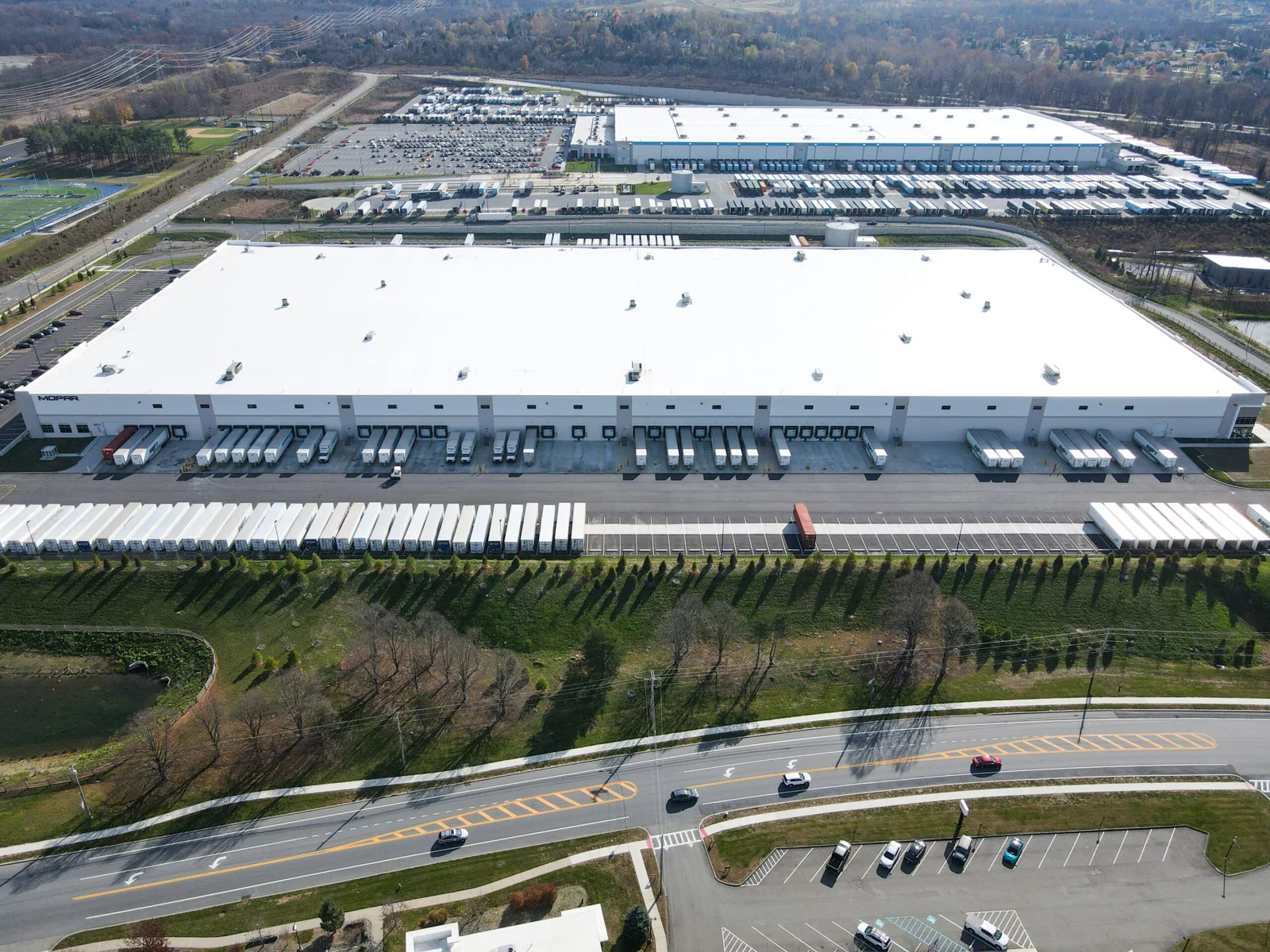
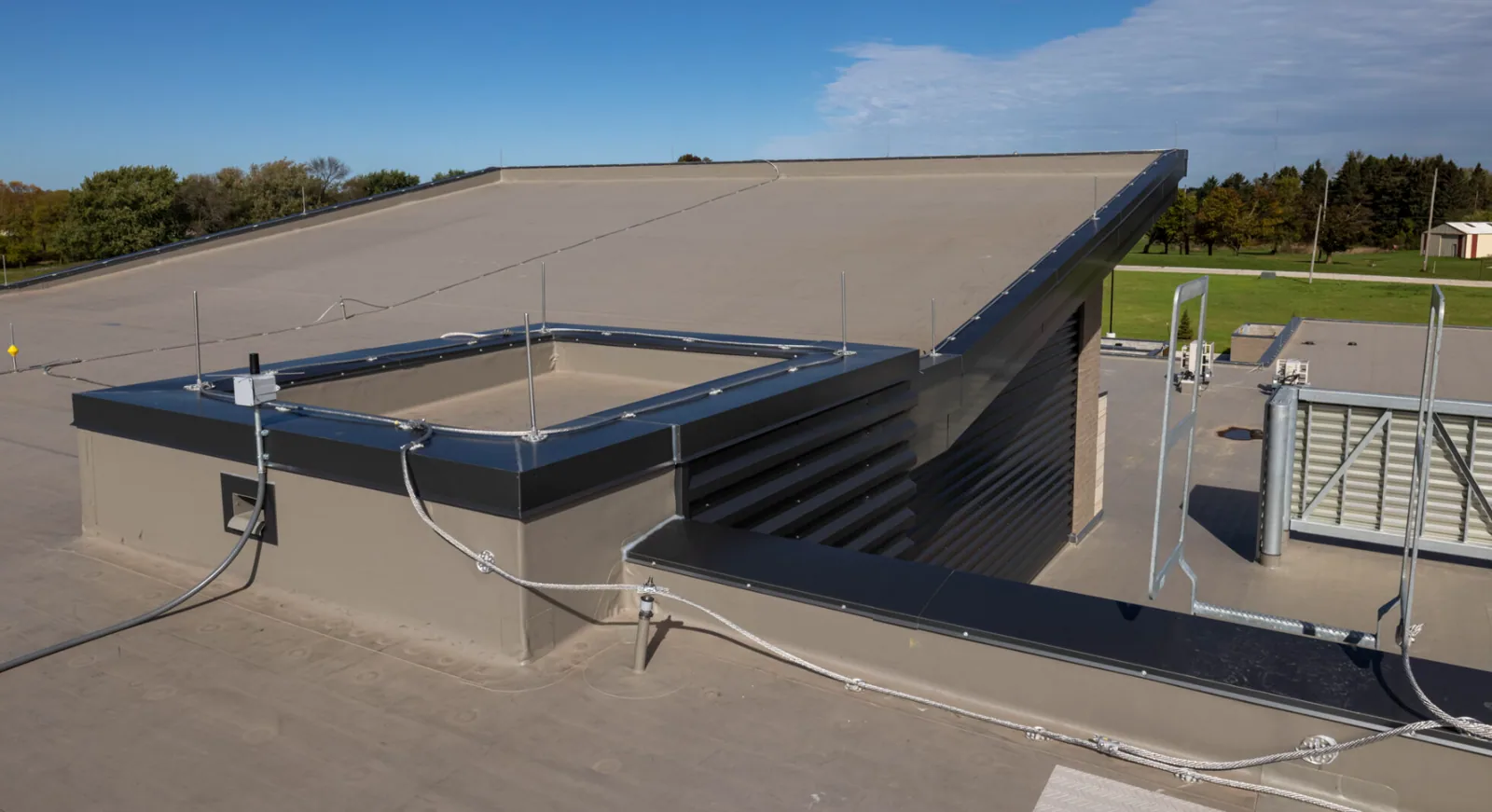
Rooftop units, plumbing vents, skylights and drains interrupt the membrane field. We inventory these features and confirm curb size, height, location and flashing condition. Where an equipment change is expected, the roof plan should use the final curb rather than preparing a custom accessory around a temporary condition. The contractor also needs the sequence for any electrical or mechanical disconnection. Coordination before fabrication can limit late cuts and prevent a detail from being forced around equipment that was not in the field survey.
We inspect roof edges, parapet caps and expansion joints to see how the new sheet will terminate. Added insulation may raise the finished roof and change flashing heights. A coping or edge-metal replacement can be required before the field sheet is completed. At low points, a drain correction may involve the bowl, clamping ring and surrounding slope.
For an active property in Mira Loma, we plan delivery and roof access around ongoing distribution work. A smaller section may be easier to protect but can add repeated tie-in and setup. A larger opening requires enough time and materials to close it safely. We agree the boundary and material staging location with the facility contact before the crew opens the roof. The plan also accounts for sensitive interior areas below penetrations and equipment.
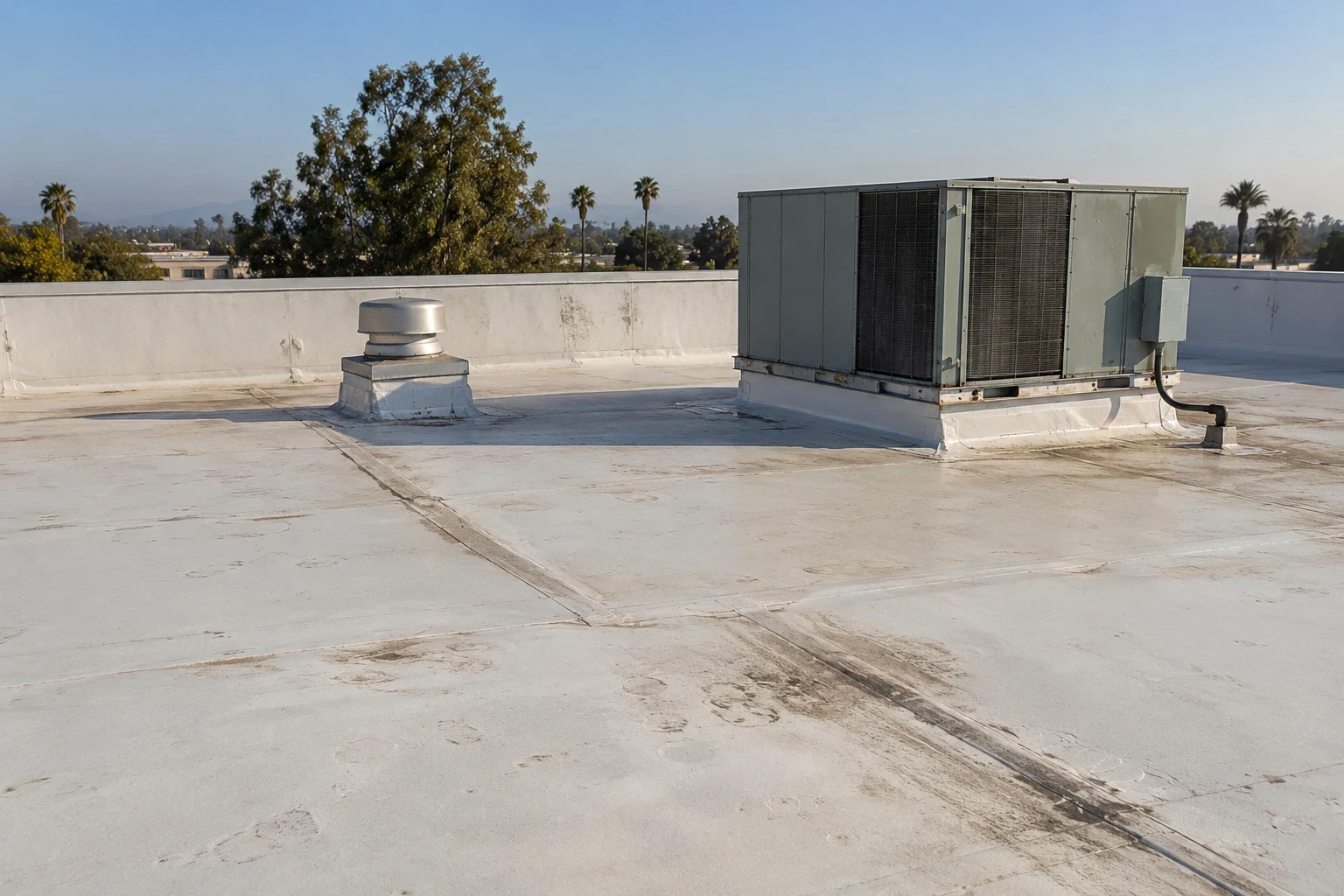
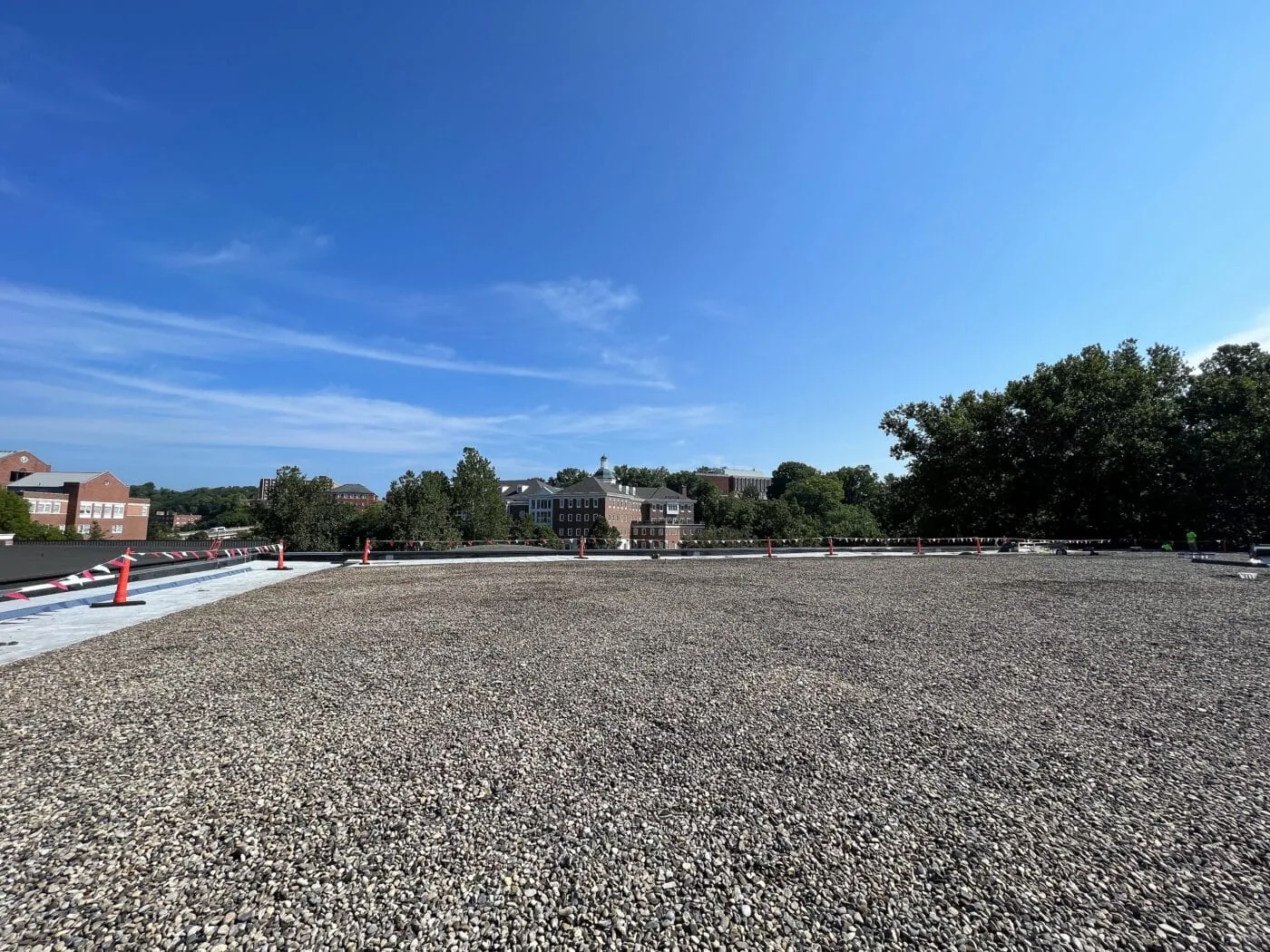
Existing roofing can remain below a recover only when it is dry, secure and compatible with the proposed Duro-Last assembly. The old system's height and layer count matter at drains, curbs and parapets. We inspect the retained material, verify attachment and identify any moisture before deciding the work boundary. If soft insulation remains, new custom-fabricated sheets can fit the roof dimensions and still leave a concealed support failure beneath them.
A tear-off exposes the deck, allowing the project to replace wet insulation and repair damaged edge construction before the new membrane is installed. It may also reveal deck repairs that could not be priced from a surface inspection. We agree how those discoveries will be documented and measured. If demolition changes the roof dimensions or curb heights, field verification may be needed before the fabricated package is released.
On a roof near Mira Loma or Pedley, we use local operating context to plan access and staging while relying on field measurements for the roof itself. An occupied-building reroof sequence can help limit open areas over active rooms. The replacement decision remains tied to wet layers, deck condition, attachment and whether the existing assembly gives the new system a reliable base.
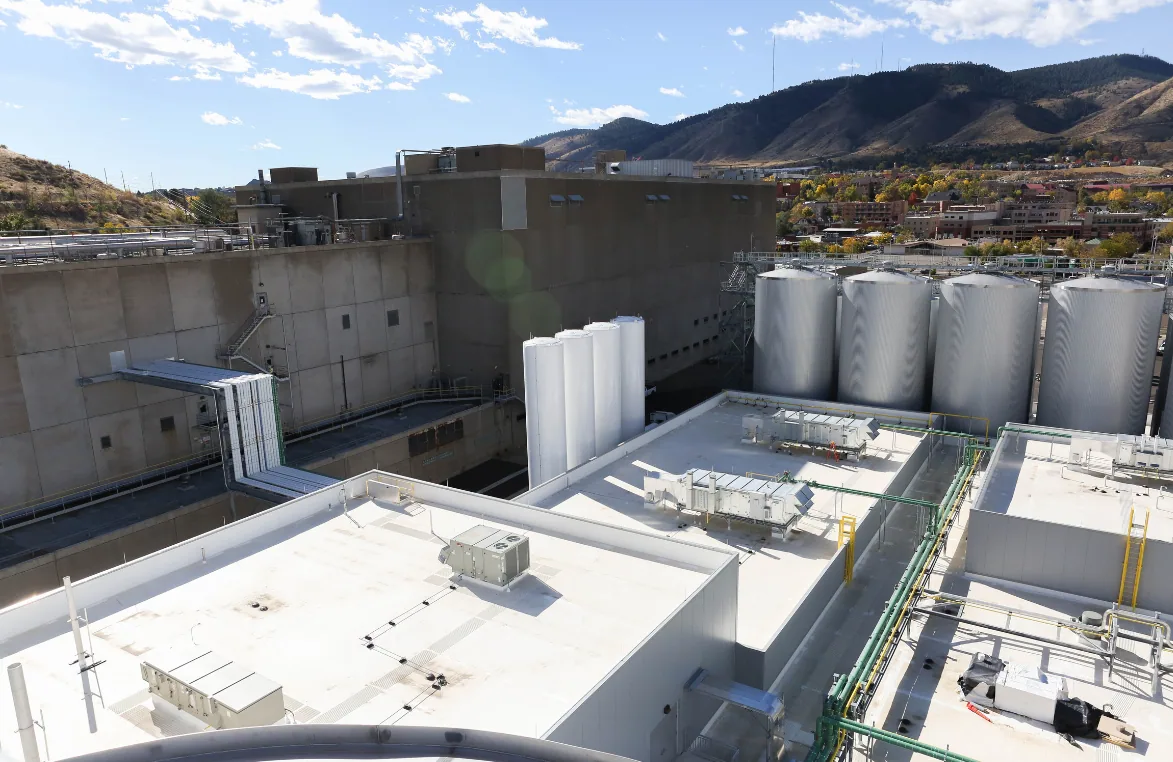
A custom sheet package changes how material is cut and joined, but the estimate still needs removal, deck access, insulation, cover board, fastening or adhesive, remaining field welds, flashing and disposal. Measurements, curb changes and drain replacement may affect fabrication quantities. We identify those costs separately so the owner can see where prefabrication changes labor and where field work remains.
Timing includes site survey, final dimensions, fabrication, delivery and installation sequencing. Late equipment changes can shift a curb accessory or sheet layout. Weather and daily closure limits influence when material can be installed. We set decision dates for measurements, removal and final system details. That creates a workable comparison against a conventional field-laid membrane when both systems are under consideration.
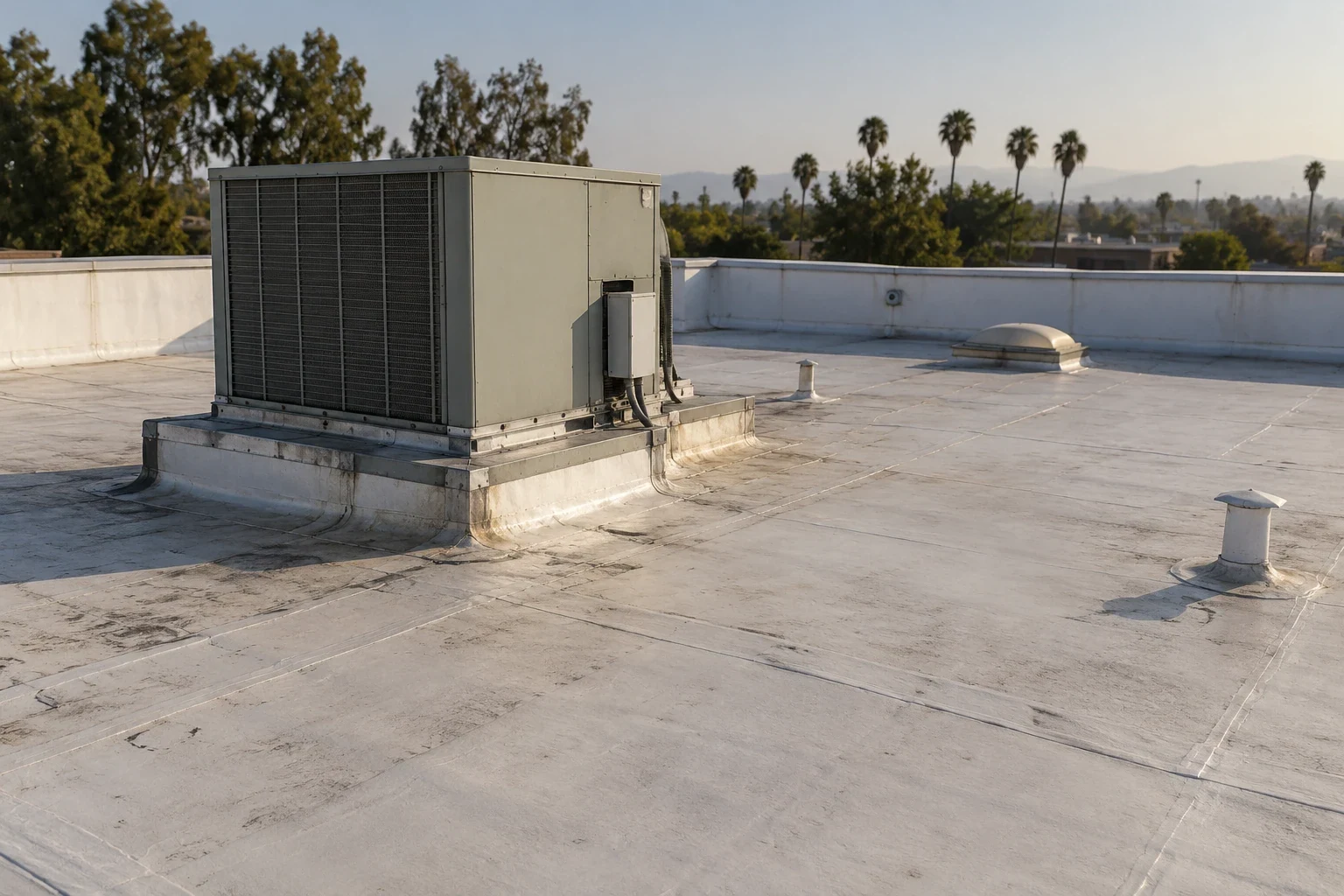
Factory-fabricated sheets and accessories can reduce some on-site seaming. The crew still makes field connections at terminations, penetrations and repair boundaries. We document those connections and compare the package layout with measured conditions before installation.
We measure curb dimensions and confirm whether units will remain or be replaced. A planned equipment change should be coordinated before accessories are produced. If the curb changes after measurement, the sheet layout or flashing package may need revision.
A recover depends on dry, stable support, layer count, attachment and finished height at drains and walls. We inspect the retained assembly and compare it with Duro-Last system requirements. Wet board or failing attachment needs correction before the new membrane is secured.
Factory fabrication can reduce field seams, but the membrane still needs site connections at edges, curbs, penetrations and other transitions. We identify each field weld and detail that remains so the installation plan includes access, preparation and closure time.