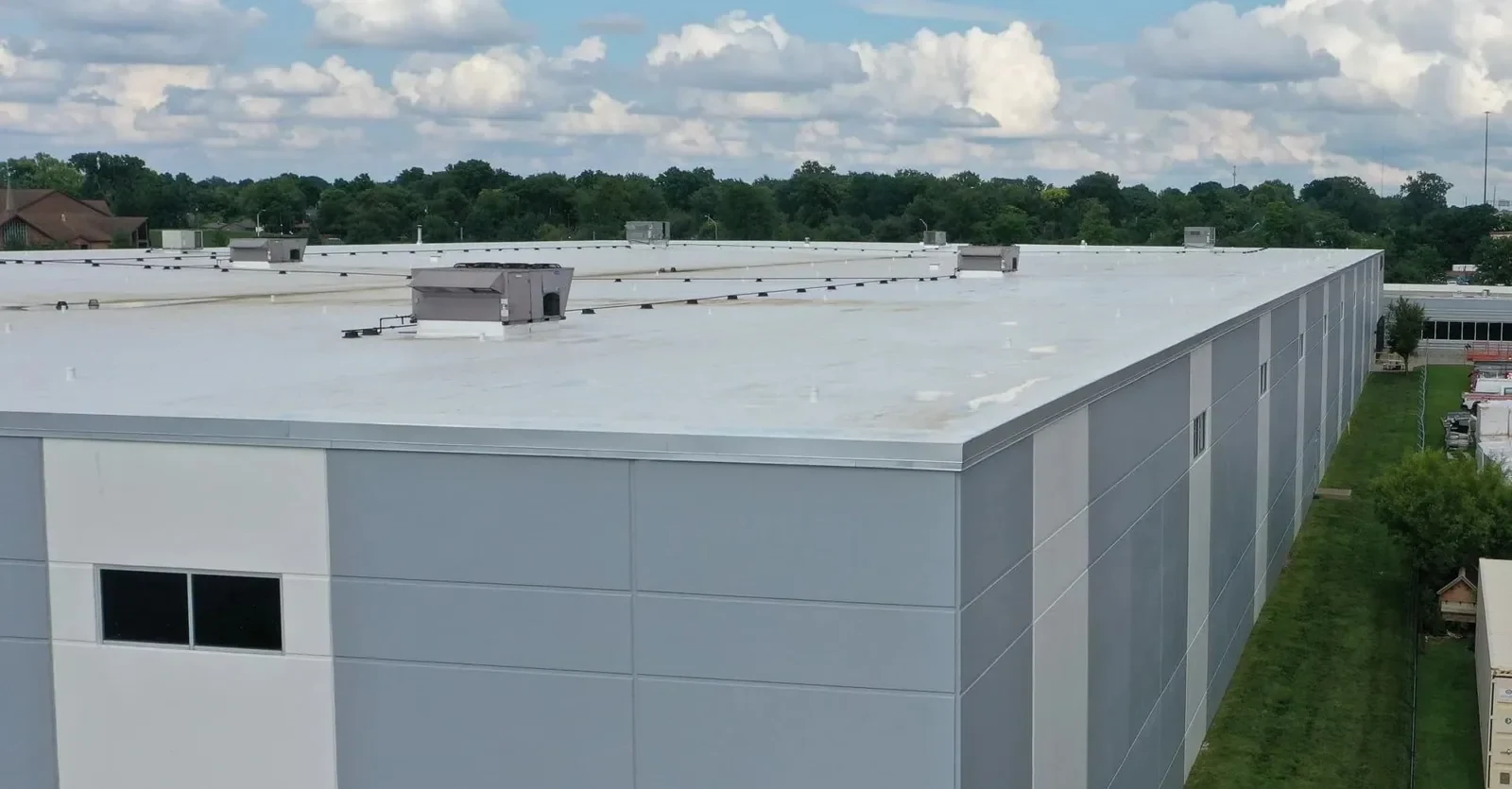
Evaluate Versico TPO options in Jurupa Valley by roof condition, seam access, attachment, traffic exposure and the scope of supporting repairs.
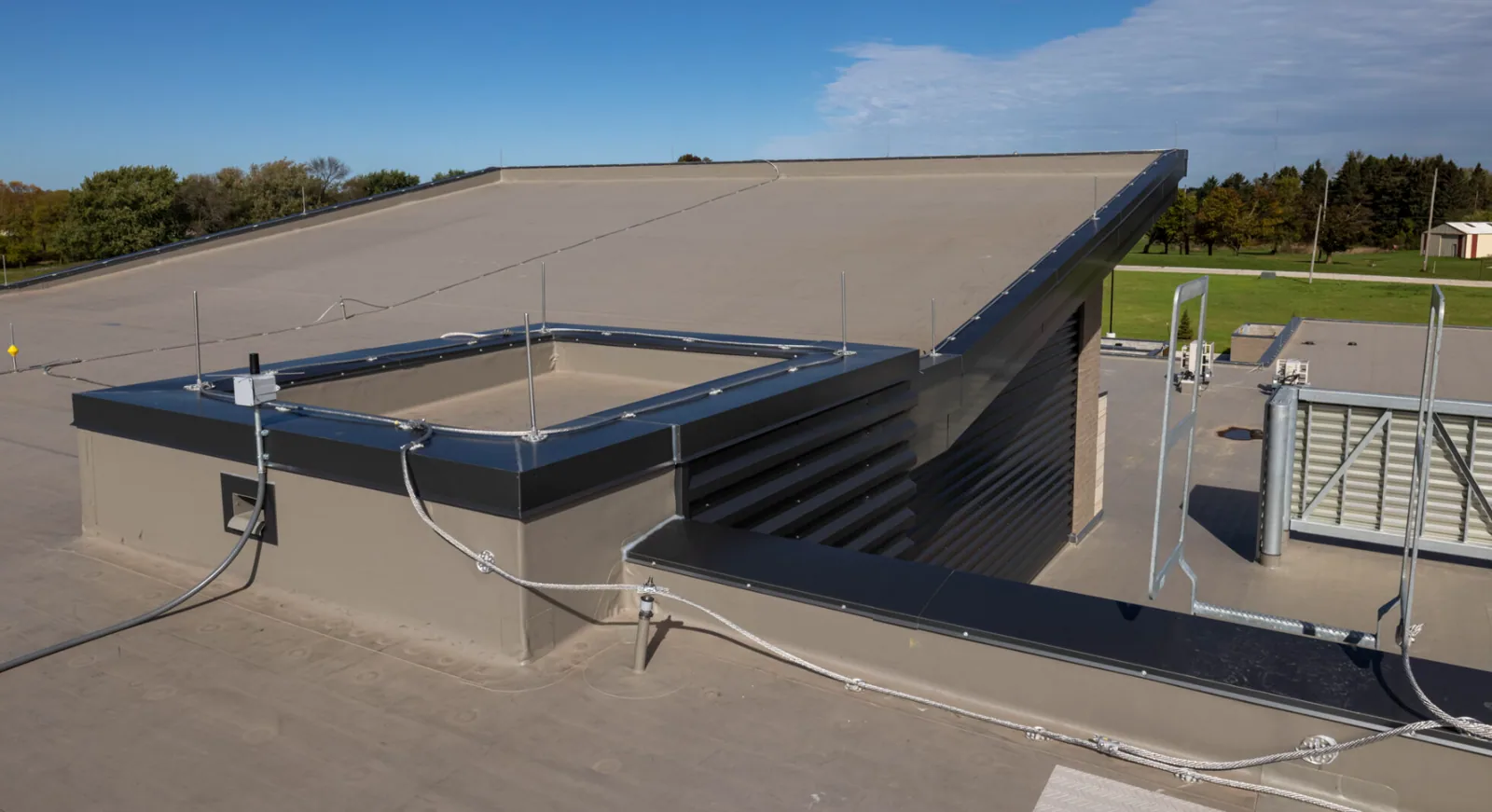
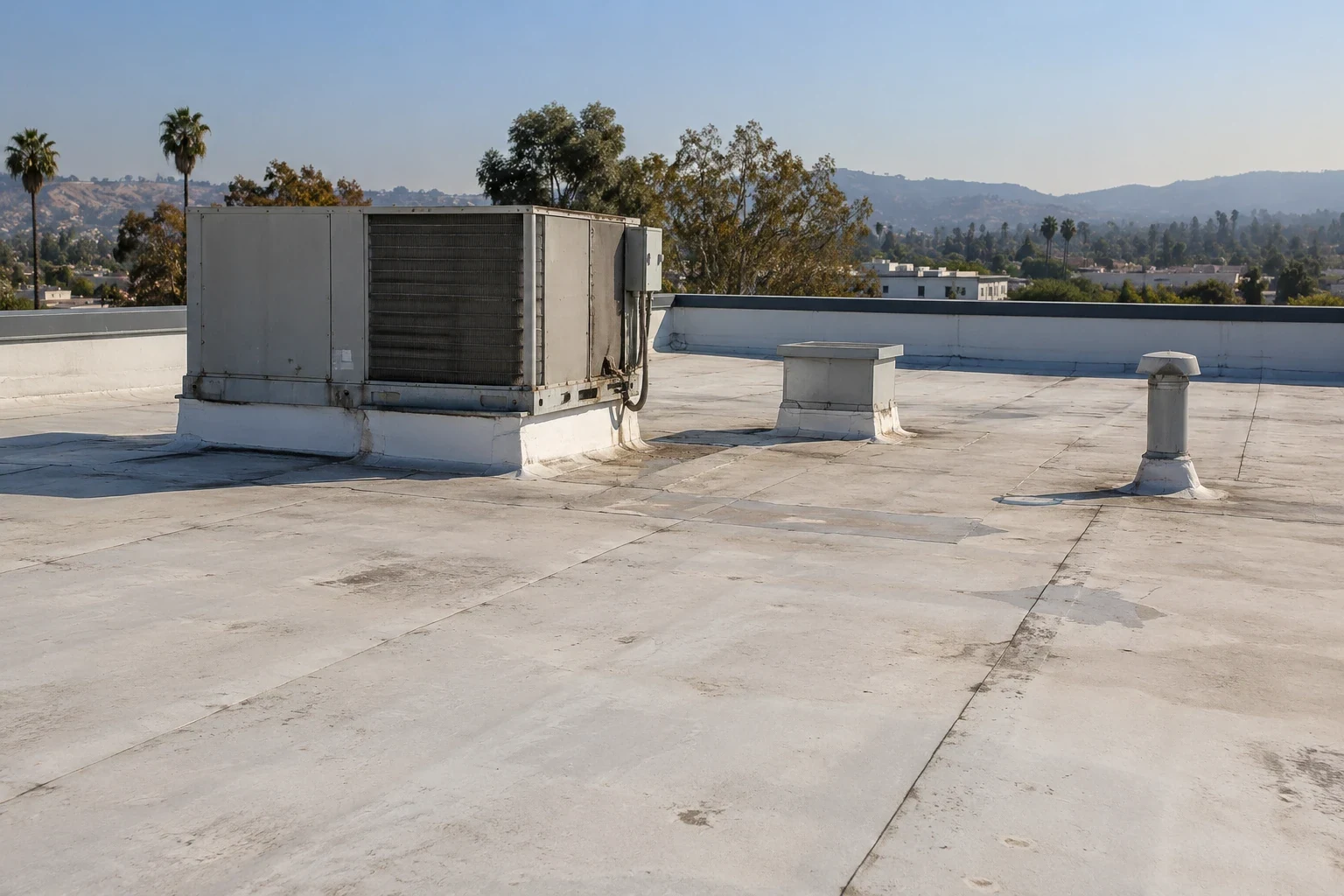
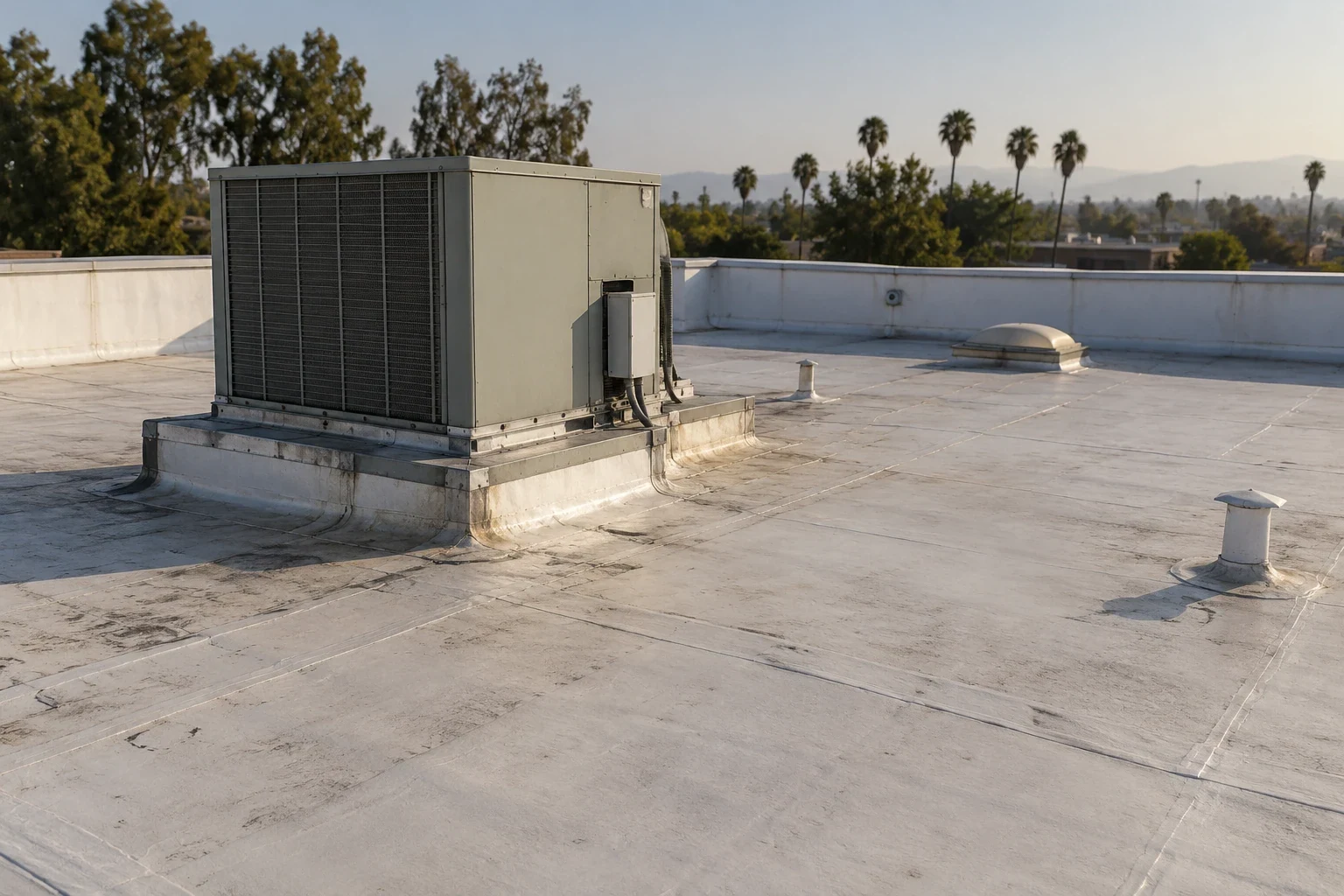
A worn TPO lap beside a rooftop unit needs more than a product swap. If dirt, weathering or a weak cover board prevents a clean weld, the repair boundary must extend to a sound receiving surface. We inspect Versico roofs in Jurupa Valley, CA and identify how much membrane and support need work. Versico's product line includes reinforced VersiWeld TPO, VersiWeld Plus and quick-applied adhesive options. Each addresses a different installation consideration; none eliminates the need to check substrate, seam condition and detailing first.
The region's heat, winter rain and Santa Ana winds put roof exposure into a local scope review. The building's actual edges and penetrations determine the repair. Mira Loma's distribution activity can make staging, delivery access and daily closure part of the work plan. We show the owner what has failed, which areas remain usable and how a Versico assembly would connect at drains, walls and equipment curbs.
Heat-welded TPO seams depend on compatible sheet, clean surfaces and a prepared lap. A split seam may be confined to one joint, or it may reflect movement in the support beneath it. We inspect the field sheet, seam, nearby repairs and insulation. Where a cover board is crushed or wet, welding another patch over that surface cannot restore support. The repair should replace the affected layer and leave a stable margin for the new membrane connection.
VersiWeld reinforced TPO is a heat-weldable single-ply sheet for new roofs and re-roofing. VersiWeld Plus includes the OctaGuard XT weathering package, while VersiWeld QA has factory-applied adhesive. Those product distinctions can inform a specification, but the installation method still needs to suit the roof deck and project conditions. We verify the existing construction before translating a product name into an assembly scope.
When concealed moisture is in question, an infrared moisture survey with test openings can help locate material needing physical checks. We compare findings with the visible roof and determine the affected board and insulation boundaries. We compare survey indications with test openings to bound damp board and leave dry sections in a repair scope. The work allowance follows the confirmed material condition.
Standard reinforced VersiWeld is designed for heat-welded seams. VersiWeld Plus is a product variant with the manufacturer's OctaGuard XT weathering package. VersiWeld QA combines reinforced TPO with factory-applied adhesive, changing how membrane bonding is handled in the field. The best fit depends on deck, system specification, wind design, access and the installer sequence. We compare those options against the roof rather than assuming that faster field application means a lower complete project cost.
A separate attachment decision remains. Mechanically attached assemblies require fastening into suitable deck and appropriate perimeter treatment. Adhered configurations depend on substrate preparation and compatible adhesive. Induction-welded systems require designed plates and corresponding equipment. Sheet width and seam count can influence layout and labor, but the crew still needs room to weld around drains, curbs and changes in plane. We present the assembly details that determine whether the proposed product is practical on this building.
Fleece-backed TPO may be considered where a project calls for that membrane construction, and Versico also sells EPDM systems for other roof conditions. A separate Carlisle SynTec option or GAF single-ply system can be reviewed when the specification allows a comparison. Each quote should disclose attachment, support-board assumptions, edge detailing and any traffic protection. Similar-looking white sheets can require different accessories and seam preparation.
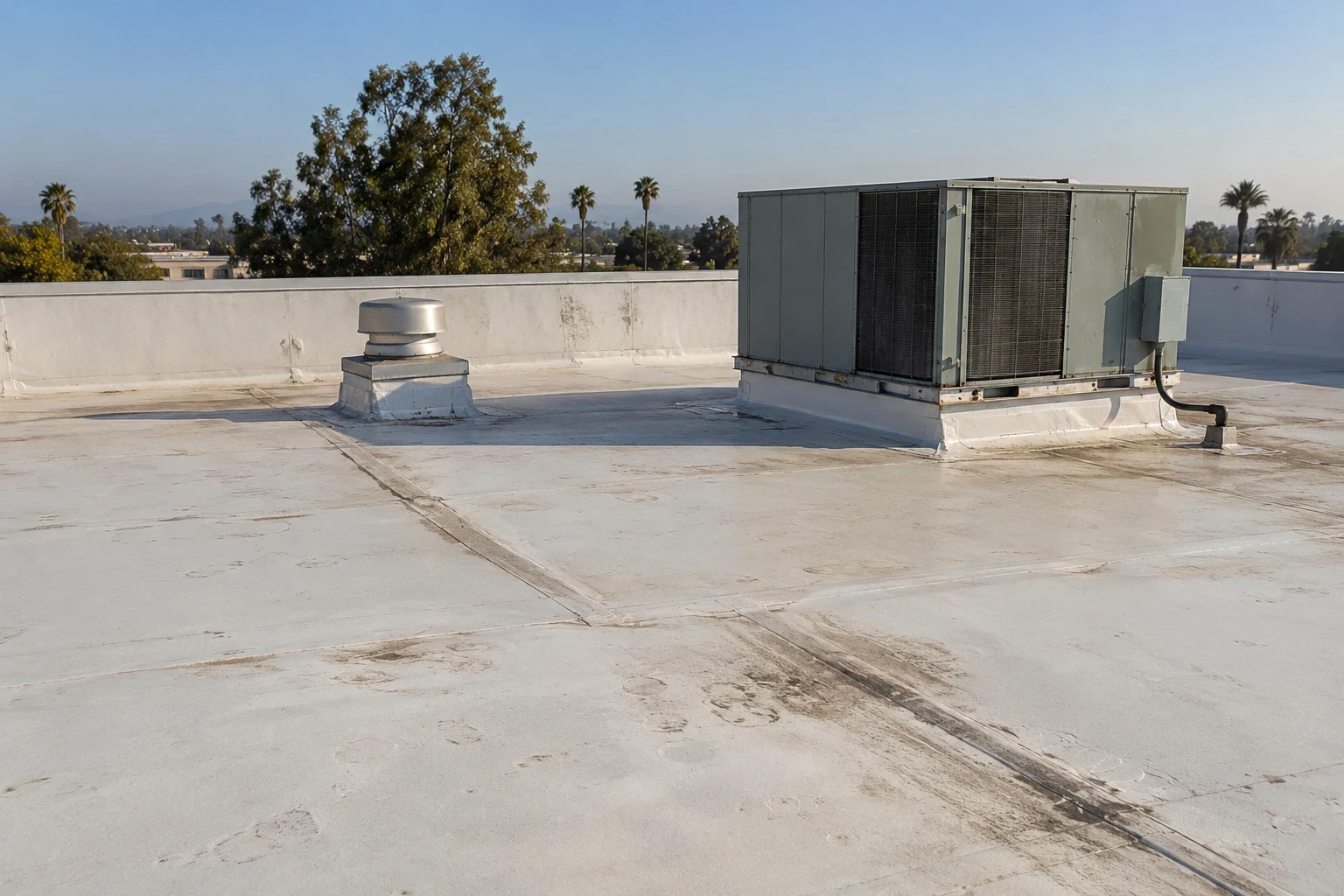
Equipment access often concentrates traffic on the route between a ladder and rooftop units. A repaired seam in that path may see repeated tools, carts or foot traffic. We locate those routes and plan compatible protection without blocking drain access. Where the roof includes an older coating or contaminant, we check whether the receiving membrane can be prepared for a weld. A patch needs enough sound sheet to form the intended seam; if the available strip is narrow, a wider replacement section may be simpler to detail.
Edges and penetrations need specific attention when the roof is re-covered. We inspect curb height, pipe boots, skylight bases, wall flashing and drain bowls. New insulation can raise the finished surface and leave a termination too low. A skylight or penetration repair or coping correction may be required to join the Versico field membrane to stable construction. Those items belong in the budget before rolls are ordered.
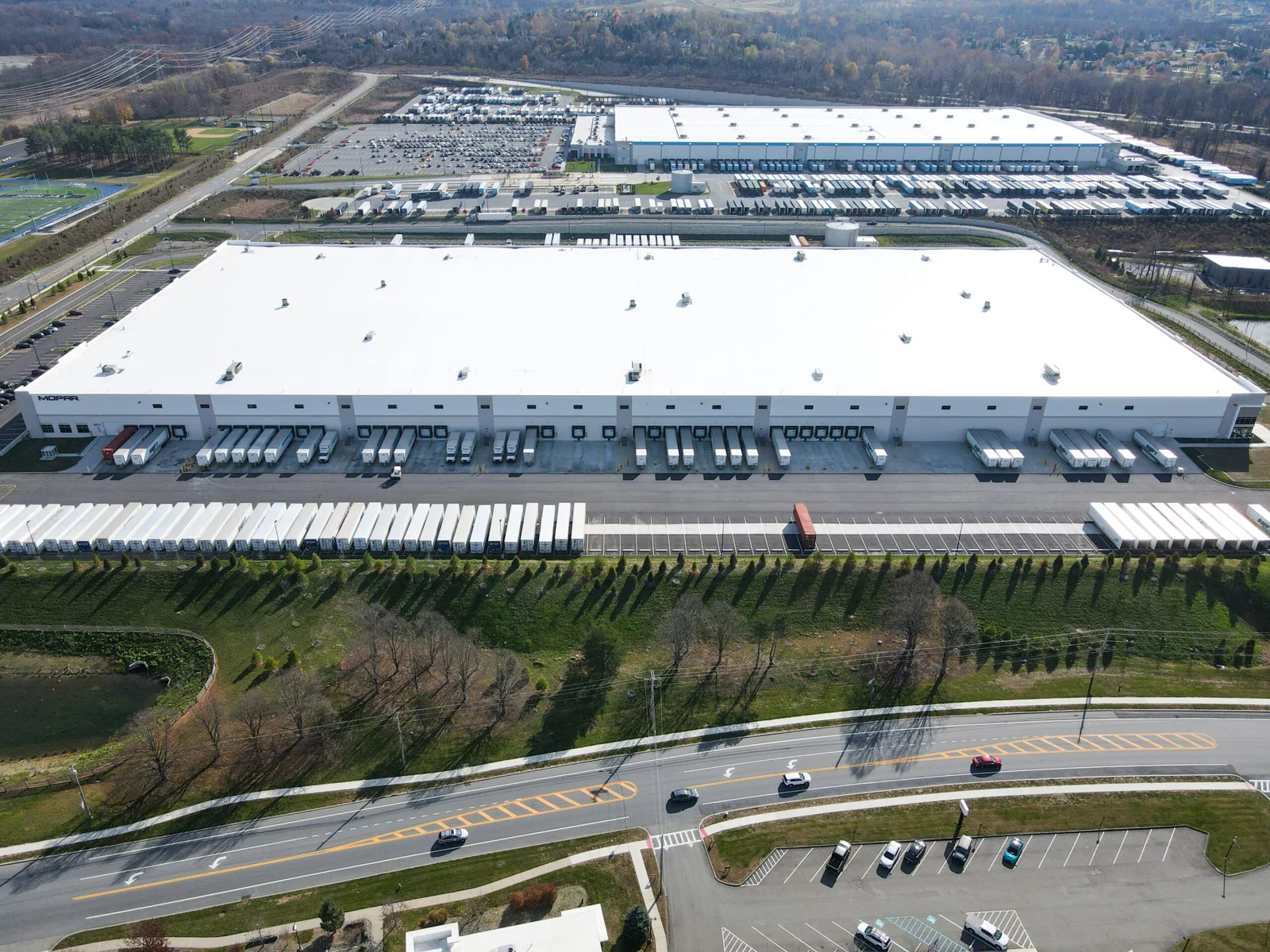
Mira Loma properties with distribution activity may require clear dock approaches or limits on debris staging. We coordinate a closure plan with the building operator so the crew can protect each area before weather or shift changes. Interior use under the roof matters where removal exposes deck or insulation. A sequence based on manageable roof sections helps keep the intended welds, temporary closure and access plan aligned.
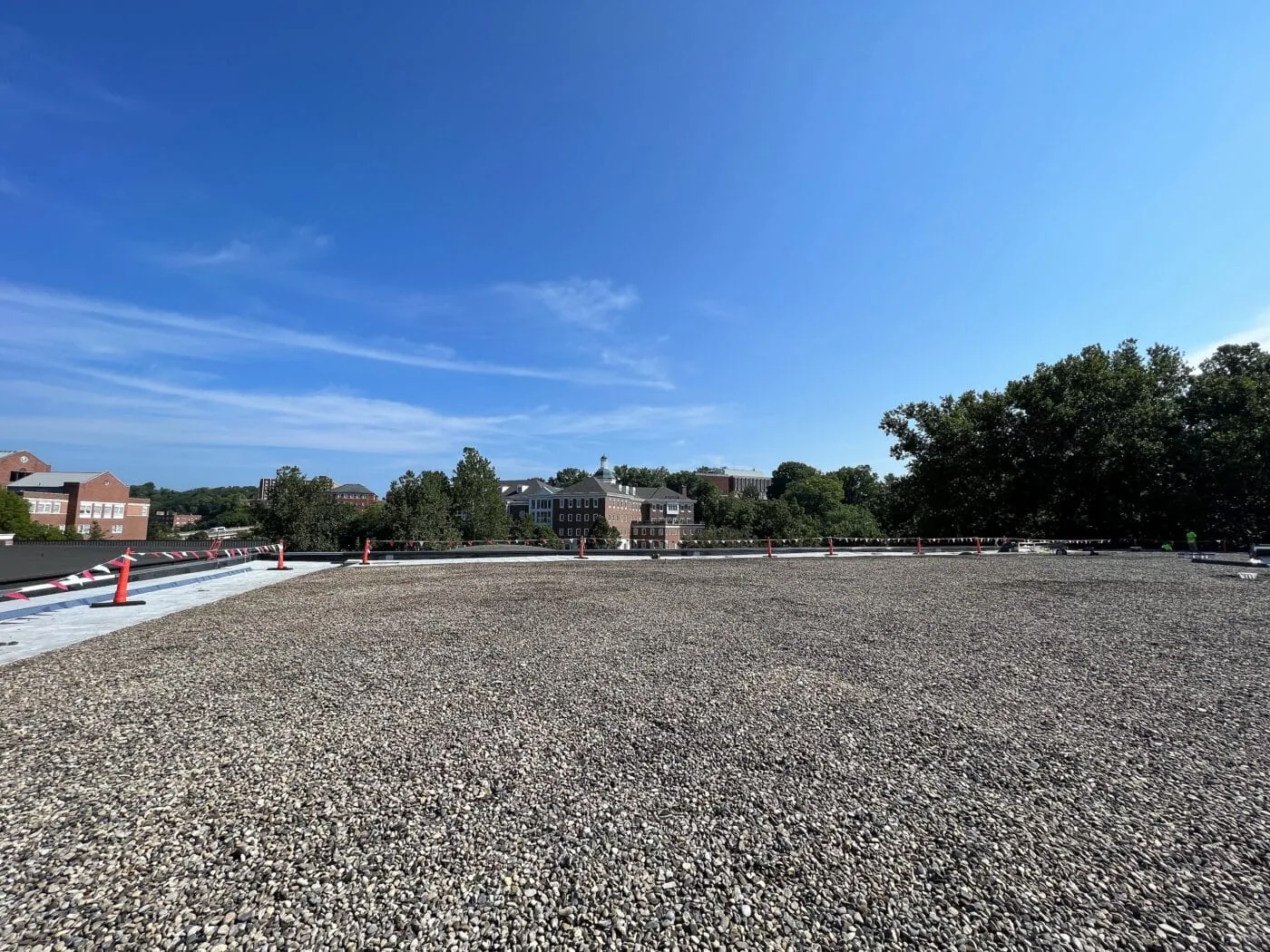
An existing roof can remain only if its surface, attachment and underlying layers can support the proposed assembly. We check for wet insulation, loose sheet, repeated repairs and drainage problems. Layer count and finished height also matter at curbs, drains and parapets. A recover can leave sound materials in place, but it will not dry an existing assembly or secure a deck that no longer holds fasteners. We identify what can remain and what needs removal before selecting a new TPO configuration.
Tear-off gives access to deck condition and lets the project replace wet board, correct slope and rebuild the perimeter. This can expand the scope once concealed construction is visible. We document the opening and use an agreed method to price additional deck repair. The choice should compare removal cost with the risk and work boundary of retaining the existing assembly. A recover plan should state how the new membrane connects to the old construction and how drains or transitions change.
Owners around Mira Loma or Rubidoux can share leak locations and maintenance records for a roof inspection. We can compare a Versico proposal with SOPREMA membranes when the property team is reviewing more than one manufacturer. The decision rests on observed layers and the complete connection details, not on where the building sits within the market.
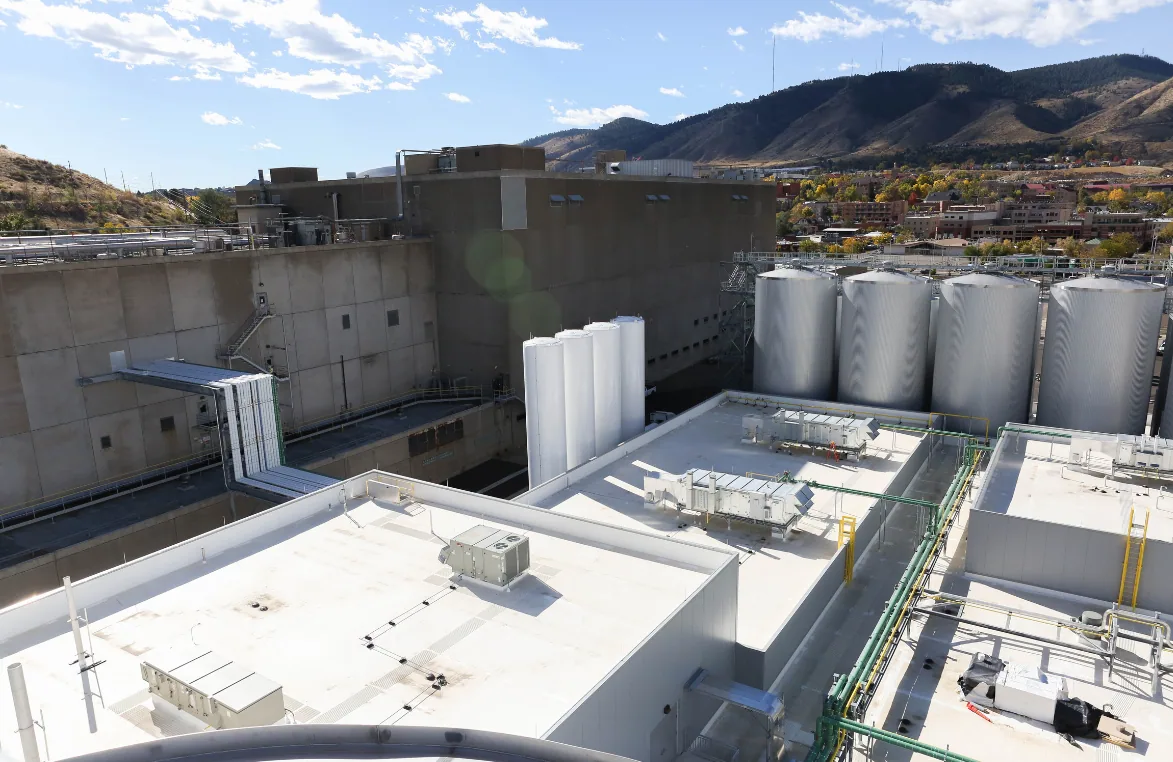
VersiWeld system pricing includes field membrane and the work beneath it. Removal, dry insulation, cover board, fastening, adhesive, seam length, flashing parts and equipment protection affect the final scope. A smaller sheet count does not remove detail work at curbs and drains. We identify those items and distinguish roof-repair allowance from replacement sections. If the deck may need repair, the estimate should describe how the condition will be measured after tear-off.
Heat and rain affect the work window; facility use affects the daily boundary. More phases can protect inventory and access but add temporary tie-ins and mobilization. We plan around site conditions and communicate any equipment shutdown that could affect interior operation. The owner can then compare Versico TPO installation with a repair or complete replacement, using the same confirmed damage limits and scope assumptions.
Both are reinforced TPO, and VersiWeld Plus includes the OctaGuard XT weathering package. The appropriate product still depends on the assembly design, exposure and project requirements. We compare current product documentation with the building conditions before specifying it.
The QA membrane has factory-applied adhesive, changing the field bonding step. It does not remove substrate preparation, attachment design or flashing work. We confirm whether the roof and specified system can use that configuration before comparing labor or schedule.
A localized split may be repaired when surrounding TPO is sound and the support remains dry and stable. We inspect the seam margin and underlying board, then weld compatible material to a prepared surface. Wider deterioration calls for a larger replacement boundary.
Moisture or crushed support can extend beyond the visible opening. Selected test cuts establish the affected insulation and cover board. Deck repair, inadequate attachment or low transitions can also enlarge the complete scope once the assembly is examined.