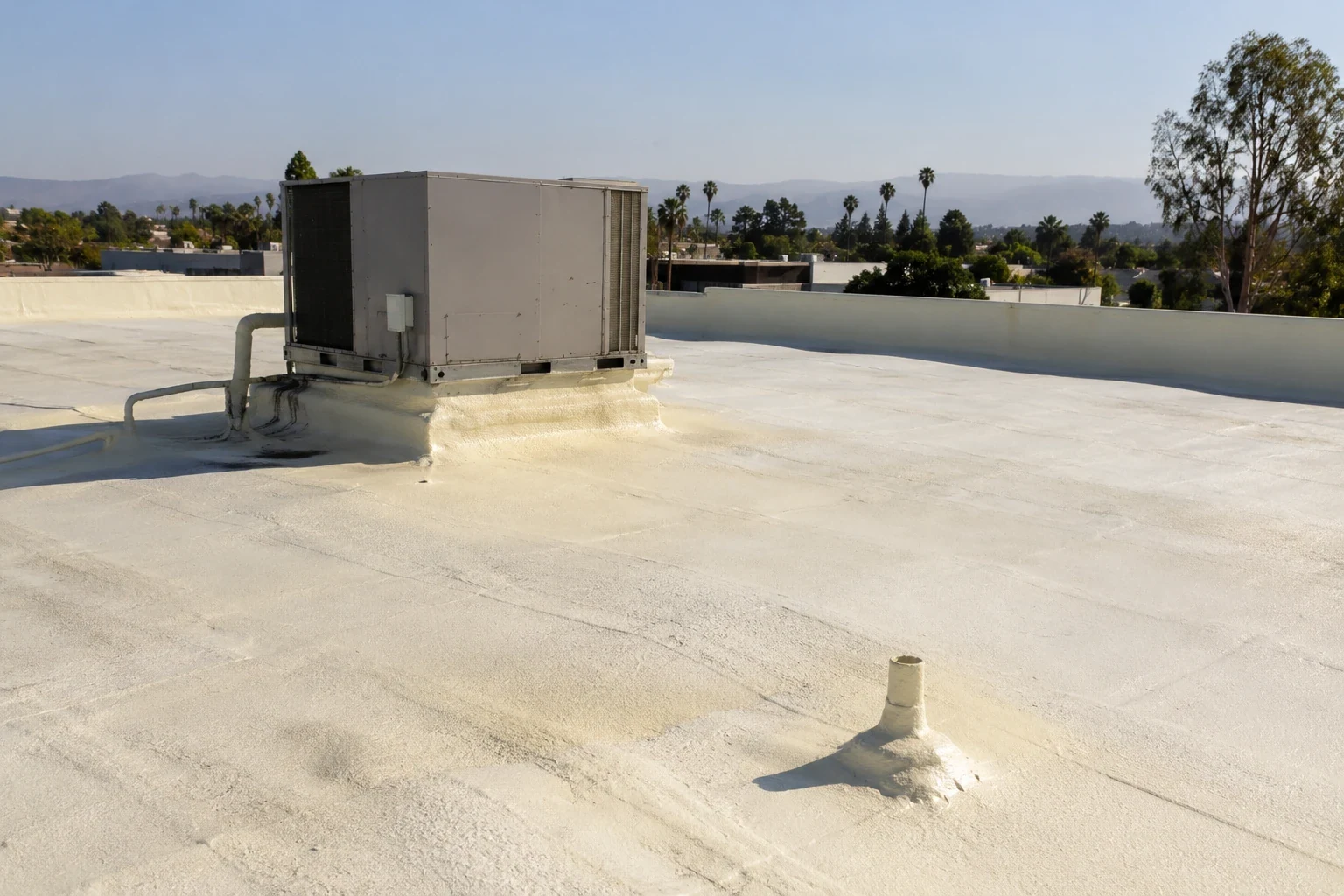
Compare metal roof retrofit scopes in Jurupa Valley with deteriorated fastening repairs, retained-panel assessment and suitable support for the new assembly.
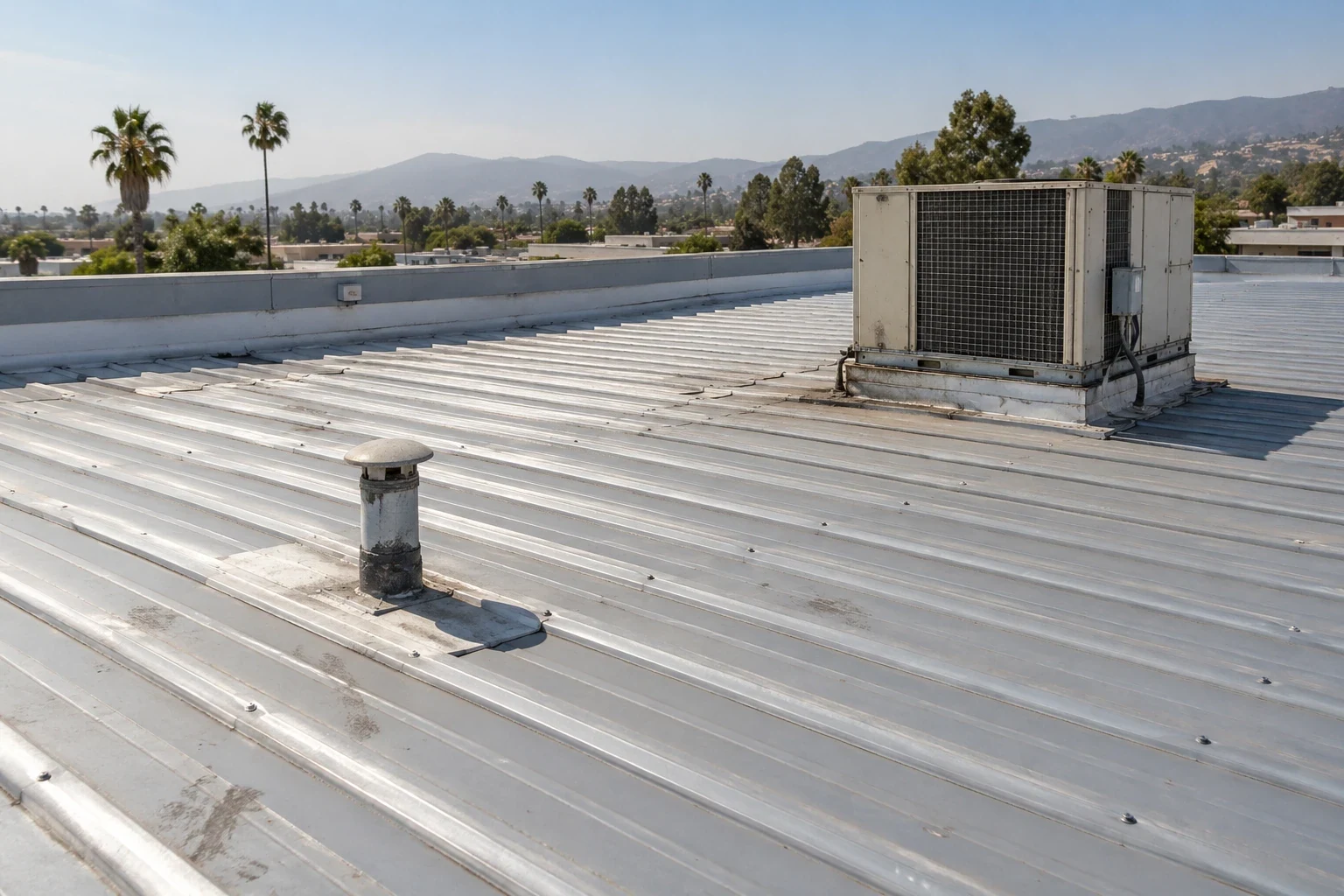

Repeated fastener holes enlarged in an exposed-fastener roof can make another screw replacement an incomplete correction. A retrofit may retain much of the panel field while giving the building a new weather assembly, but the deteriorated fastening and support still need resolution. We assess metal roof retrofit work in Jurupa Valley, CA by separating those tasks. The contractor can compare panel repair, supporting corrections and the construction needed above the retained roof.
Perris had Lowe's and Home Depot distribution centers among its employers in 2022. Mira Loma also contains industrial distribution operations. Work above distribution uses can require staged removal and protection of the space below. We examine the actual building before proposing retention or replacement. The new assembly needs a suitable receiving roof and planned drainage, with the repair allowance tied to the metal and support that cannot remain as found.
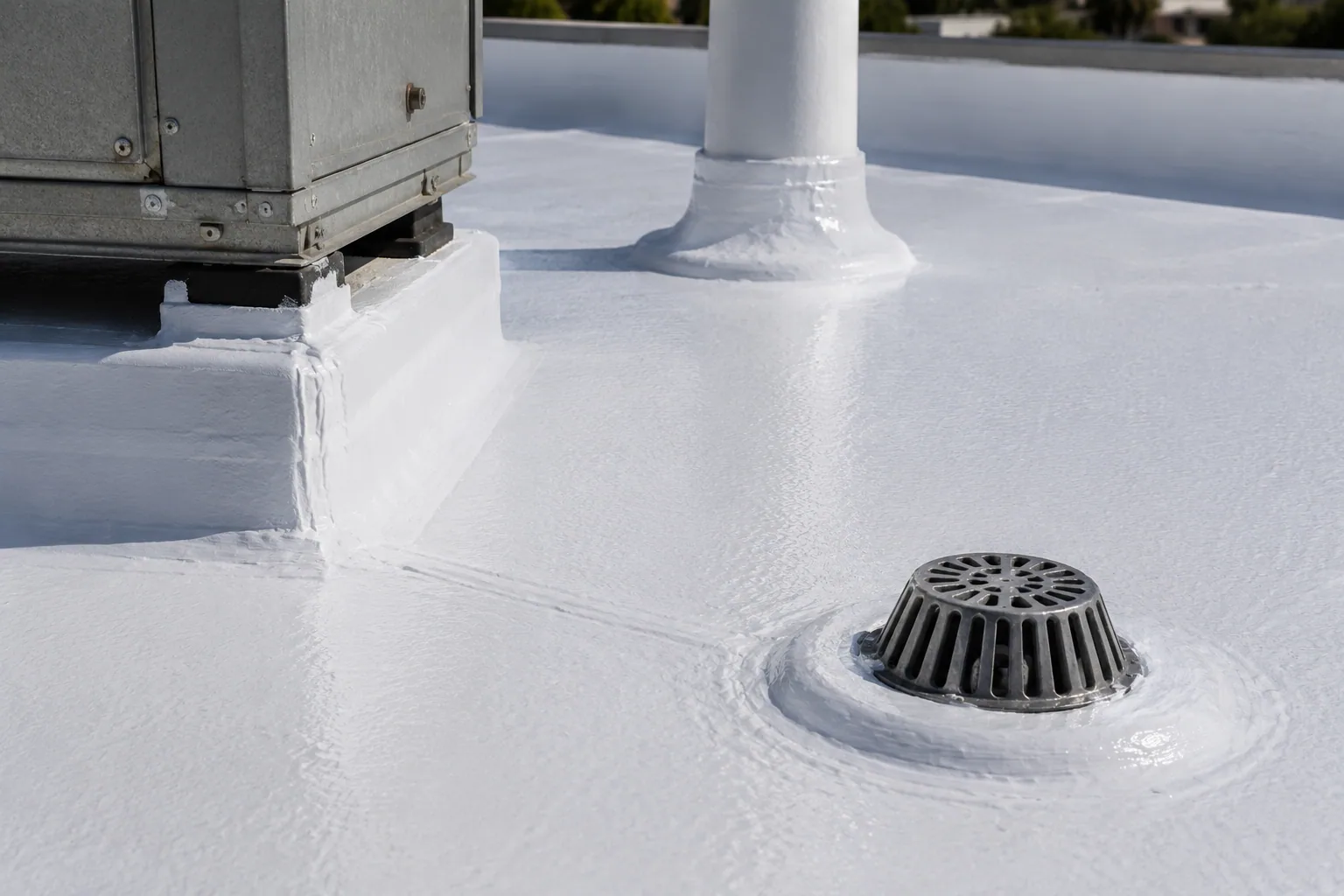
A loose screw may reflect a failed washer, enlarged panel hole or unsuitable connection to the support. We inspect those components separately. Replacing the screw can be appropriate for a bounded defect when the receiving construction suits the selected correction. Repeating that treatment where the support has deteriorated leaves an unresolved attachment issue. The scope identifies which locations need panel or backing reconstruction before a retrofit can be considered.
Accessible underside conditions and selected openings can help establish the receiving roof. We assess corrosion, previous additions and attachment concerns where they affect the proposed work. Structural suitability and new loading require responsible design review. The contractor needs those decisions before ordering a system that depends on retaining construction whose condition has not been assessed for that role.
A retrofit condition assessment also examines panel laps, ridge details and penetrations. A field that appears suitable may include connections that need correction before they become covered. We identify the damaged components and their access requirements. The retrofit proposal should show those preliminary repairs rather than assume a new outer layer makes the existing roof defects irrelevant.
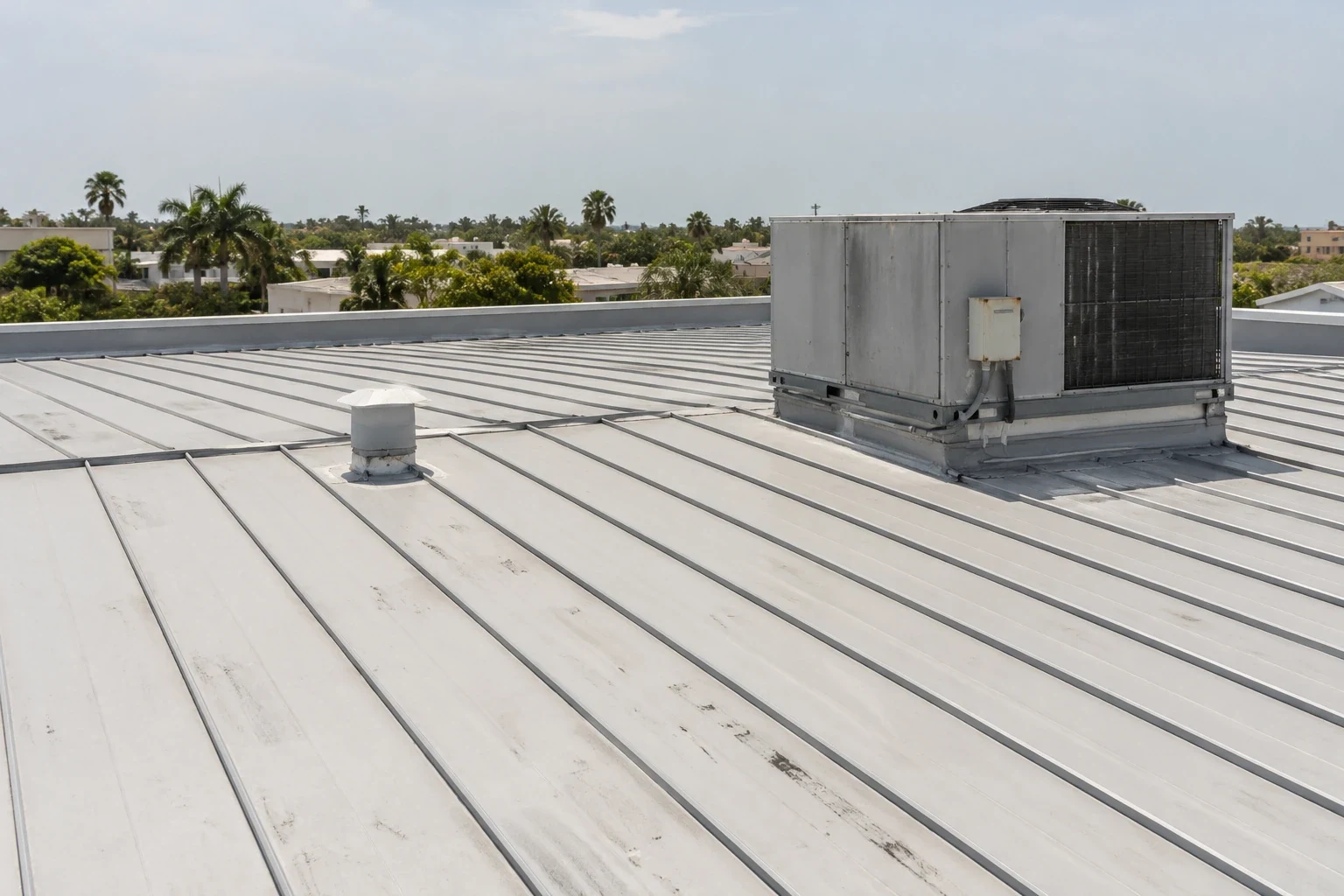
A retrofit can use an arrangement selected for the existing profile and building requirements. Its design may involve support elements, insulation or another receiving layer for the new weather surface. We assess the specified construction and identify the condition it needs below. Retaining the old panels changes removal and handling, but it does not eliminate the need to establish sound attachment and suitable structural capacity.
A standing-seam replacement is a separate option with its own panel, support and movement requirements. We compare its complete removal and reconstruction with the retrofit proposal. The owner should see which damaged parts disappear under each scope and which remain in a supporting role. That comparison is more useful than treating the two exposed surfaces as interchangeable finishes.
A membrane retrofit needs suitable support across the existing panel profile and a specified attachment arrangement. With TPO over retained metal construction, we assess the receiving layers, perimeter connections and penetration details. The membrane should not bridge an unsupported or unsuitable surface. Any correction to panel condition or supporting construction belongs in the scope before the new roof-side layers are installed.
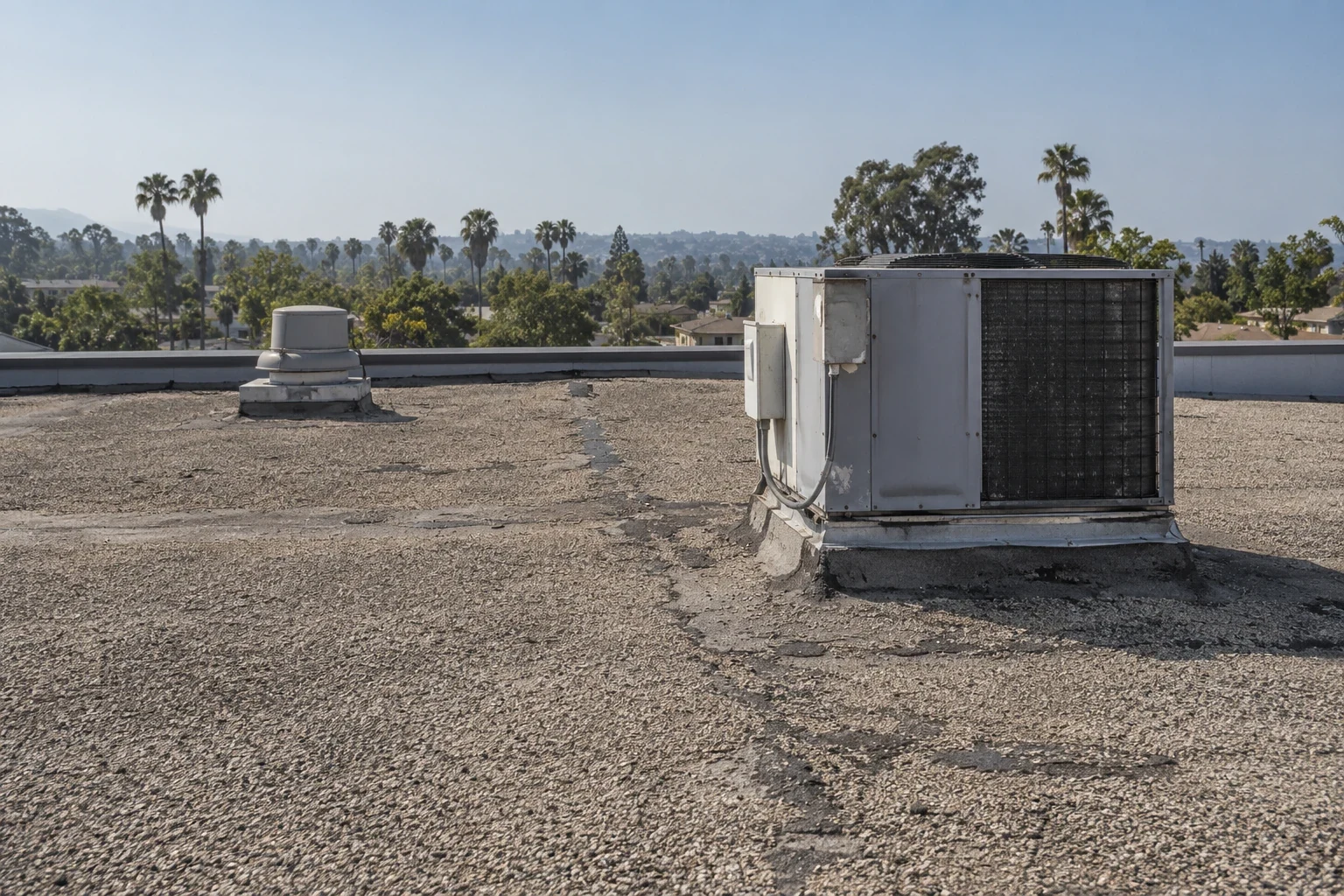
Dents, open laps and damaged sections can interrupt the receiving geometry. We establish the corrections needed for the selected retrofit assembly. Filler, support or replacement details must suit the system and underlying construction. An improvised leveling measure can leave a point load or unsupported area beneath the new roof. The proposal should identify the component being reconstructed and the role it will perform after the retrofit.
Existing penetrations may have incompatible old repairs or deteriorated flashing that requires removal. We examine the receiving curb, opening and adjacent metal before forming the new interface. The detail should meet the new finished elevation while maintaining appropriate weather dimensions. Covering the field first can make those connections harder to rebuild if their support correction was omitted from the initial allowance.
Water caught within retained construction requires investigation. We identify wet layers and any removal needed before adding new material. A retrofit should not conceal insulation or deck conditions that need correction. The contractor can compare the affected-area reconstruction with the wider assembly, including the temporary closure needed where existing roofing must be opened before the new work proceeds.
Added roof layers can alter the relationship between field surfaces, gutters and wall transitions. We assess how runoff will reach the outlets after installation. The new assembly needs its drainage path established before the perimeter is closed. A raised finished surface can require different trim, transitions or outlet arrangements, with any design or plumbing work coordinated before roofing materials fix those locations.
Reconstructing perimeter and gutter connections includes assessment of backing and attachment. We identify components that need renewal to receive the changed roof geometry. Retaining deteriorated perimeter metal to reduce visible replacement quantities can leave the retrofit dependent on the same failed edge. The allowance should show the complete connection, including the support that makes its attachment suitable.
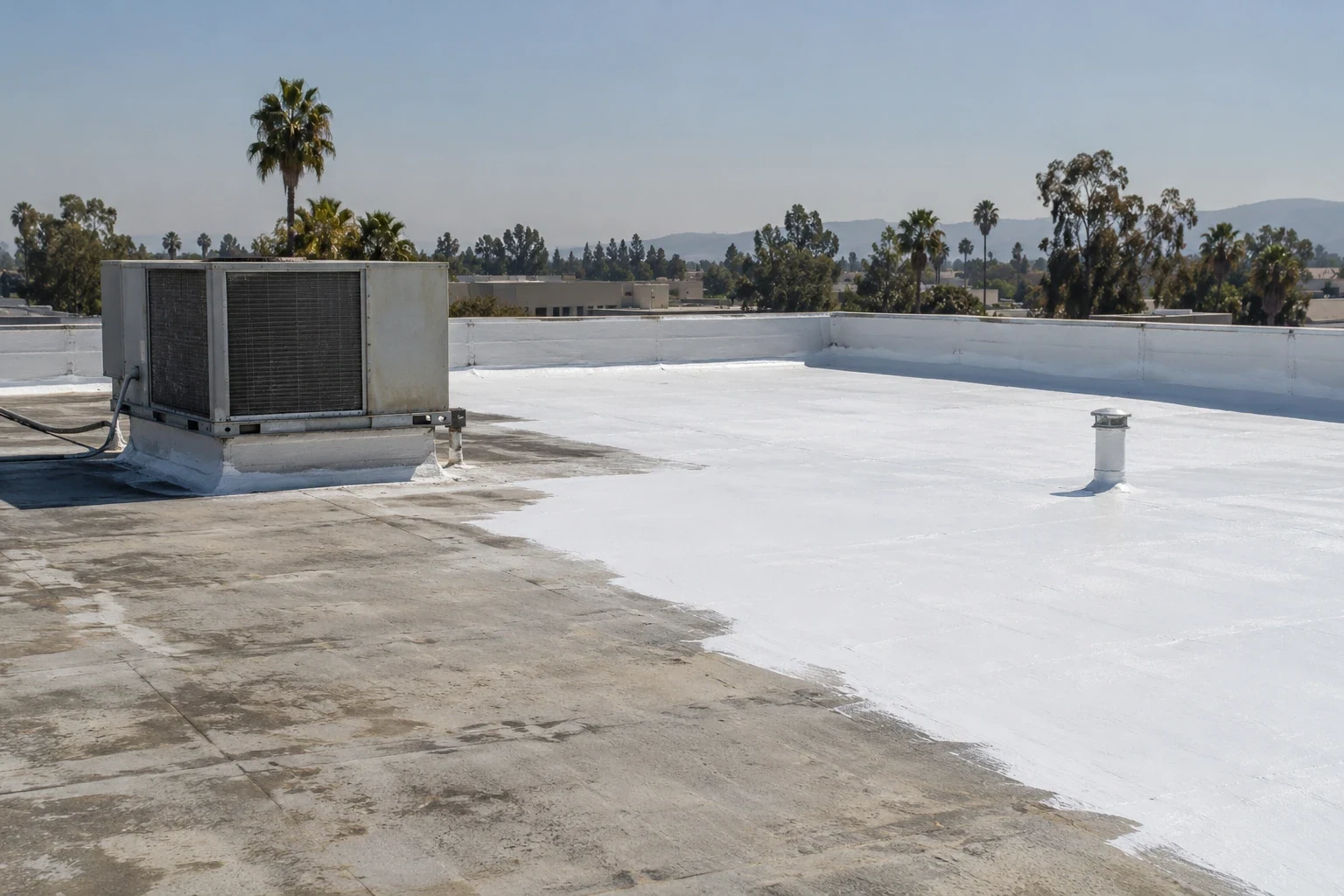
A retrofit can reduce some removal exposure while still requiring openings at damaged sections and connections. We identify those locations and discuss interior protection with the operator. For a distribution-center retrofit project, handling routes and storage beneath the work can determine the feasible stages. The sequence must allow the preliminary repair and the new weather assembly to be closed properly.
At a property in Perris, the actual distribution operation may restrict when a loading route or interior area is released. We establish that requirement rather than assume the retained roof removes every operating interruption. New supports, insulation and perimeter components still require delivery and placement. Their handling belongs in the schedule alongside the repairs needed below the added assembly.
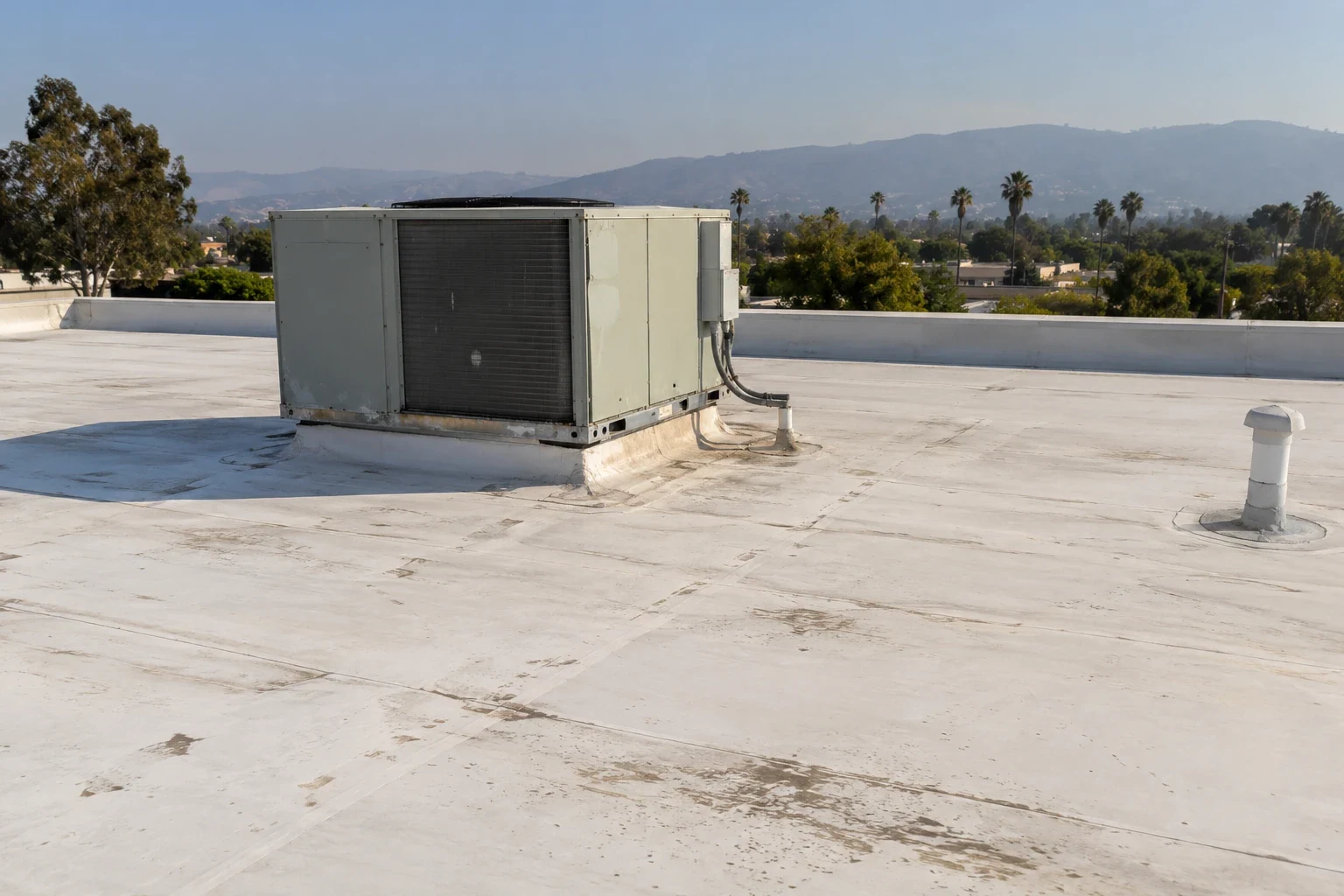
Equipment servicing and future roof work need access to penetrations, outlets and supports after the retrofit. We identify those paths and the protection appropriate to the new material. Old and new components should have clearly defined interfaces so later work does not disturb a connection without the compatible repair being arranged. The owner can then maintain the completed assembly with its retained construction and new weather surface understood together.
Inspection after severe weather should focus on visible movement, open connections and changes at the perimeter. Jurupa Valley's region experiences Santa Ana winds, which can stress vulnerable roof components. We assess observed damage and identify the affected connection rather than assume the whole retrofit needs renewal. A bounded defect can be corrected when the adjacent layers and support remain suitable for the repair.
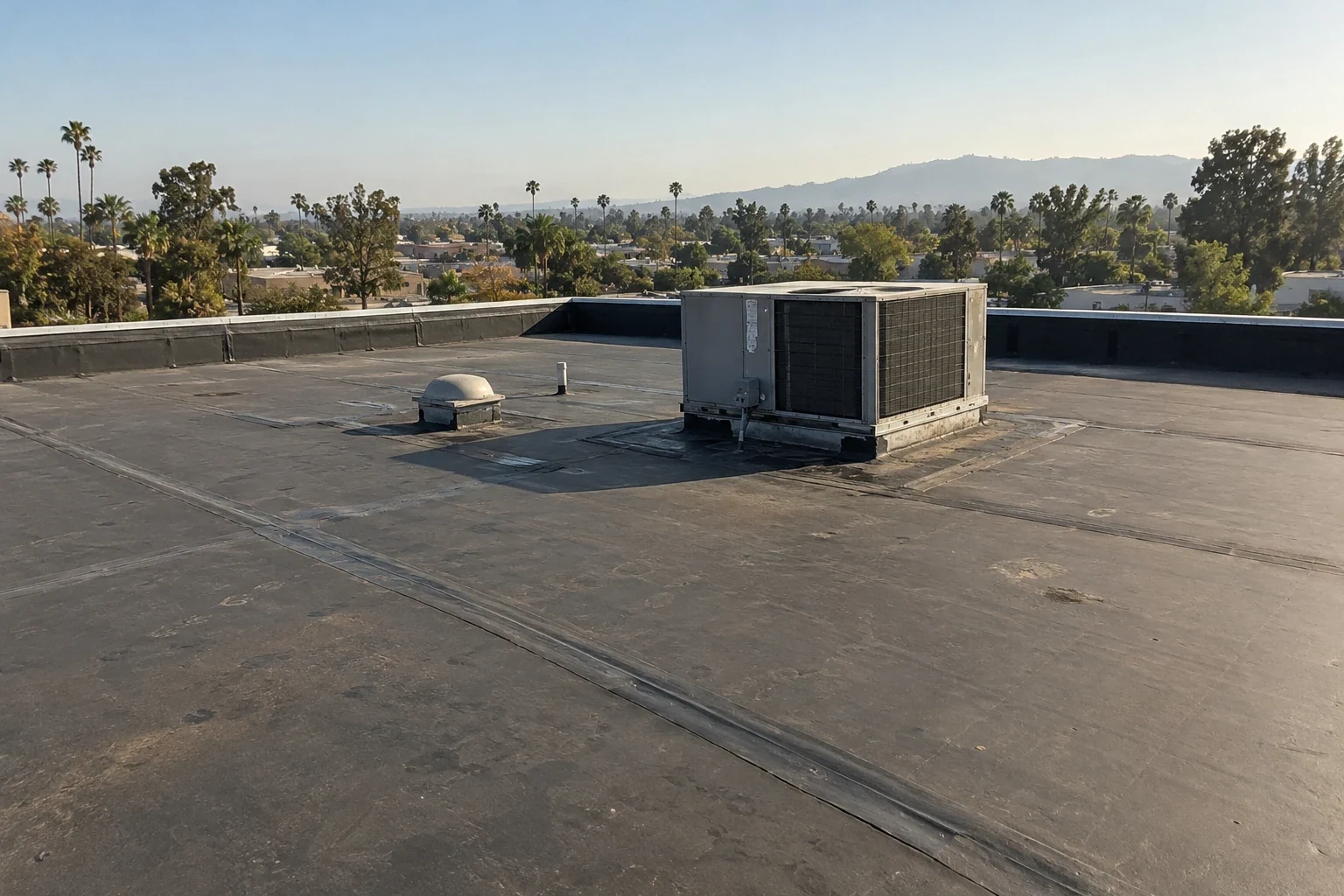
The proposal separates retained panels from replaced fastenings, damaged metal, new support and weather-layer construction. Handling and perimeter changes are also explicit. A retrofit can be compared with full removal only when both scopes include the support and drainage correction the building needs. The owner receives an assessment of what stays, what changes and which physical conditions must be resolved before that choice is implemented.
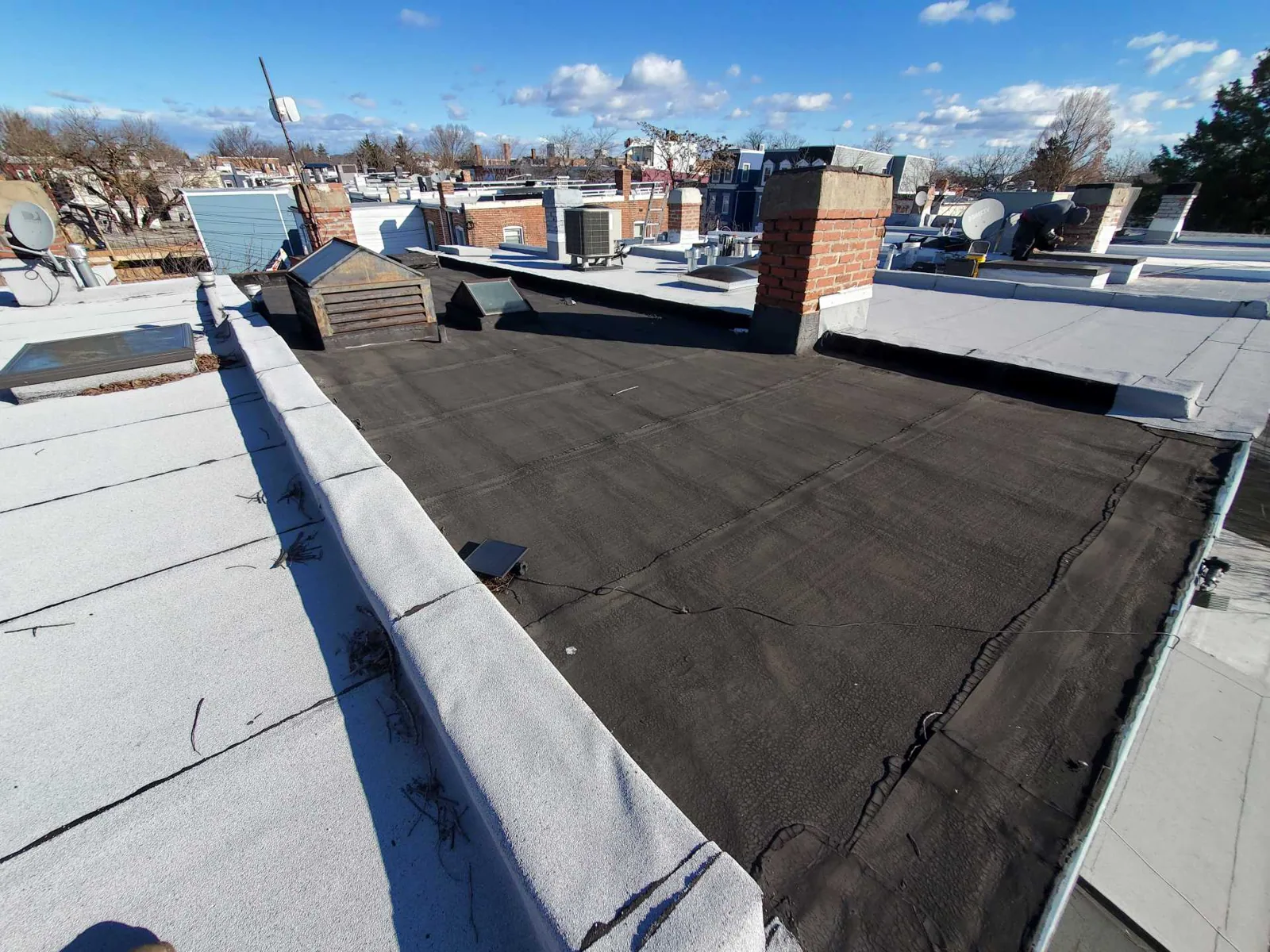
The loose connection needs assessment before the panels are assigned a retained role. We identify failed washers, enlarged holes and support concerns separately. The selected retrofit requires suitable receiving construction and any necessary attachment correction.
Damaged layers, penetrations and perimeter connections can still require removal. We identify those locations and the protection needed below. The retrofit schedule includes their correction rather than treating retained field panels as a reason to omit preliminary repairs.
The finished roof elevation and runoff connection may differ after new layers are added. We assess the outlet and perimeter geometry before selecting the detail. Changed trim, backing or drainage components belong in the complete scope where they are needed.
Both options need the required support, attachment and drainage work identified. We separate retained construction, removals and new components with their handling requirements. That makes the comparison reflect the building's actual roof correction rather than only its new exposed material.