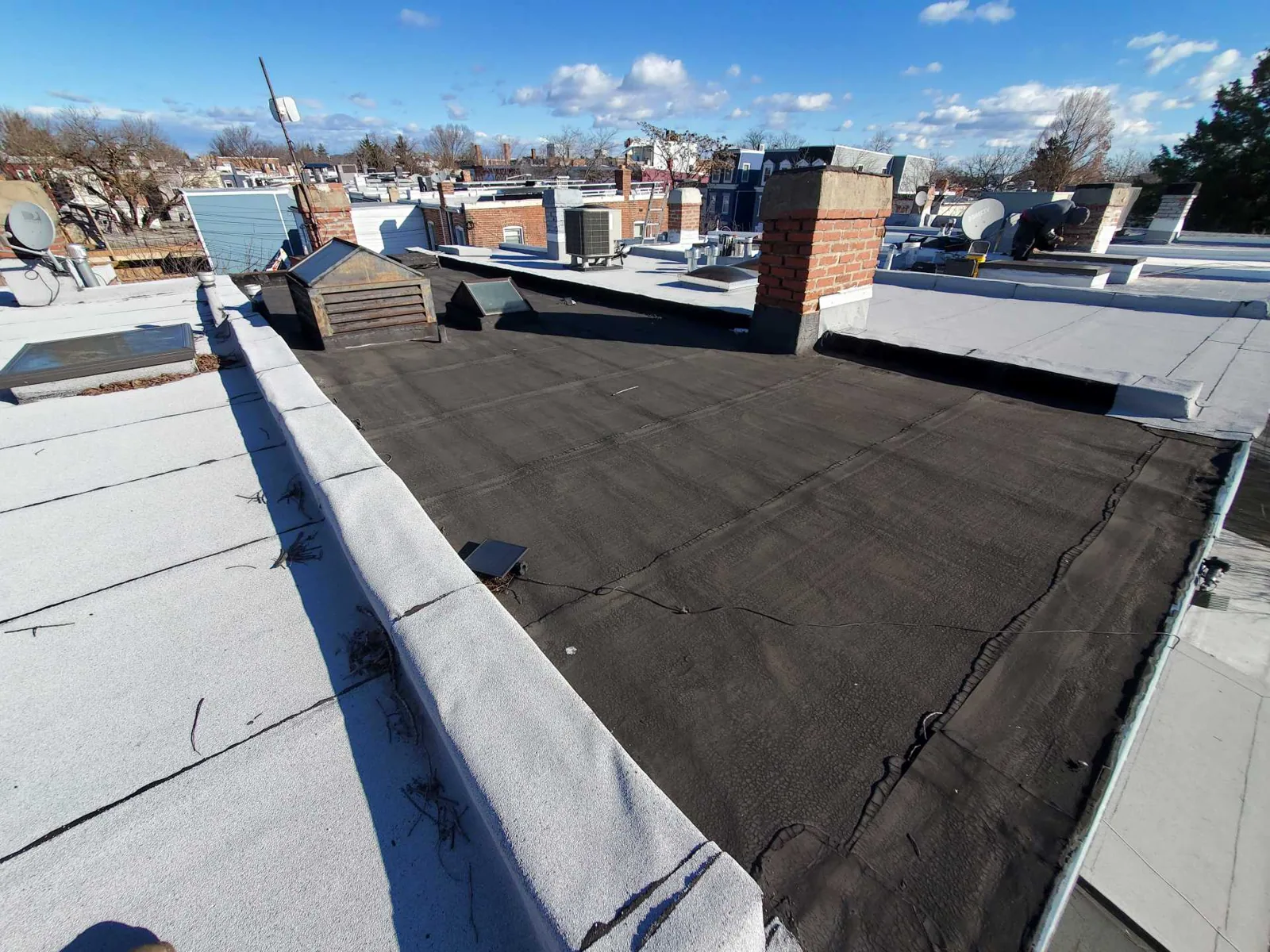
Assess spray foam roof repairs in Jurupa Valley with damaged-foam removal, restored drainage contours and suitable coating protection over retained sections.
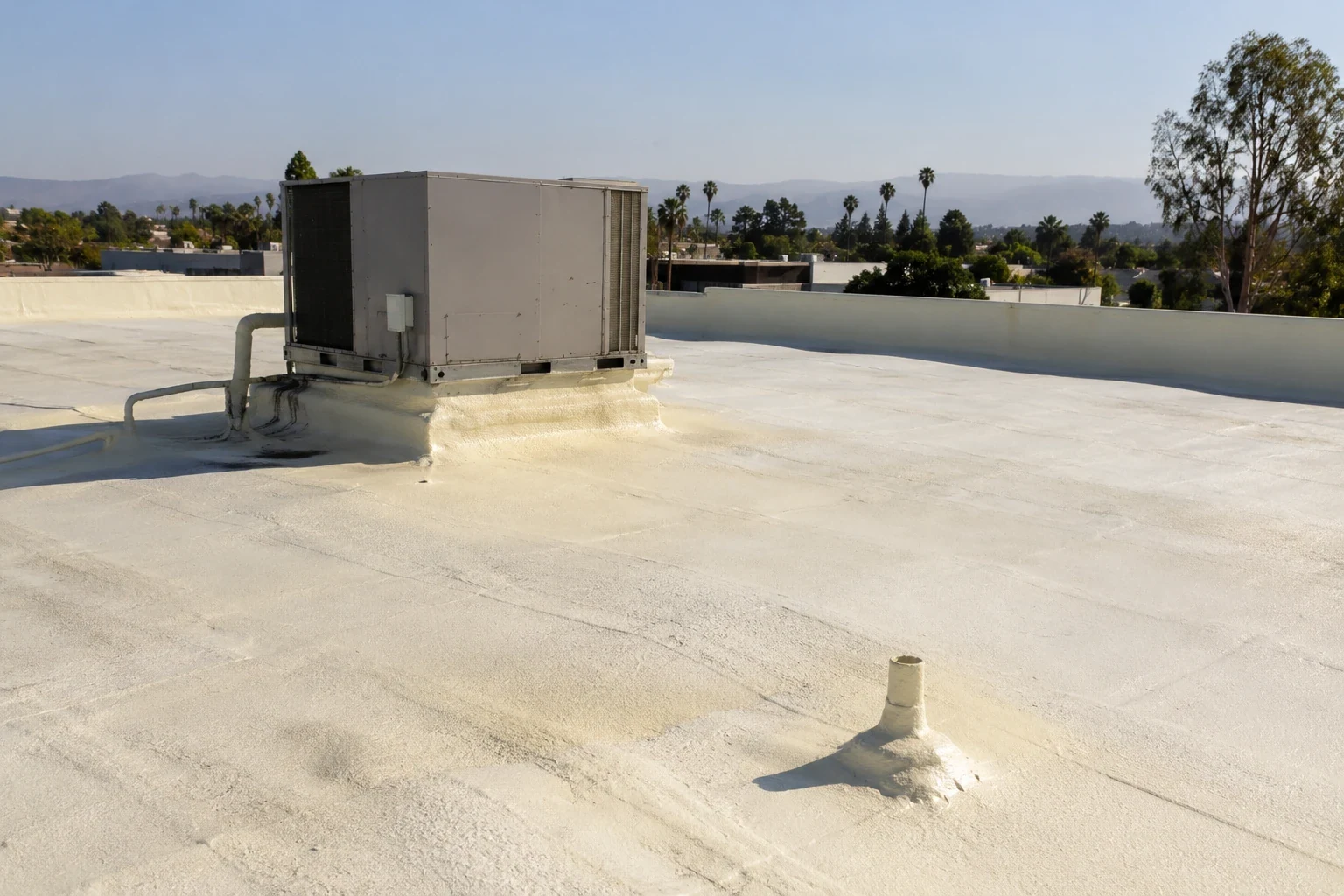
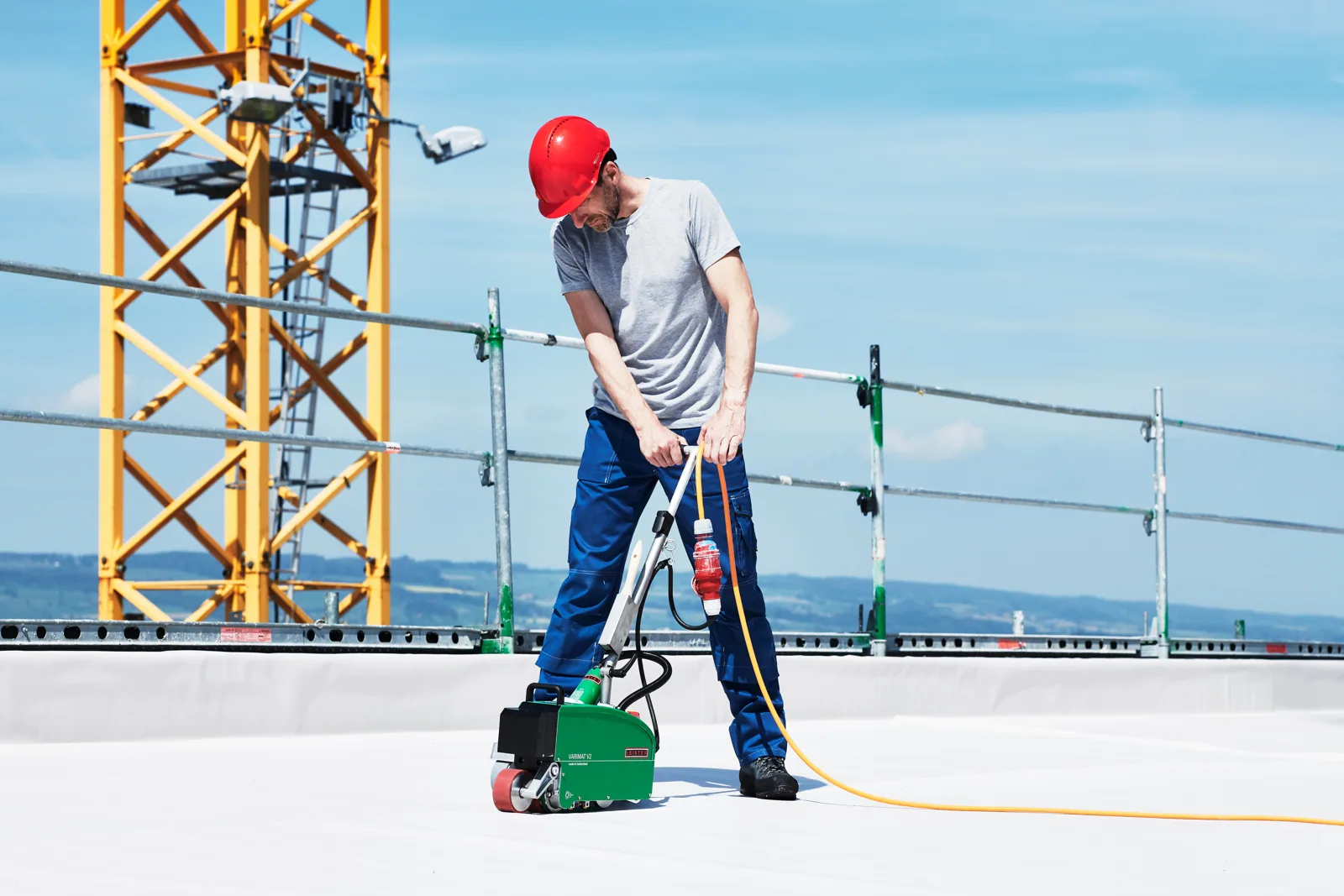
A raised foam repair ridge can trap water behind an otherwise usable roof section. Correcting that contour may require a bounded cut and reconstruction rather than another coating pass across the whole field. We assess spray polyurethane foam roofing in Jurupa Valley, CA by examining the drainage path and the foam beneath its protective finish. The contractor gets a scope for the failed geometry, any wet material and the coating connection needed around retained construction.
Rancho Cucamonga has office parks particularly along Haven Avenue, and Corona includes manufacturing businesses. Foam roof work for those kinds of operating buildings can involve equipment, wall connections and interior areas beneath a repair. We examine the particular property before proposing retention or renewal. The choice includes suitable foam support and coating protection, with drainage restored as part of the damaged section rather than left outside the allowance.
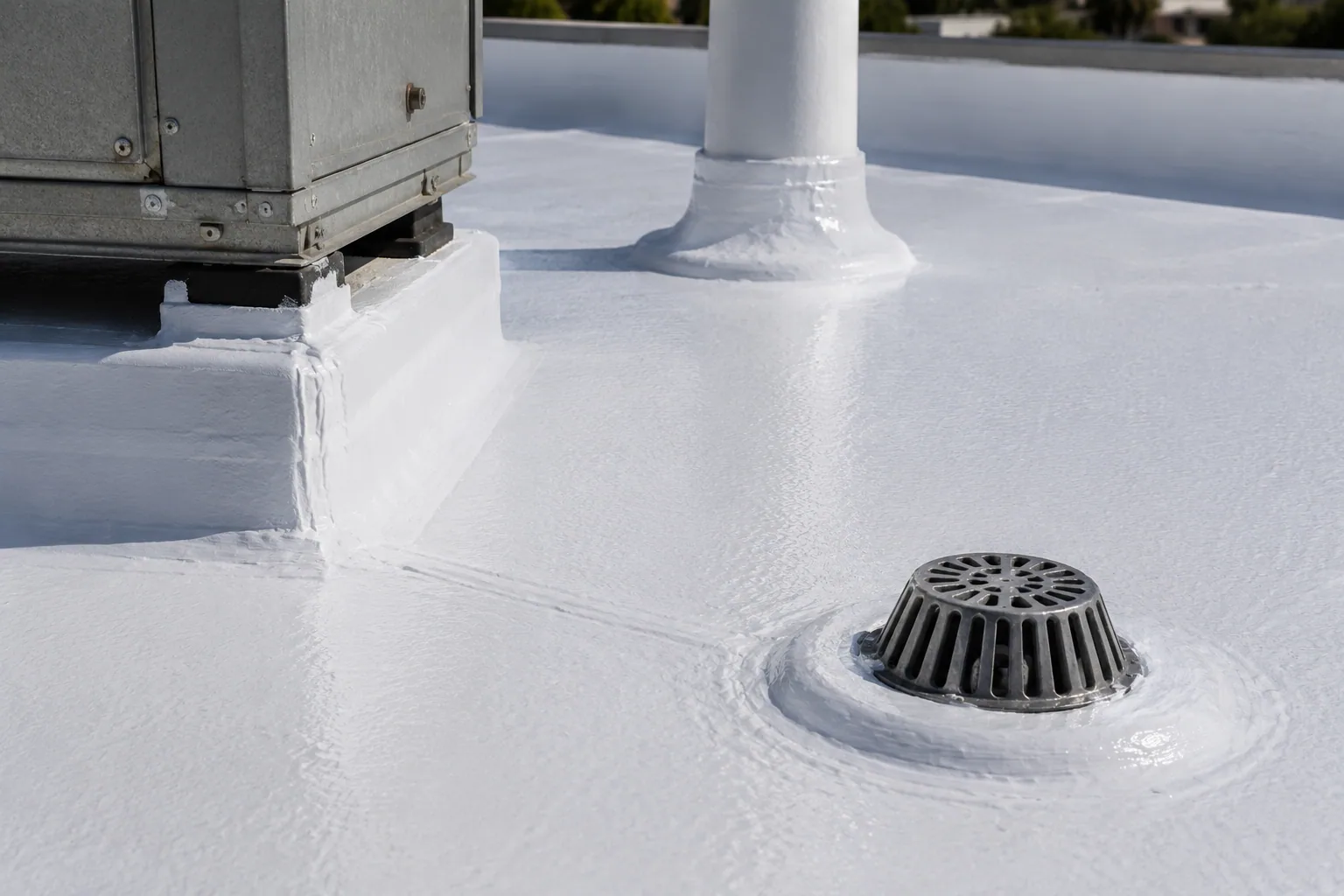
A drainage obstruction may come from a previous patch, damaged foam or a change in the surrounding assembly. We inspect the outlet route and compare it with the roof contour. The correction should address the actual barrier. Removing a high ridge without assessing the adjacent foam can leave damaged material exposed, while coating it again can preserve the same obstruction under a fresh finish.
Assessment of the outlet connection identifies whether the drainage component also needs work. We distinguish a contour correction from an unsuitable drain body or pipe condition requiring another trade. The roof-side repair connects those tasks where needed. The contractor should understand which element is preventing discharge before selecting an allowance for foam reconstruction around an outlet.
Moisture within suspect foam needs physical investigation before retention is recommended. We identify affected areas and check the supporting construction where accessible. Dry material beyond the damaged boundary may remain if it can receive the new repair. Wet or deteriorated foam cannot be treated as suitable merely because it can be covered. The removal follows its condition and the space needed to form the replacement contour.
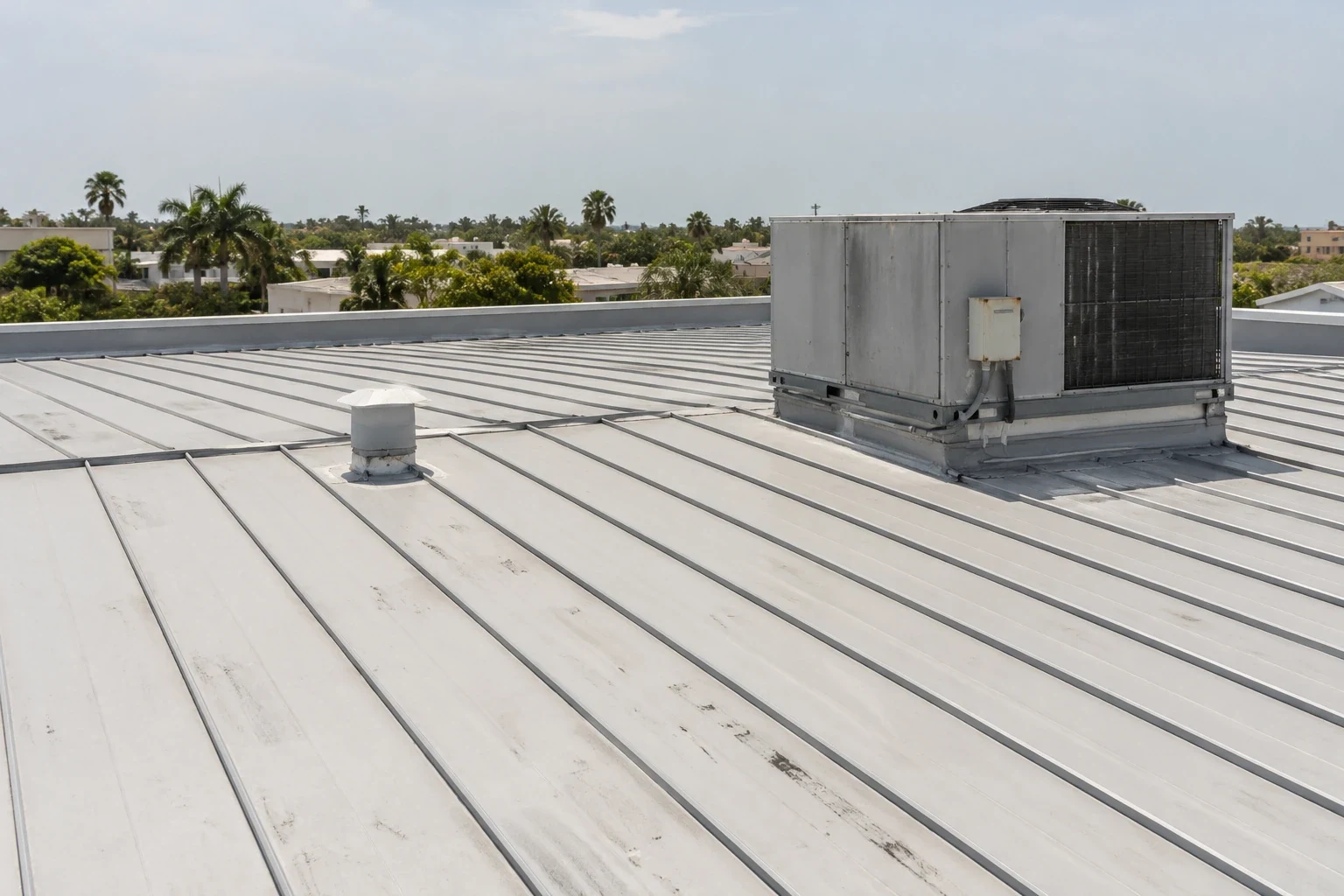
Localized SPF repair removes damaged material to suitable construction and rebuilds the specified foam section. We assess the cut edge and substrate before applying the replacement. The new foam must join the retained area in a geometry that suits drainage and coating work. A sharp or inaccessible transition can complicate protection of the repaired section. The scope includes the shaping and preparation needed for its finish connection.
Where the underlying roof or deck has deteriorated, that condition is corrected before new foam is placed. We identify affected support separately from the foam volume. Structural concerns go to the responsible design team. Filling above unstable construction can restore the visible contour without providing a suitable receiving assembly, so the repair boundary should include the layers that cannot carry the proposed reconstruction.
Penetrations and walls need assessment alongside the field shape. A contour correction that changes the finished height can alter the useful flashing dimension or runoff path at those connections. We identify the necessary transition detail before application. The contractor needs the completed weather arrangement, including any curb or outlet coordination, rather than a foam quantity that leaves the perimeter of the replacement section unresolved.
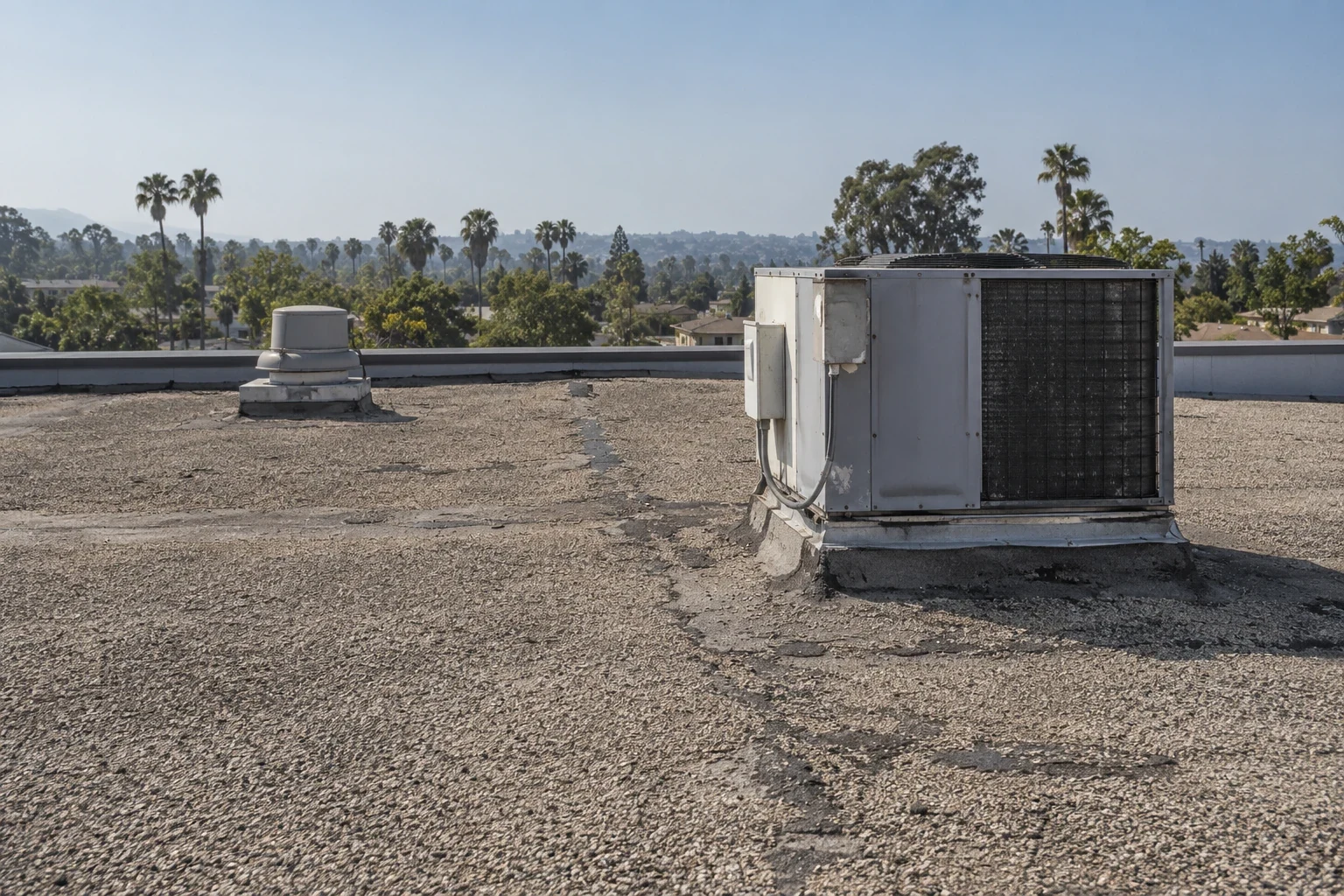
Foam application requires suitable receiving conditions and controlled installation. We assess surface moisture, preparation and the environmental requirements of the selected materials. Wind can affect application and protection of nearby property. The work plan includes the conditions under which the proposed section can be installed, so removal does not create an opening that cannot be reconstructed as intended during the available period.
Jurupa Valley's inland regional weather includes summer heat, winter rainstorms and Santa Ana winds. We coordinate application against actual site conditions rather than use those regional patterns as a schedule. Nearby vehicles, equipment and air intakes may require protection from overspray. Their location and operating use affect the feasible work area. Those measures belong in the allowance alongside the material needed to rebuild the damaged roof.
Work above an occupied interior may also require protection where support layers are removed. We identify the affected space and agree on the work window with the operator. The foam section and its protective coating need coordinated completion. The sequence should not rely on leaving newly installed foam exposed while another material, trade or acceptable application period is still being arranged.
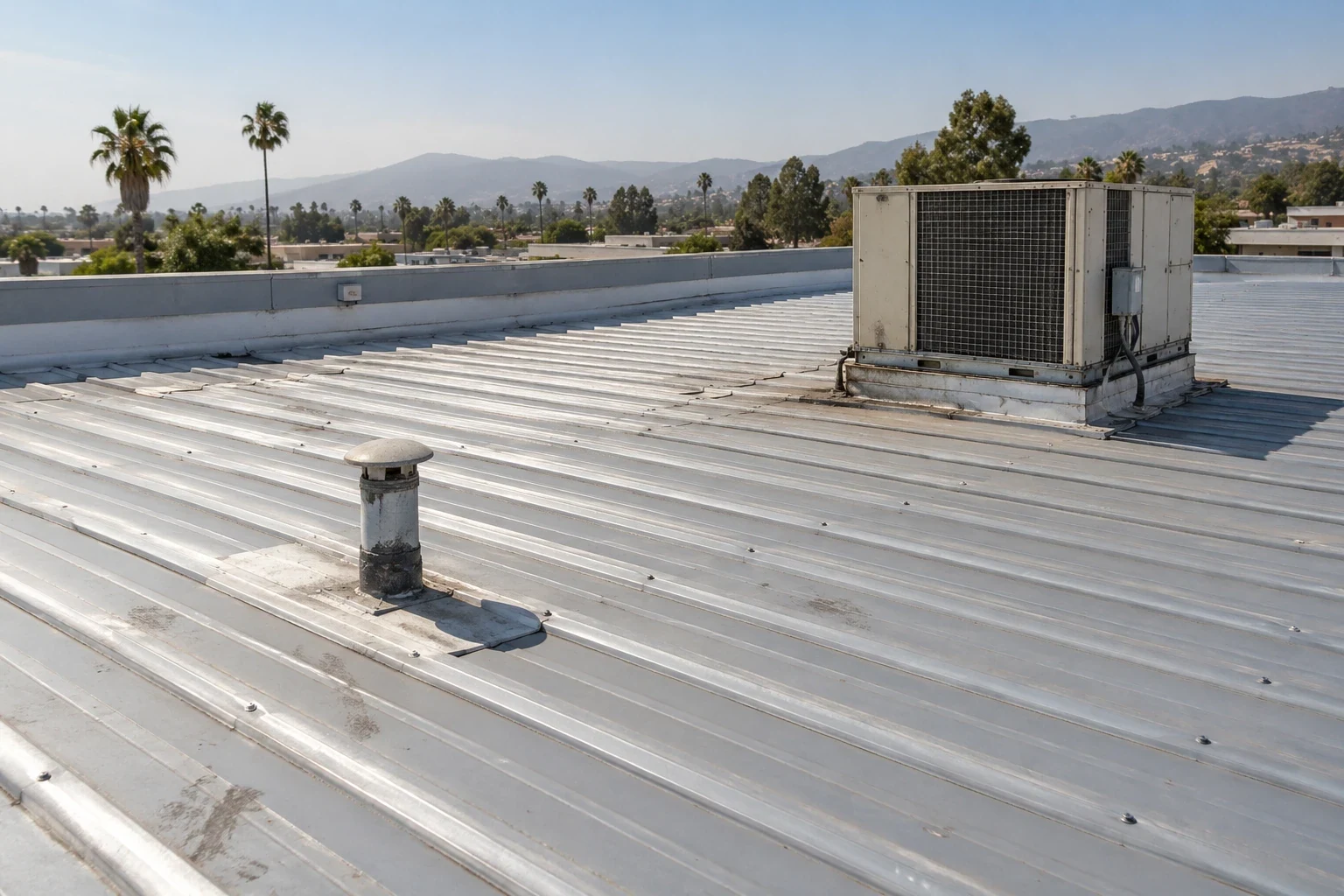
SPF needs appropriate protective coating over its finished surface. We assess the retained coating, adhesion and repair materials before selecting the new protection. Weathered or peeling finish can require preparation beyond cleaning. The repaired foam and surrounding coating need a compatible connection. Applying more material over a loose finish leaves a weak receiving layer beneath the new treatment.
Silicone coating construction has its own substrate, thickness and detail requirements. We assess whether the prepared foam and retained finish can receive the selected system. The coating allowance follows those requirements and the repair geometry. It should not be offered as a substitute for removing wet foam, correcting an obstructed drainage path or rebuilding an unsuitable penetration connection.
An acrylic coating system requires assessment of application, curing and drainage conditions for the proposed product. We compare those needs with the building and existing assembly. The owner should see how preparation and maintenance differ under the available options. Neither material name alone establishes that a deteriorated receiving surface can be retained without correction.
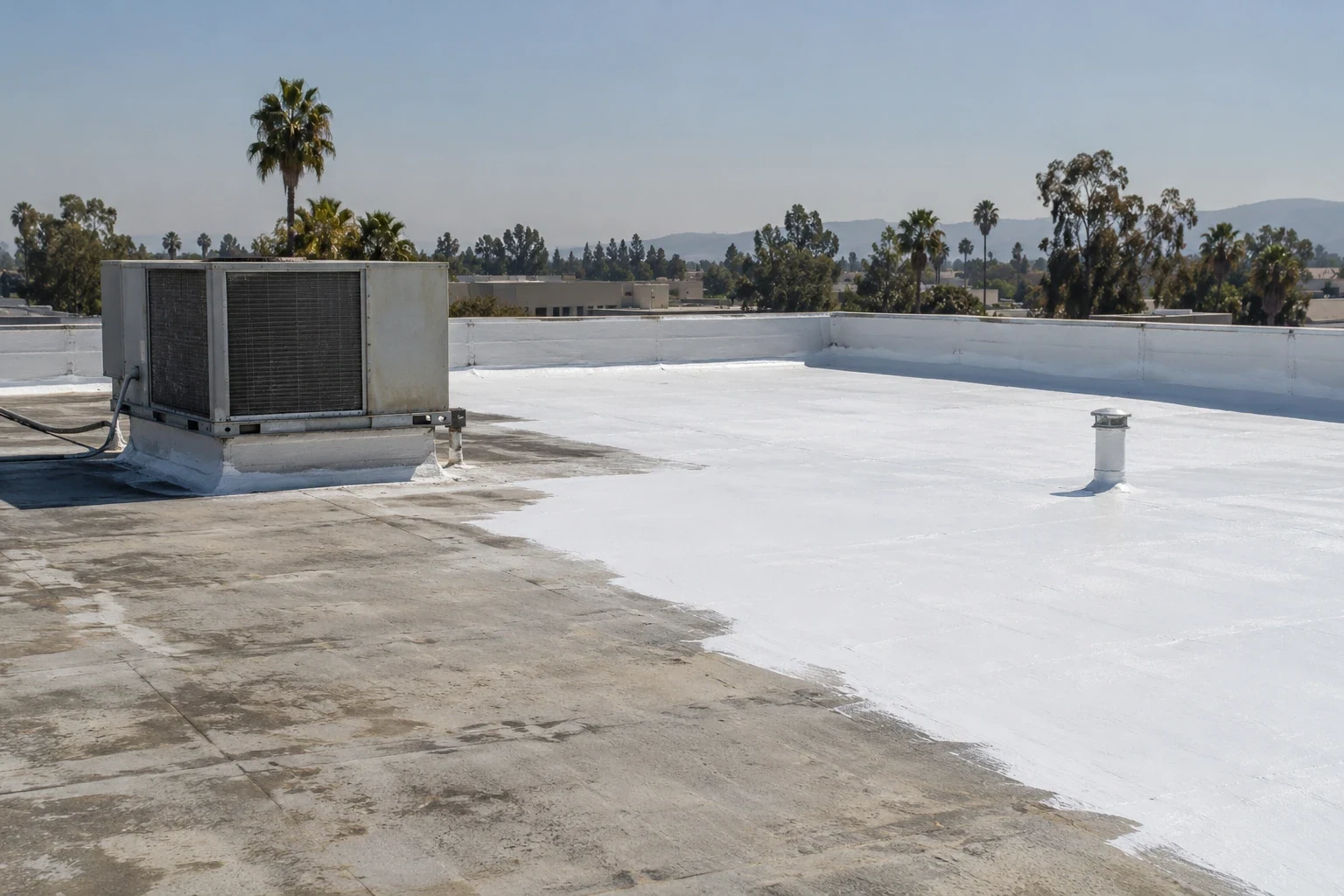
Tools, concentrated bearing and recurring traffic can damage the coating and foam below. We identify suitable protection at actual service routes and support locations. The arrangement must preserve drainage and access to details needing inspection. Contact damage should be repaired before a protective measure conceals it. Otherwise the retained foam can remain deteriorated beneath a pad that only hides the visible symptom.
At a property in Rancho Cucamonga, office use can influence when equipment servicing and roof work occur. We discuss the actual operating needs and include the vulnerable routes in the repair assessment. For a foam roof above occupied offices, protection below a removal and protection on the finished surface are separate tasks, each tied to how the building will be used.
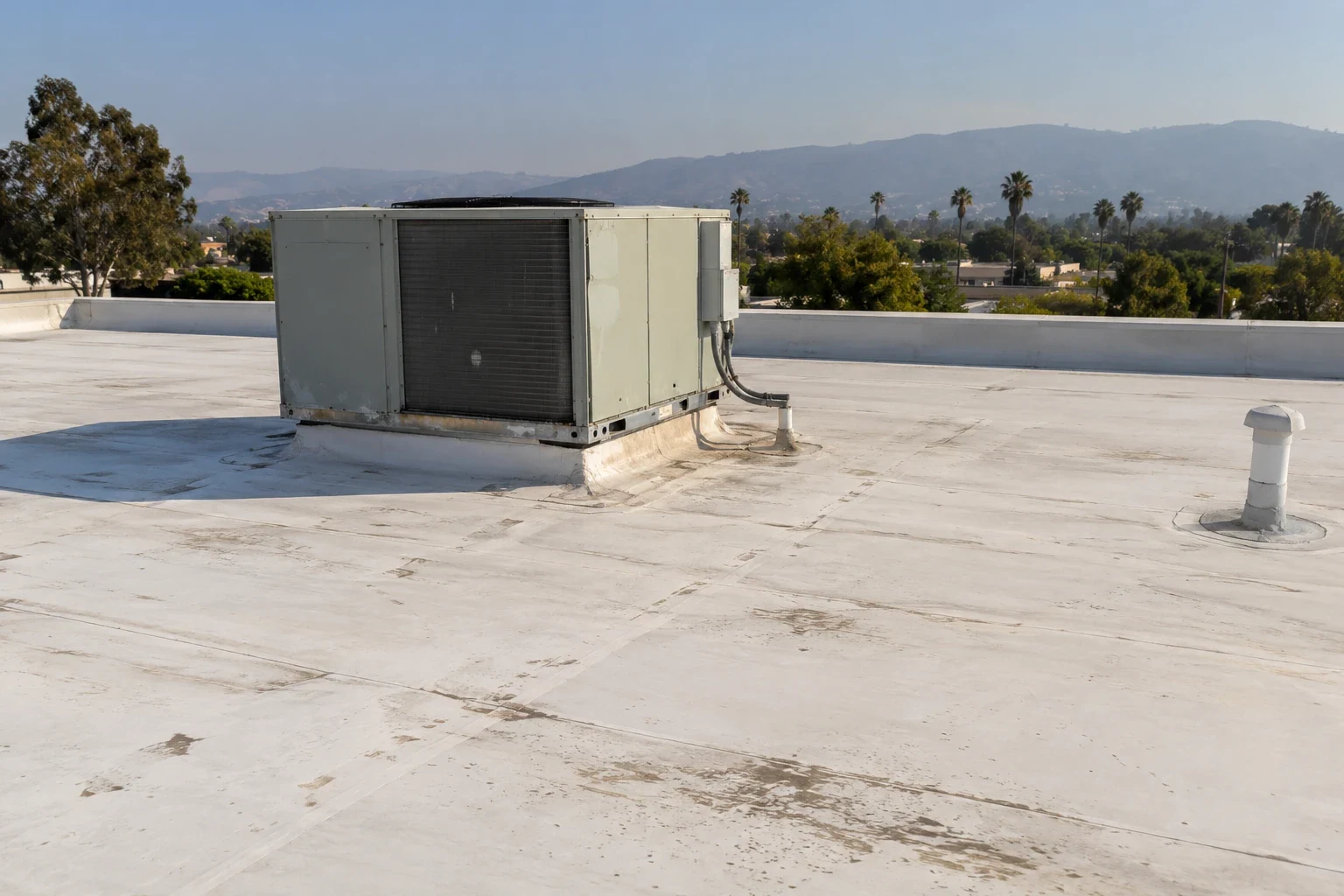
Foam cutback, support correction, replacement shaping and coating preparation should be identifiable in the proposal. A bounded drainage defect may allow suitable field construction to remain. Widespread wet or deteriorated foam can support a broader replacement option. We compare those scopes against actual findings and the application arrangement they require. Continued inspection of repaired contours and coating condition helps identify changes before another local defect expands into damaged supporting material.
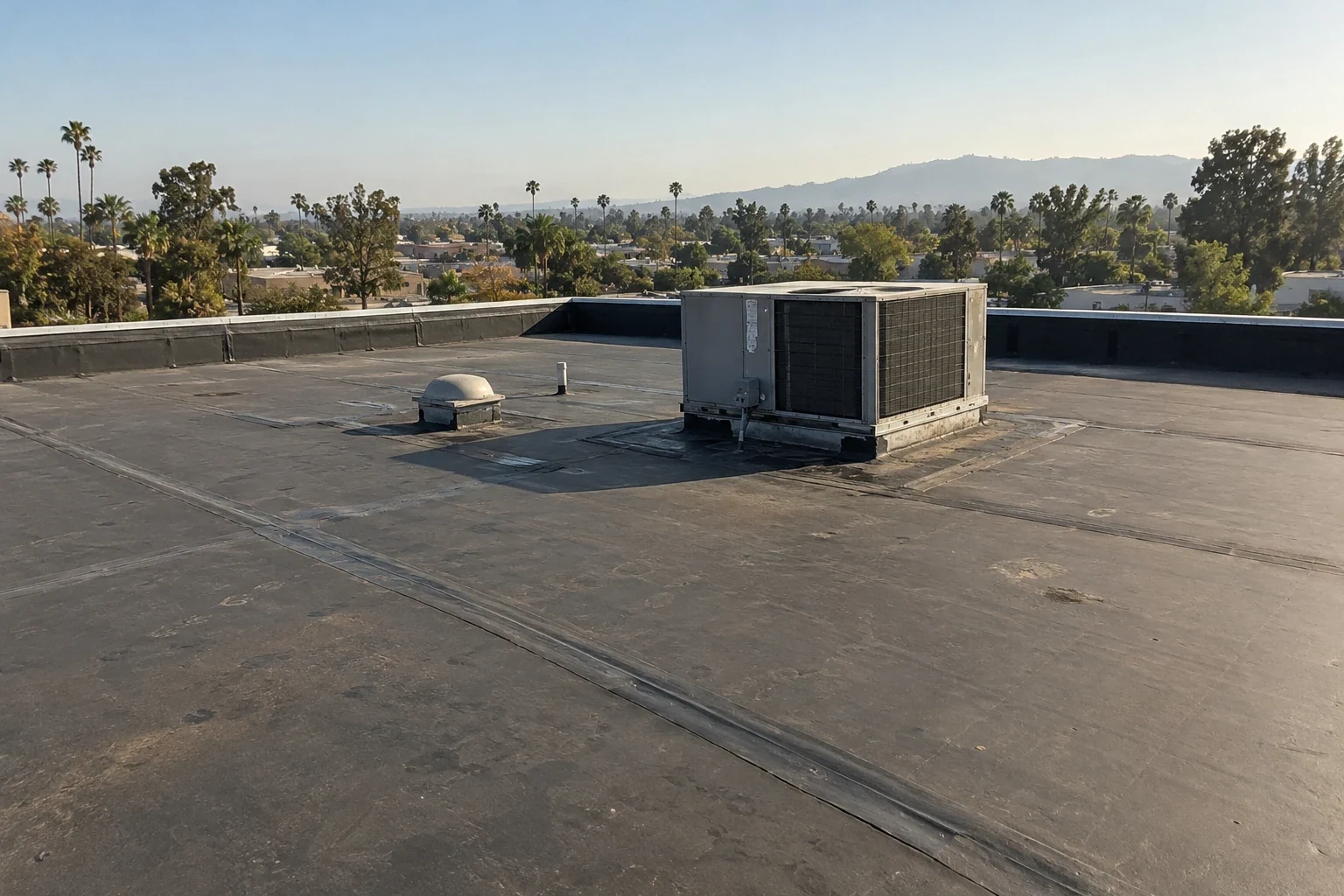
A localized repair may be possible where surrounding foam and coating can receive the new connection. We inspect the contour, moisture and finish adhesion before defining the limit. The completed repair must restore drainage and protect the rebuilt section with suitable coating.
The foam condition needs assessment where moisture or deterioration is suspected. We use appropriate investigation to identify affected material. Usable adjacent construction may stay, but damaged foam requires removal where it cannot receive the repair properly.
Application can require protection of nearby property and operating equipment from overspray. We assess those locations and the material's environmental requirements before scheduling. The feasible section must be installable under the actual site arrangement.
The proposal identifies damaged foam removal, underlying correction and contour reconstruction. It also includes the protective finish and any outlet or flashing work required by the changed geometry. Those tasks distinguish a complete repair from another coating pass over the existing barrier.