Plan commercial roof work in Ontario, CA with an assembly-specific scope for leaks, freight access, exposed details, and operating schedules.
A diagonal split in a wall flashing can send water behind a warehouse parapet and wet insulation away from the visible tear. The repair decision depends on the membrane, the wall connection, and whether a dry receiving surface remains beyond the split. We inspect commercial roofs in Ontario, CA and define the layers to retain or remove. The scope also accounts for freight access and the work window needed to rebuild a complete connection.
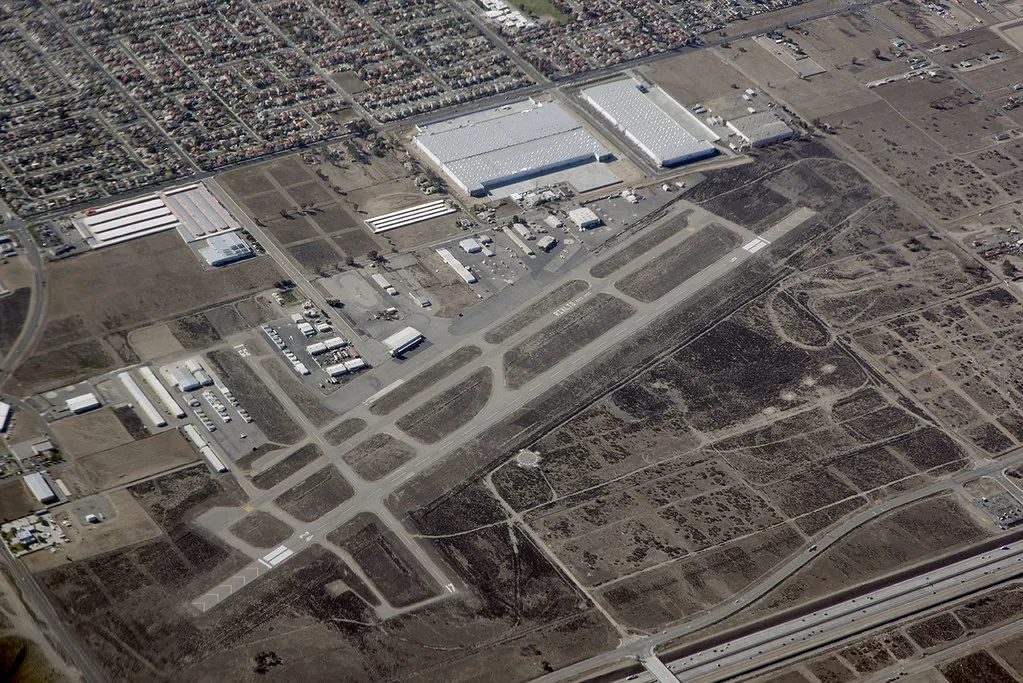
Ontario's economy includes warehousing and manufacturing, including Maglite. Interstate 10 and State Route 60 run east-west through the city, with Interstate 15 along its eastern side. Ontario International Airport supports freight operations associated with FedEx and UPS. This is a citywide logistics context; a particular property's use and access plan still come from its operator. We coordinate roof work around the actual freight route, loading schedule, and equipment restrictions at the building.
A wall flashing can split where it turns from the field membrane, terminate below coping, or meet an equipment curb. We inspect the whole transition and compare the roof slope with the interior leak location. Water may travel under insulation or follow a deck seam before it appears indoors. We locate the failure, then determine how far the surrounding material needs to open for a stable repair. A surface seal is not a complete scope if wet layers remain beneath it.
For a membrane roof, compatible repair material must bond or weld to the prepared existing surface. For metal, the overlap and fastener line need a detail suited to the panel and movement. We identify the installed system from seams, edges, markings, and records, then state the receiving condition in the work description. An infrared moisture survey can help select areas for physical confirmation if moisture may extend beyond the visible split.
Ontario's road network helps organize material travel, while the property contact confirms the approved entrance, internal drive, lift position, and any route shared with deliveries. A commercial inspection maps the affected detail and nearby drains, penetrations, and edges so the operator can review the proposed opening before equipment arrives.
A localized flashing repair is suitable when the wall and field can receive a compatible connection and the substrate is sound. We remove failed material, prepare the surfaces, and connect the new flashing to the membrane or panel system. If insulation is wet or the vertical backing is unstable, we expand the boundary and document what must be rebuilt. The owner sees the difference between repairing one transition and reconstructing the adjacent roof section.
A recover leaves existing layers below the new system, so moisture, attachment, added height, wall terminations, and drain depth need review first. Replacement exposes more of the assembly and can address damaged insulation or substrate, but adds tear-off and disposal. We compare those options with freight access and staging included. The work should not close the roof before each curb, wall, and outlet has a receiving detail suited to the finished surface.
Ontario's warehousing and manufacturing context can mean a building has equipment or a delivery operation that needs a planned release. For a warehouse roof or manufacturing property, we coordinate access with the operator and the other trades. Those categories frame questions to ask at the site, while the assembly inspection establishes the actual work. A TPO transition and a standing-seam detail cannot be treated as the same repair.
Where a property runs multiple shifts, we ask which loading bays or equipment routes must remain open and use those details to stage the repair. We stage material to avoid blocking drains and service paths, then define a roof section that can be removed and closed within the approved work window. These details help connect construction timing with an operation that cannot simply move its receiving schedule.
Roof work above storage or production needs protection for both the open section and the space below. We identify inventory, machinery, or occupied rooms that could be affected by debris or water. The operator confirms any relocation or shutdown, while the roof crew defines temporary weather protection and the daily closing line. If the scope changes after concealed conditions are exposed, the owner reviews the added opening before work extends over another area.
Material deliveries and waste removal need routes that fit the facility's circulation. We ask where a lift can set up, which gate or drive is approved, and when freight activity is lighter. A phased stage may reduce disruption, but it still has to leave a complete membrane or flashing tie-in at the end of the release. An occupied-building roofing plan gives the contact a clear account of access, protection, and daily completion points.
If an active leak precedes a replacement decision, first identify the entry, loose material, and safe access needed to limit exposure. We assess safe access, take reasonable steps to limit water entry, and record what remains for permanent work. The report separates temporary protection from the lasting repair and identifies any affected insulation or interior zone. That gives the owner a documented next step instead of treating the first water control measure as the final scope.
Repair cost changes with the length of the split, the amount of wet insulation, wall flashing height, substrate condition, and the number of transitions that must be rebuilt. Lift access, staging distance, freight windows, and interior protection also affect labor. We separate those drivers in the proposal so the owner can compare a patch with a full replacement section. A complete scope names what is removed and how the new connection is finished.
Ontario includes several road corridors and freight activity, but the service request still needs a property contact and safe route. We coordinate the specific entry and work period before setting the schedule. If the roof portfolio includes Riverside or Corona, a Riverside roof record and a Corona assessment stay tied to their own assemblies. A multi-site roof program can compare condition and planned capital work across locations without combining repair quantities.
Share the Ontario building, leak or flashing location, freight schedule, roof records, and any equipment constraints. We will inspect the installed system, set the wet-layer and removal boundary, and return a scope with access, protection, and material preparation included. The decision can then follow the assembly and the operating window available for the work.
It may be repaired when the adjacent membrane, backing, and substrate can receive a complete connection. We inspect moisture and the wall-to-roof transition before setting the limit. A larger section is considered if the supporting layers are damaged.
We confirm the loading calendar, approved gate, lift location, and routes that must stay clear with the operator. The work section is planned around the release and includes a daily closure that protects the building.
The survey can help identify areas for physical confirmation when moisture may extend beyond the visible leak. We use inspection openings and material checks to determine what is actually wet before adding removal quantities.
The receiving method depends on the installed assembly. We identify panel, seam, flashing, and substrate conditions, then specify a connection compatible with that system rather than using one detail for both.