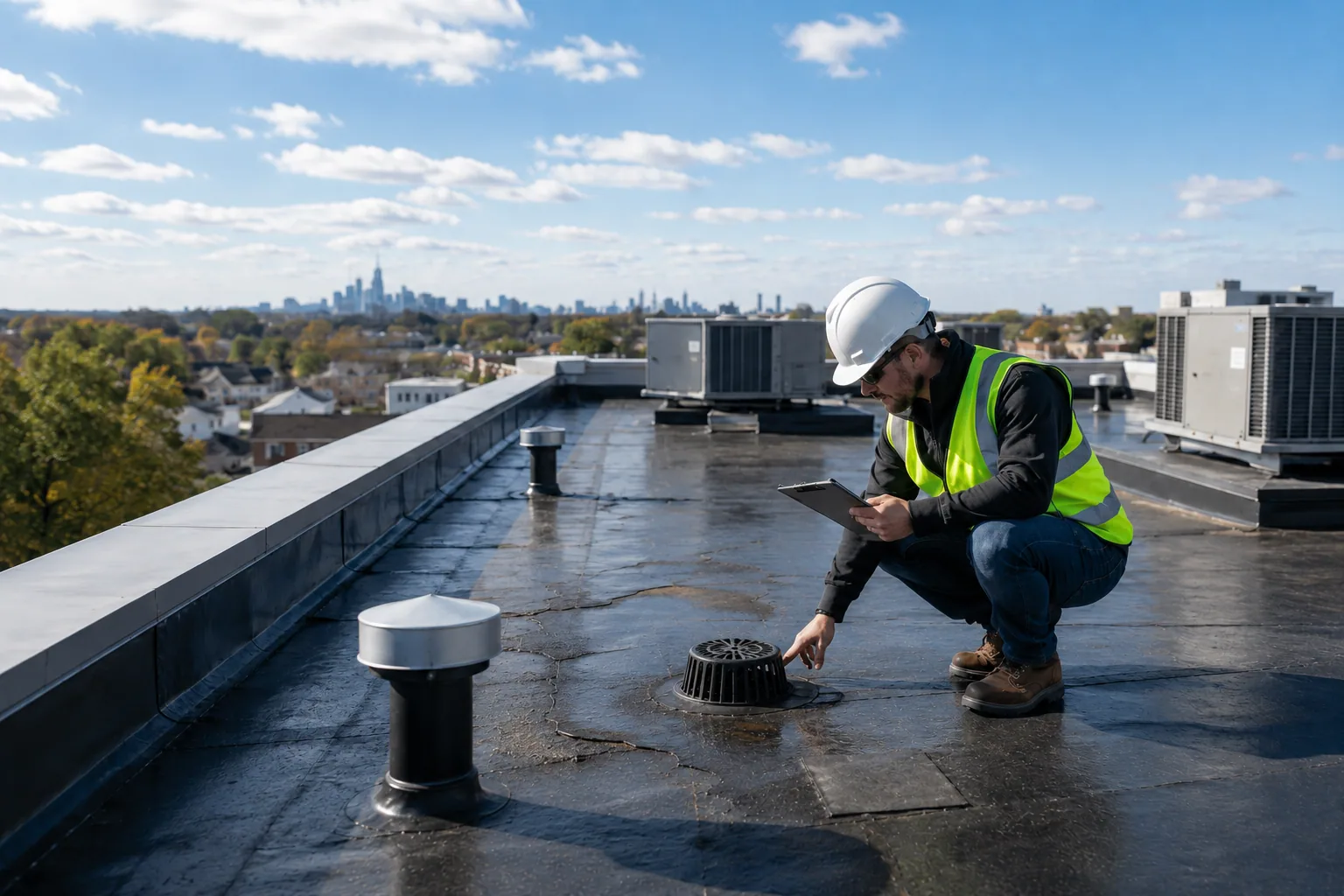
Assess storm-damaged commercial roofs in Jurupa Valley, secure exposed details and compare membrane, edge and wet-layer repairs against the damage found.
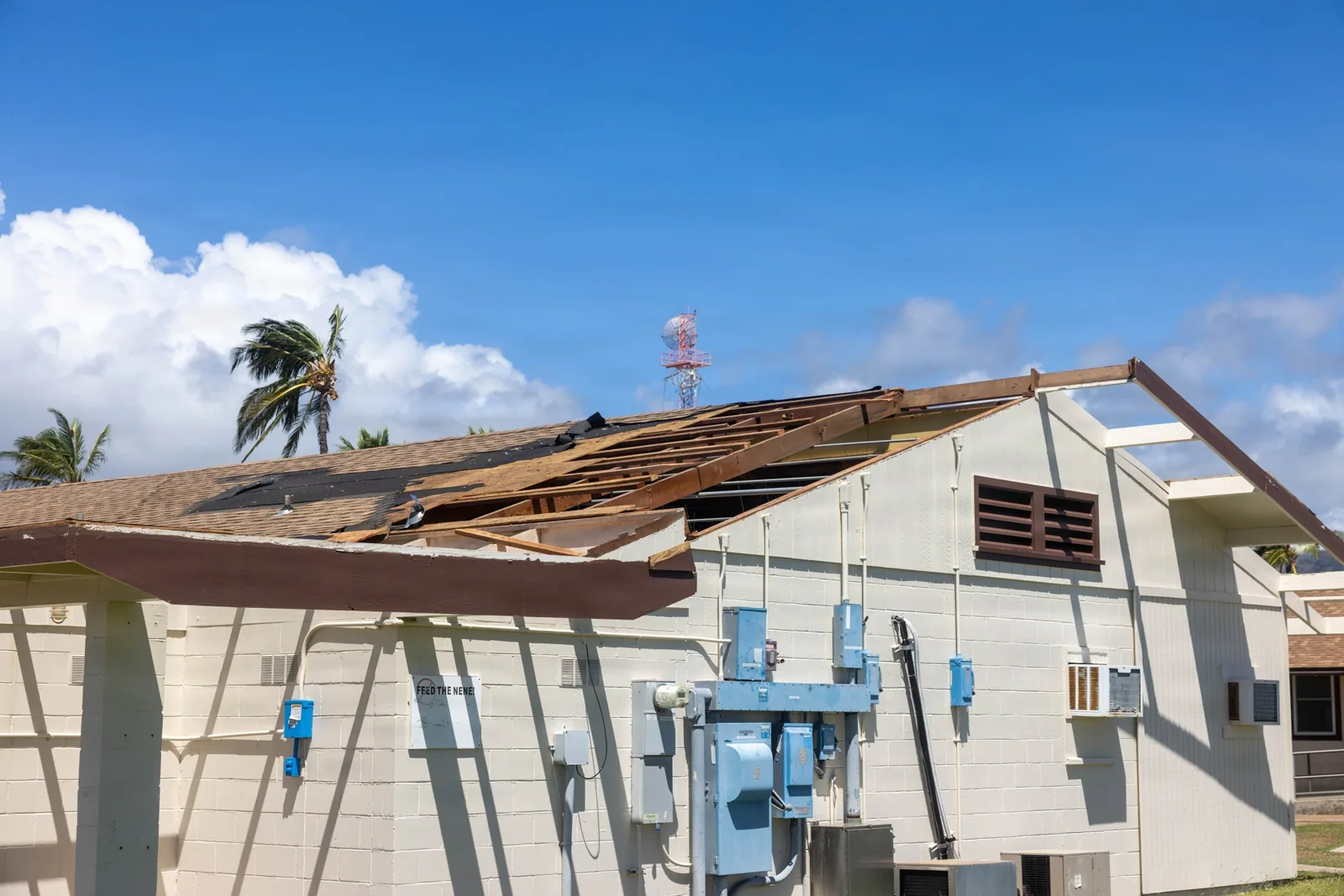
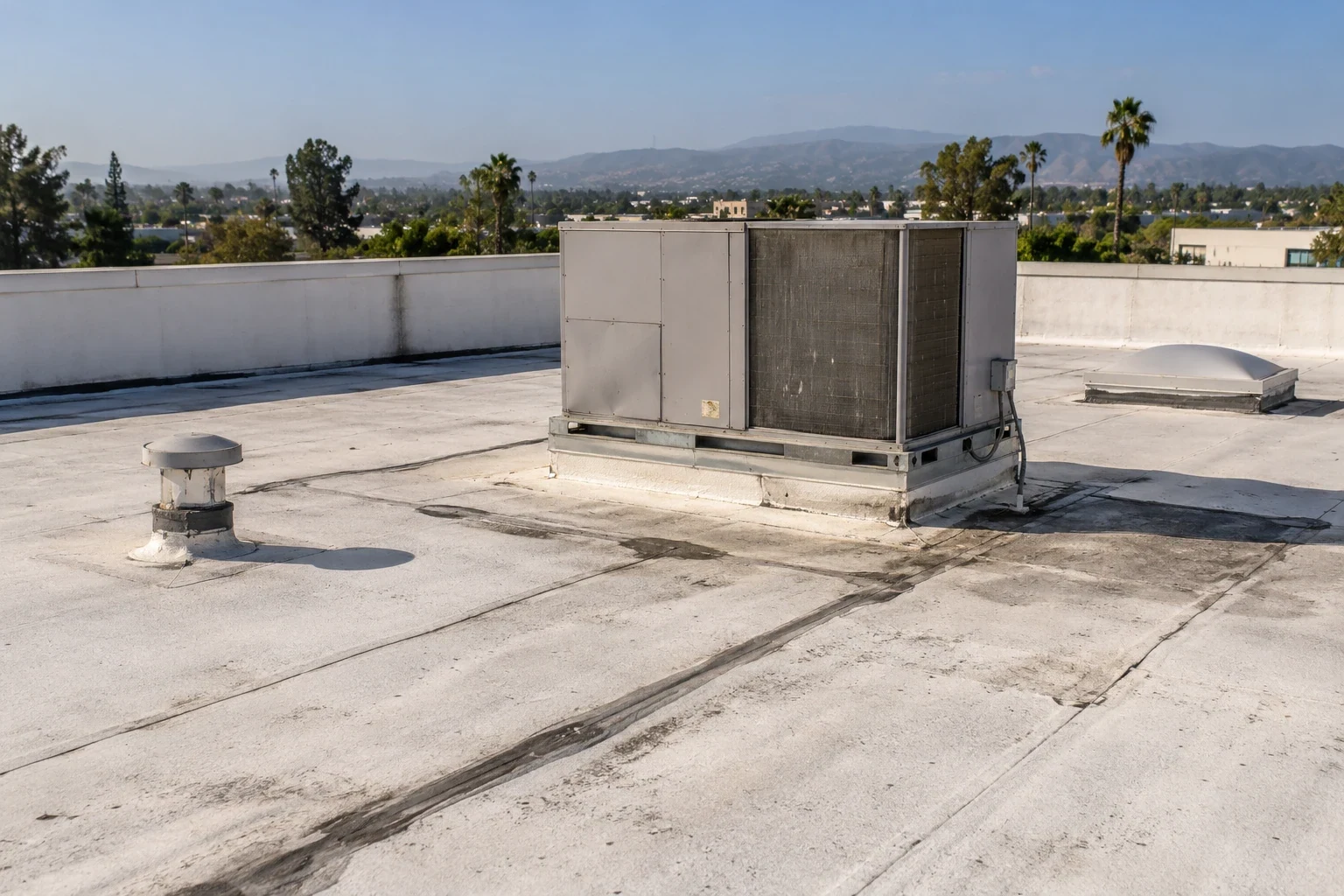
Debris driven into a roof seam can leave an opening beside construction that still looks intact. The damaged sheet needs examination, and its attachment must be checked before a contractor sets the patch limit. We assess storm-damaged commercial roofs in Jurupa Valley, CA and separate stabilization from the permanent repair. The scope follows the disturbed components and affected layers, including damage beyond the first visible tear where the adjoining construction has lost support or fastening.
Santa Ana winds caused damage and injuries in Mira Loma on December 25 and 26, 2000. Regional winds and winter rain make exposed edges, roof openings and drainage important parts of a current damage assessment. We inspect your building's actual condition and identify what needs securing, testing or replacement. For a general contractor, the useful comparison is a complete repair boundary with its supporting work, rather than an allowance based only on the amount of missing sheet.
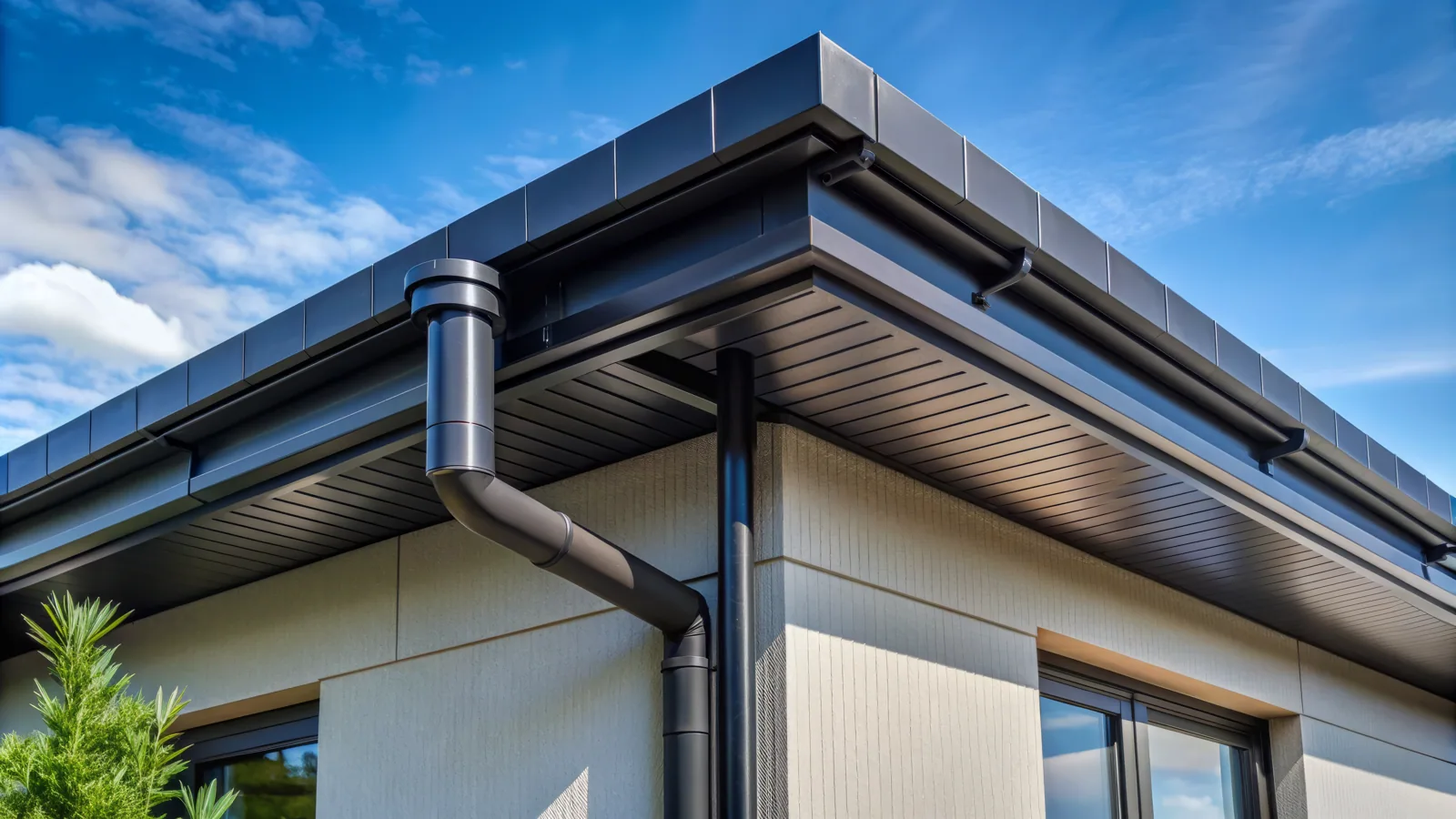
Loose metal, unstable overhead material and water entering occupied rooms can require immediate restrictions. We assess safe roof access and establish which openings can be protected under the current weather and surface conditions. Where needed, urgent dry-in and stabilization can precede the permanent work. A temporary closure has to shed water onto usable roofing and remain secured. Covering a damaged area without checking the adjoining attachment can leave an unstable work boundary.
Water near electrical equipment or damaged ceilings needs attention from the appropriate building or emergency personnel. We coordinate the roofing response with those interior hazards so the exterior repair does not create additional exposure below. Occupied spaces may require protected access and a limited removal stage. The owner should know which measure reduces the immediate risk and which assembly remains damaged until the scheduled permanent reconstruction can take place.
Scattered debris can point to more than one disturbed component. We examine where loose objects came from and whether they have damaged adjoining surfaces. Equipment panels or sheet metal may require the responsible equipment trade as well as roofing work. We record those connected conditions before cleaning alters the scene. Removal then follows a safe handling plan, particularly where items are near an edge or over an entrance still being used.
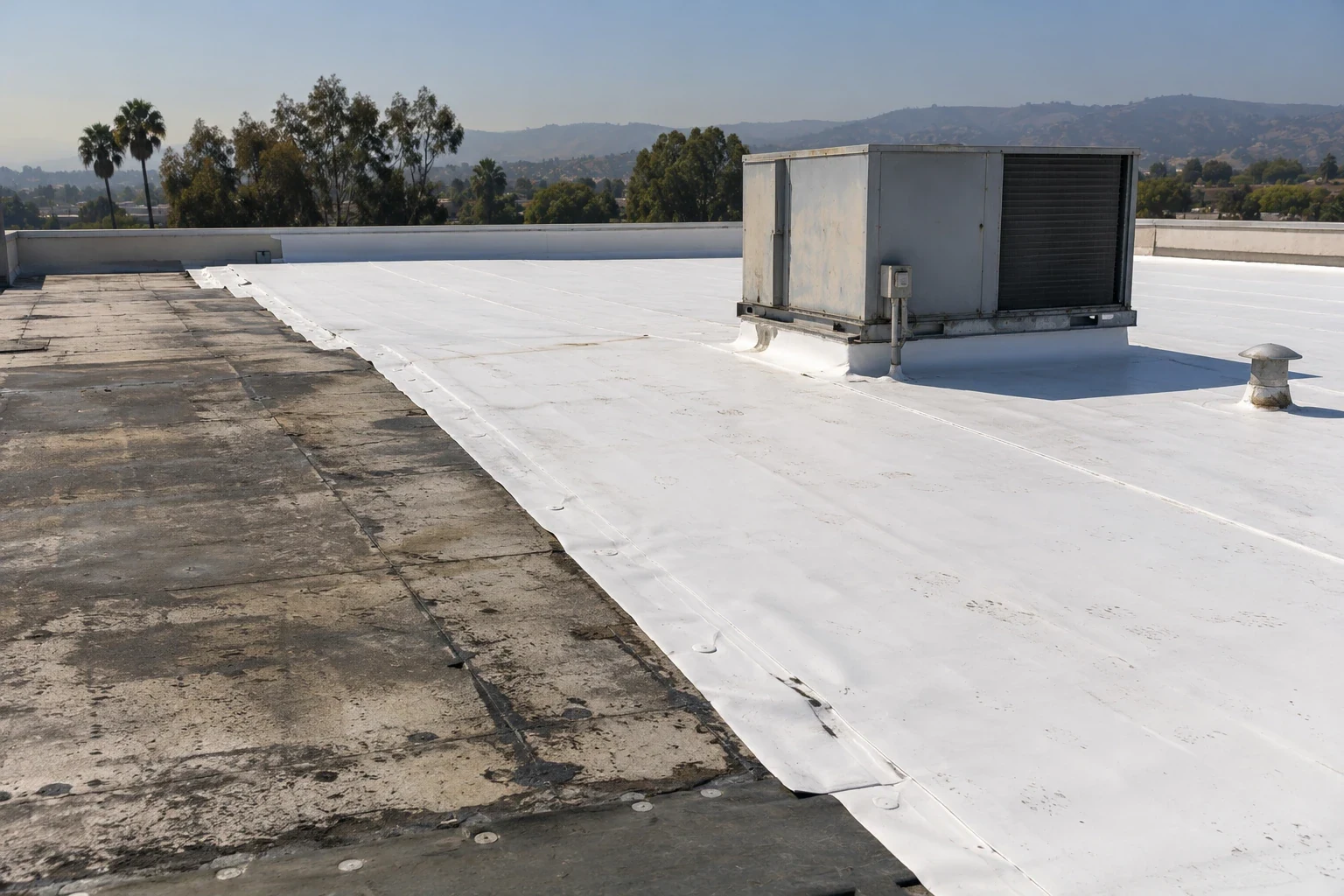
A lifted sheet can stress fasteners and seams beyond the torn material. We examine the surrounding membrane, insulation support and perimeter connection to establish where stable construction begins. A patch needs a sound receiving area with enough room for its complete connection. If fasteners have loosened across an adjoining section, membrane repair alone leaves a mechanical weakness. The scope must include the attachment correction or replacement area that the findings require.
Edge metal and coping can fail through loose supports, deteriorated backing or damaged connections. We examine the substrate as well as the metal profile. Wind-related fastening repairs may involve replacing connected pieces and rebuilding their support. A new exposed section does not restore continuity if the adjacent components remain unstable. We identify the removal length and termination conditions needed to return the edge to a complete working detail.
Drainage failures can become apparent during heavy rain. Debris may block an outlet, but a raised inlet or compromised drain connection needs different treatment. We inspect accessible components and identify plumbing issues that require a connected trade. Correcting persistent ponding can be part of the roof repair where the assembly itself creates the low area. We distinguish that work from clearing material deposited during the event.
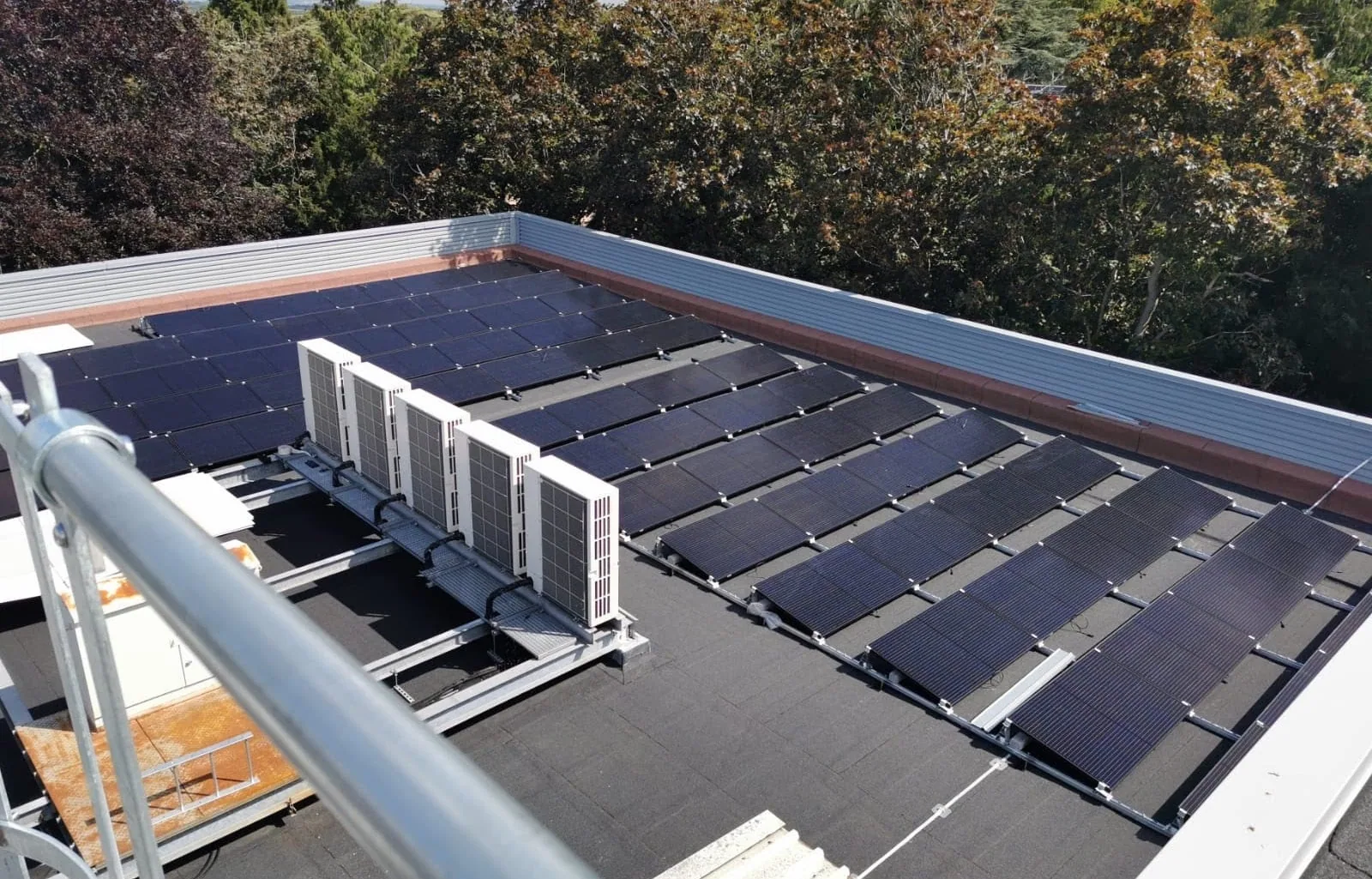
An impact opening can be surrounded by an otherwise usable sheet. A brittle membrane with spreading splits may need a broader replacement section to provide a workable connection. We clean and examine the damaged area, then assess the receiving surface and support. The repair choice follows those findings. Different defects on the same roof can require different methods, even when they are discovered during one post-storm inspection.
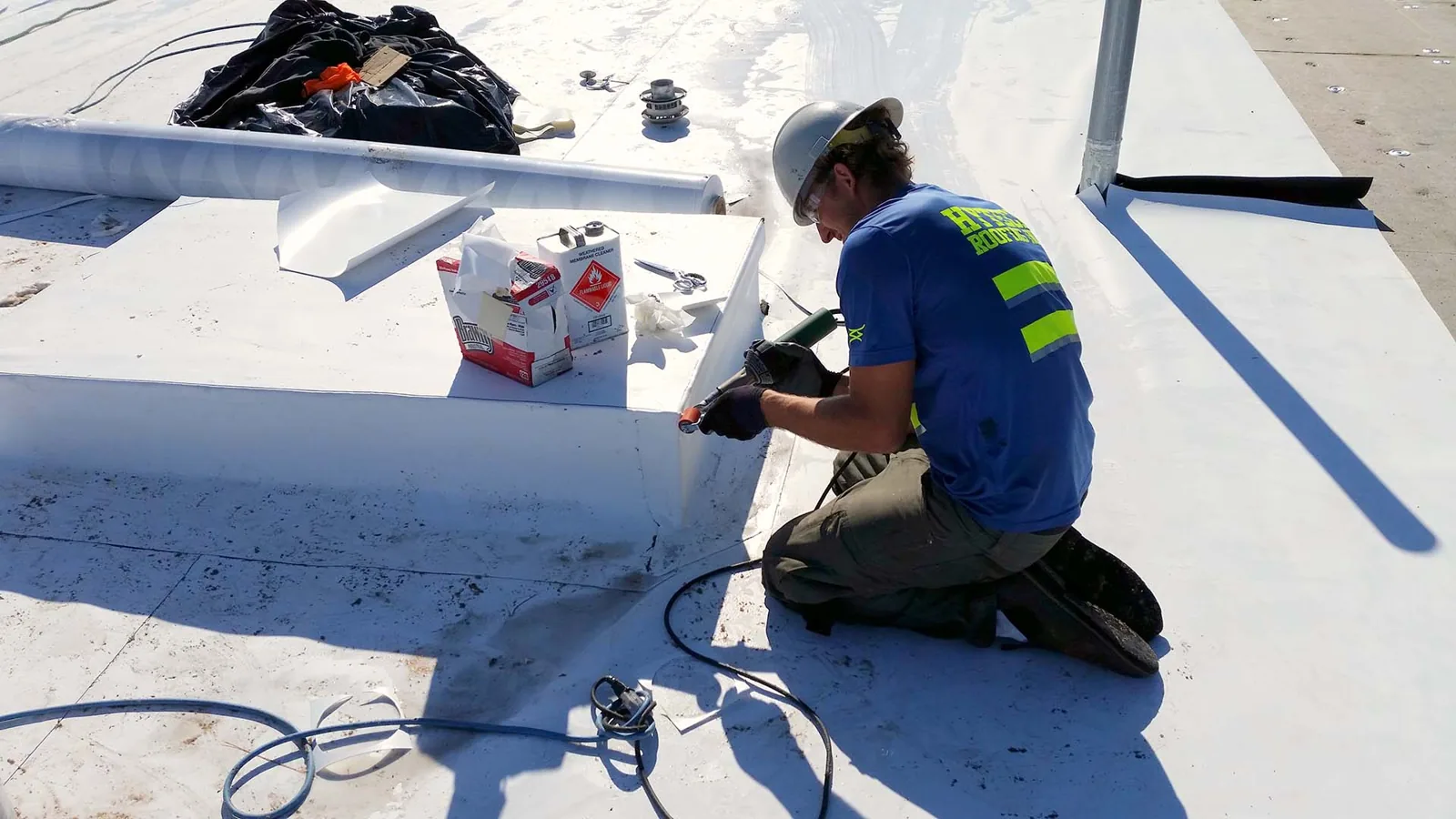
On TPO roofing, a compatible sheet repair needs suitable preparation and a sound weldable area. Existing contamination, aging or layered compounds may increase the stripping required. Asphalt and rubber assemblies need other joining methods. We establish the installed material and the surrounding condition before choosing the repair. That avoids comparing one proposal's complete reconstruction with another proposal's surface treatment over an inadequately assessed defect.
Damage at a skylight or curb can involve the glazing, support frame and flashing separately. We identify which component admits water and which trade must repair it. A roof patch does not restore broken glazing, and replacing the lens does not repair an open curb corner. The general contractor needs both scopes and their sequence. We describe the roof connection that must be rebuilt after the adjoining component has been restored.
Water entering during a storm can move into insulation beyond the visible opening. We assess suspected areas and use testing where it will establish the removal limit. Saturated insulation and damaged boards need replacement rather than concealment beneath a new sheet. The proposed boundary may need adjustment during opening as the actual condition becomes visible. We explain how that additional work will be measured and photographed before reconstruction proceeds.
New insulation and cover board must meet the retained assembly at a workable elevation. A sudden step can stress the patch or hold water along its seam. We rebuild the support and water path as part of the replacement section, including outlet changes where necessary. The repair allowance includes these connected details. Membrane quantity alone cannot describe the work required to restore a wet, depressed area beside a damaged flashing.
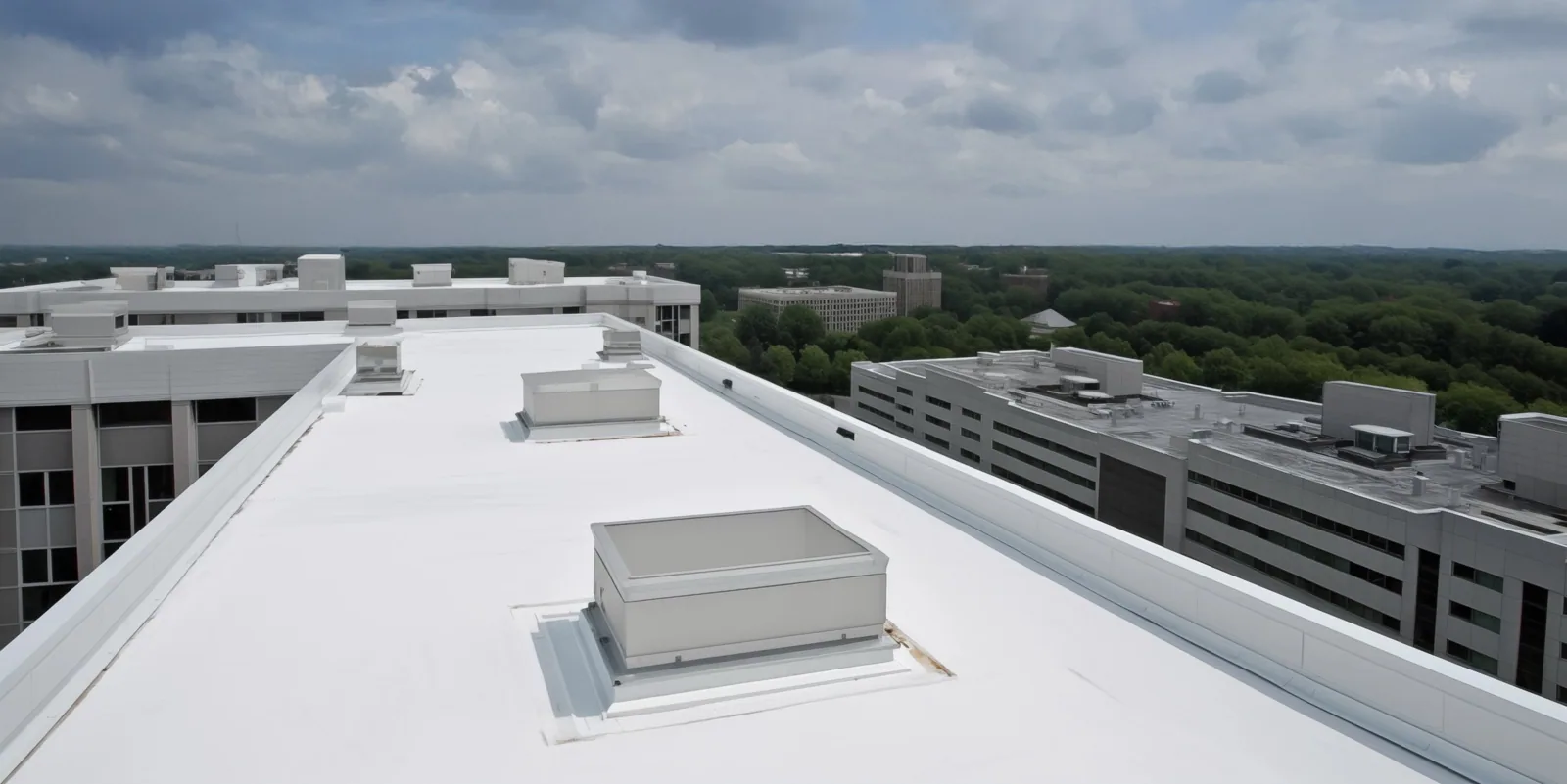
Industrial distribution operations are part of Mira Loma's building use. For distribution-center storm repairs, stocked areas and delivery activity can limit where an opening or debris container belongs. We establish the actual building restrictions and sequence the roof work accordingly. Temporary closures may be necessary between stages. They should be priced alongside the permanent materials where the operating window prevents one continuous repair operation.
Rubidoux Town Center's businesses lie along Mission Boulevard. A repair at a property in Rubidoux may need protection of adjoining entries and coordination at shared components. We inspect the physical boundary and determine who controls the affected roof detail. The schedule includes safe removal, receiving-surface preparation and completion of the weather connection, rather than assuming that replacing the visible damaged piece completes all work at the edge.
We document the observed damage and completed repair with photographs and locations. If a claim is involved, those damage findings can support the assessment without assigning coverage decisions to the roofer. Unresolved testing, deck concerns or connected trade work remains identified. The owner receives a usable next action where the scope cannot yet be completed, with the required access or material decision explained against the damaged component.
Movement at the opening can disturb the adjacent attachment and support. We establish a stable boundary before forming the permanent connection. If nearby construction remains secure, the repair can stay limited; loosened components need their own corrective work so the new patch is not tied into the same weakness.
The scopes can be coordinated after the glazing, frame and curb connection are assessed. We identify the roofing work and the separate component repairs, then sequence them so the final flashing meets a stable assembly. Temporary protection may be required between the two operations.
We describe the observed conditions and distinguish event-related damage from other drainage concerns where the findings support that distinction. Coverage is decided through the claim process. A persistent low area still needs a practical roof correction, whether handled within the claim or as separate work.
Wet material or substrate deterioration may extend beyond the visible tear. The proposal should explain how we establish and document that additional boundary. Rebuilding only the original outline can leave unsuitable material under the new repair if the opening reveals a wider failure.